
How to choose an AI visitor assistant
Five practical questions to ask before you pick one, with AI Loes at Zwin Nature Park as the example.
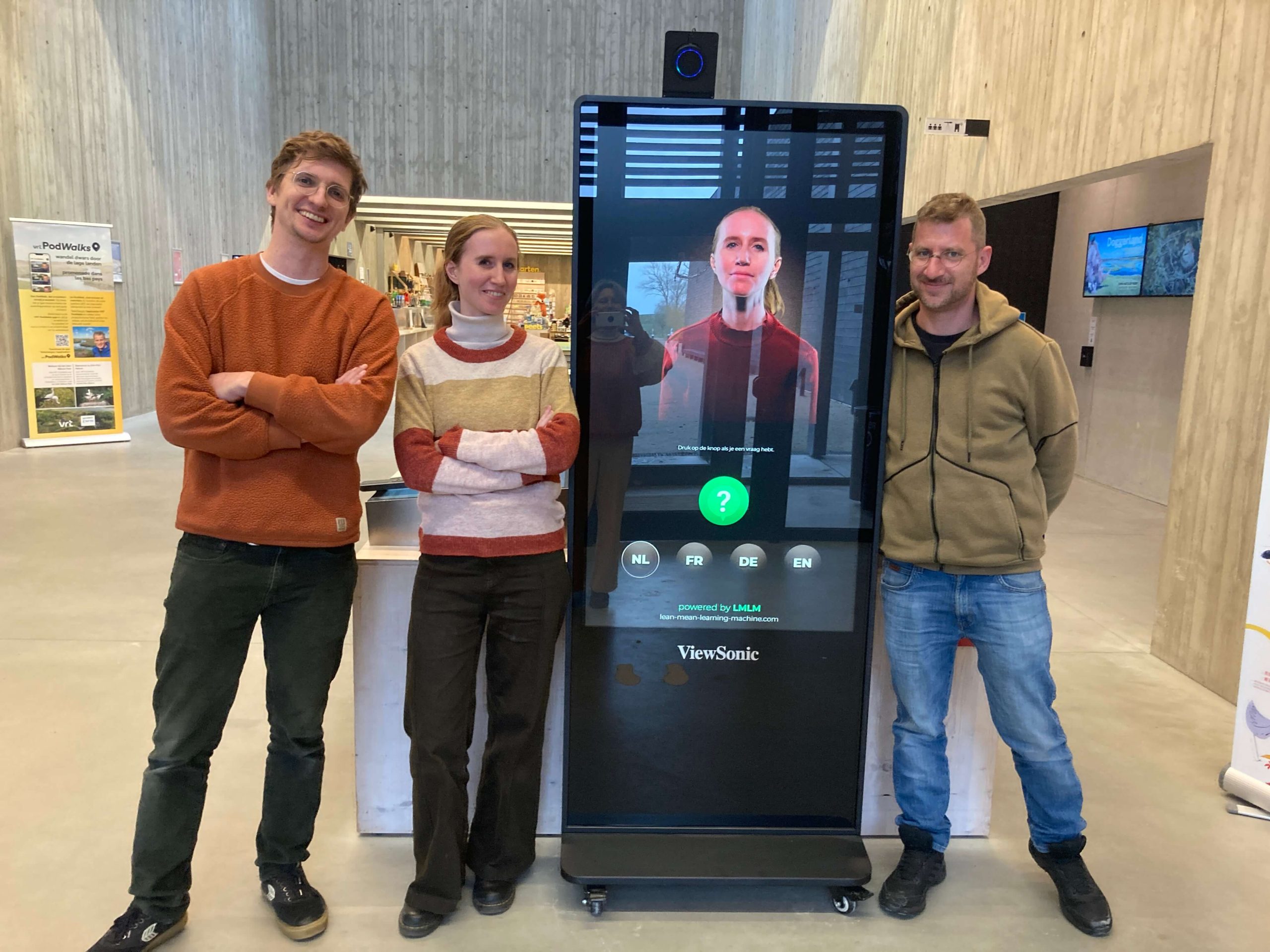
The real Loes and her AI version, side by side, with creators Dennis and Dries.
What an AI visitor assistant is
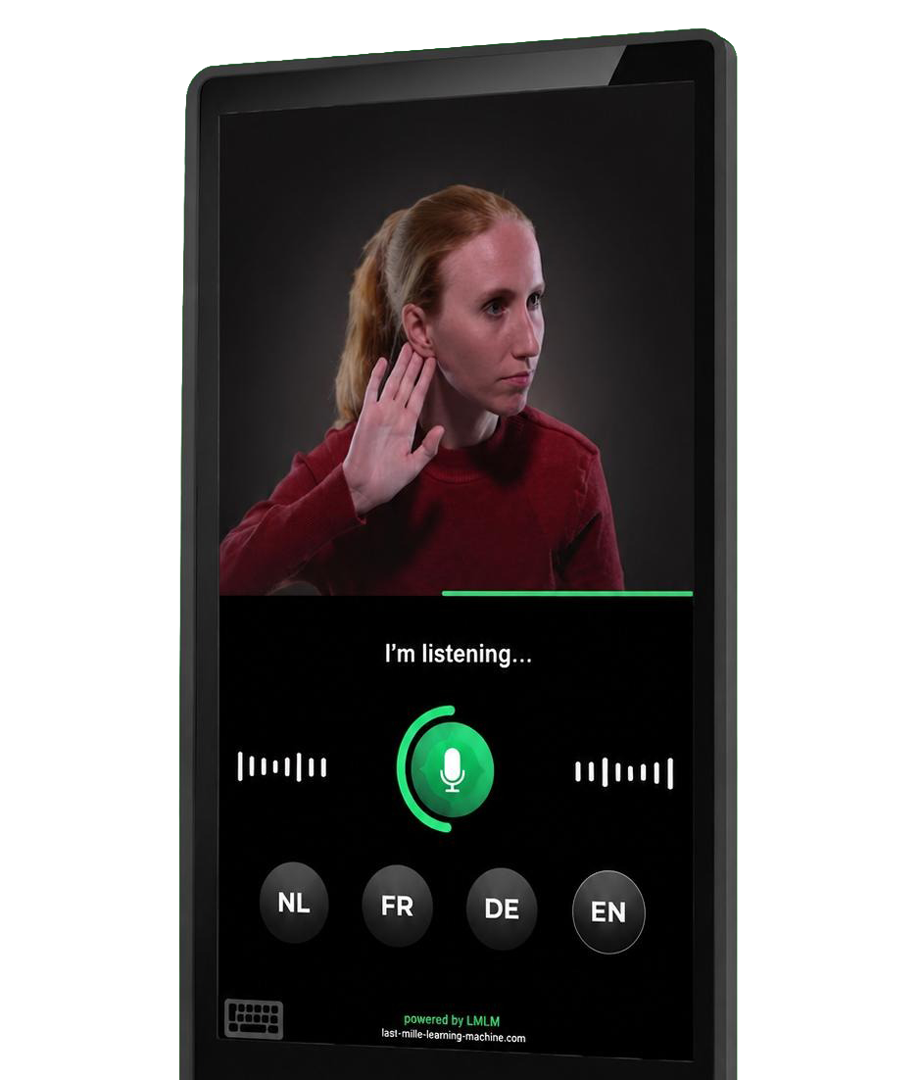
AI Loes on her kiosk at Zwin Nature Park: push the button, ask, and she answers.
A screen or a character that answers your visitors’ questions out loud, in their own language, without a person behind it.
AI Loes is the example we use on this page. She works at the front desk of Zwin Nature Park, a nature reserve on the Belgian coast. Using the face and voice of a real reception employee, she answers practical questions in four languages. Visitors push a button, ask, and Loes answers. Before Loes went live, we worked through each of the following questions with the park. These are also the questions you should discuss with any supplier.
Who is a good representative for your museum?
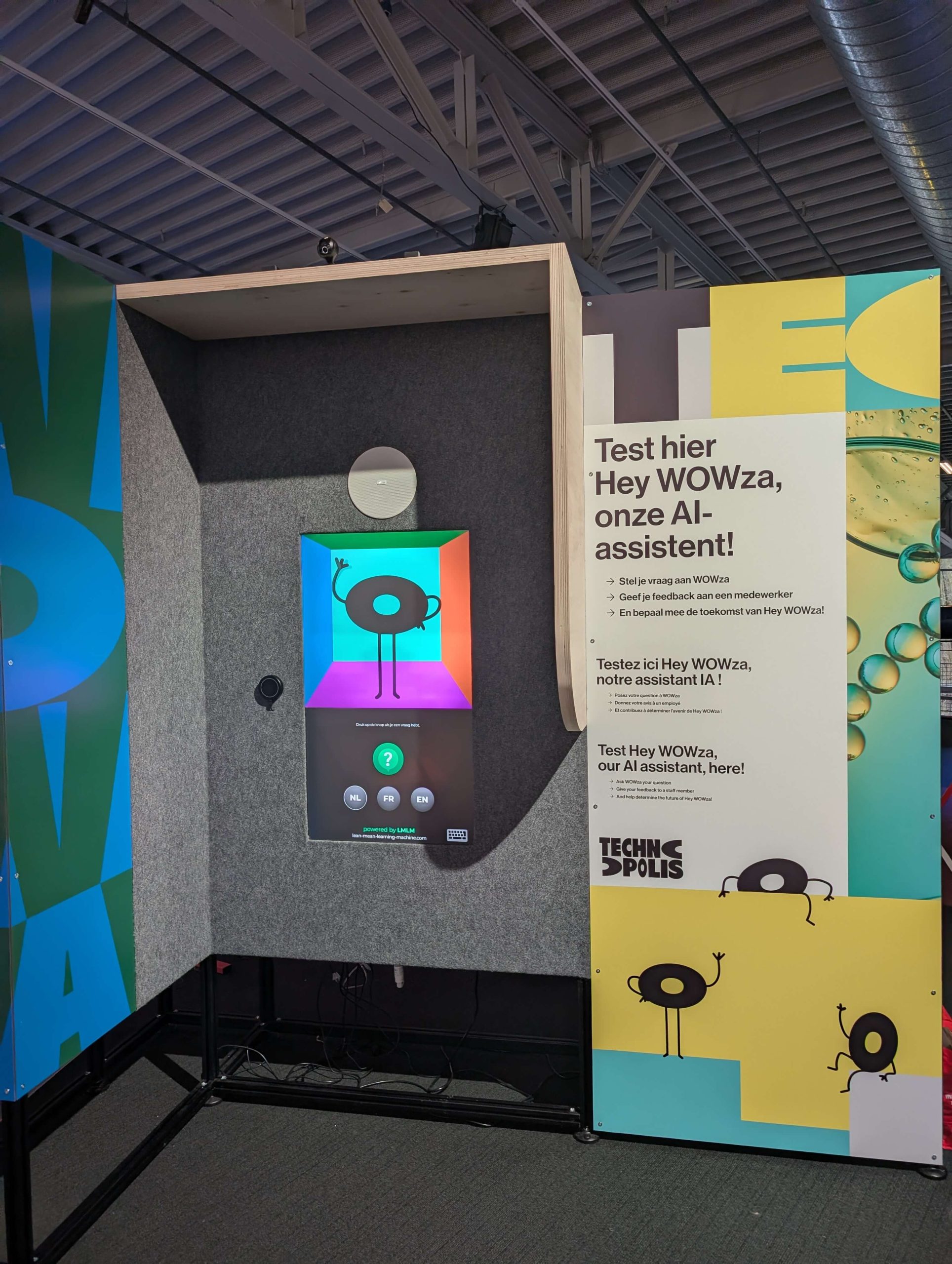
heyWowza at Technopolis: the kiosk shows how an AI assistant can fit into the venue’s space and design.
An animated character, a mascot people already know, or someone from the organization itself.
This first decision shapes everything that follows. There are three options. Someone from the organization: it is very humanizing when the assistant is an employee who works there, not some unknown AI bot. That is Loes, a real front desk colleague at Zwin. A mascot people already know: Zwin is known for its storks, so its visitor interviewer appears as a Lego stork. A new character: at Technopolis, the science center in Mechelen, the assistant is heyWowza, a character created especially for the entrance. All three work. Pick the one your visitors would recognize.
Do you have enough information about this person?
- His nameJulius Felix.
- Where he is fromThe Nervii, a tribe from what is now Belgium.
- His jobAuxiliary soldier on Hadrian’s Wall, 162 AD.
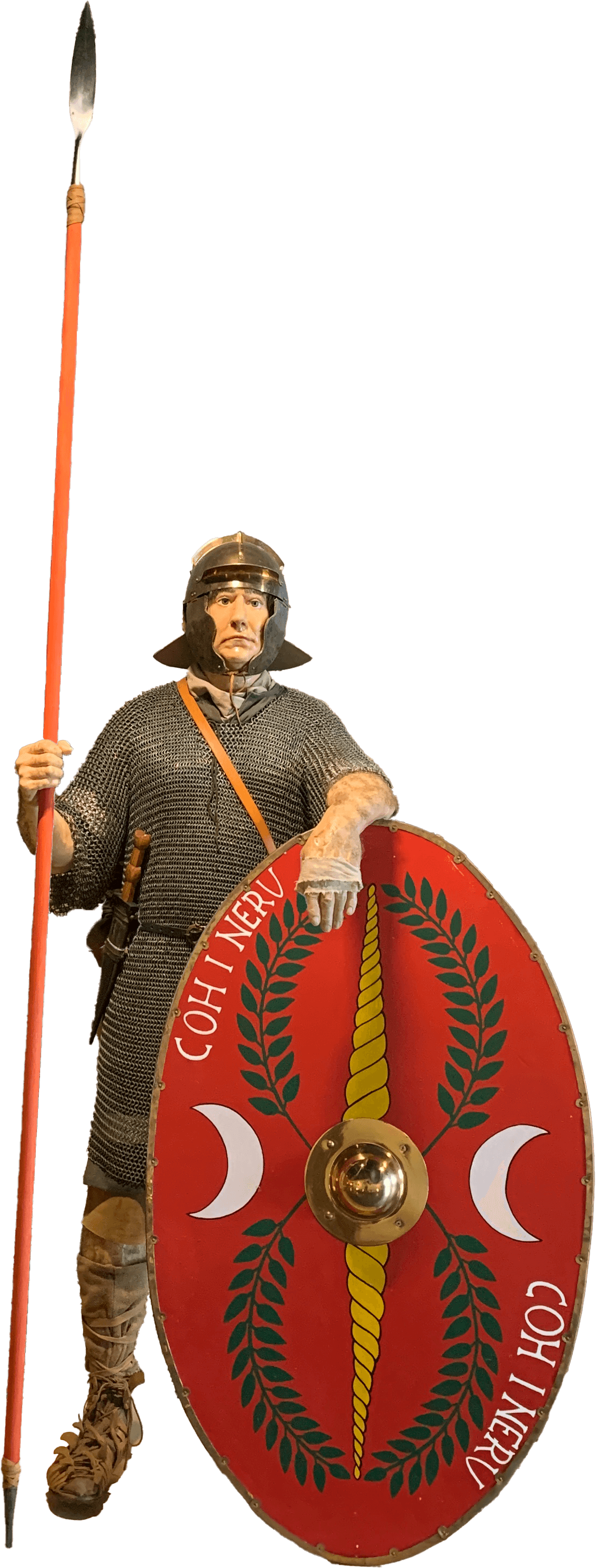
- His unitCohors II Nerviorum. It says so on his shield.
- His lunchBread and porridge. Again.
- His wifeVisitors ask. Someone has to write the answer.
Julius Felix, one of the 2 AI Roman soldiers at the Archeocentrum Velzeke in Belgium. Everything he knows about himself was written down first.
Visitors will ask about their personal life, their history, their work and why they matter. “I don’t know” 10 times in a row makes for a boring assistant.
Whether the character is real or fictional, you need enough material to support it. Visitors rarely follow the script. They may ask a Roman soldier about his wife, a woman in a painting about her shoes or a reception employee whether she enjoys her job. If most of those questions are met with “I don’t know”, people stop asking. For Loes, the park supplied the practical information: opening hours, tickets, the walking routes, the storks. She knows 601 questions as of September 2026, and the number grows every week from the questions visitors actually ask.
Can a historical figure be accurate without being insensitive?
- War heroOpened the sluices at Nieuwpoort in 1914 and stopped the German army with seawater.
- “Hates” the GermansHistorically fair. Less fun for the German visitors in front of him.
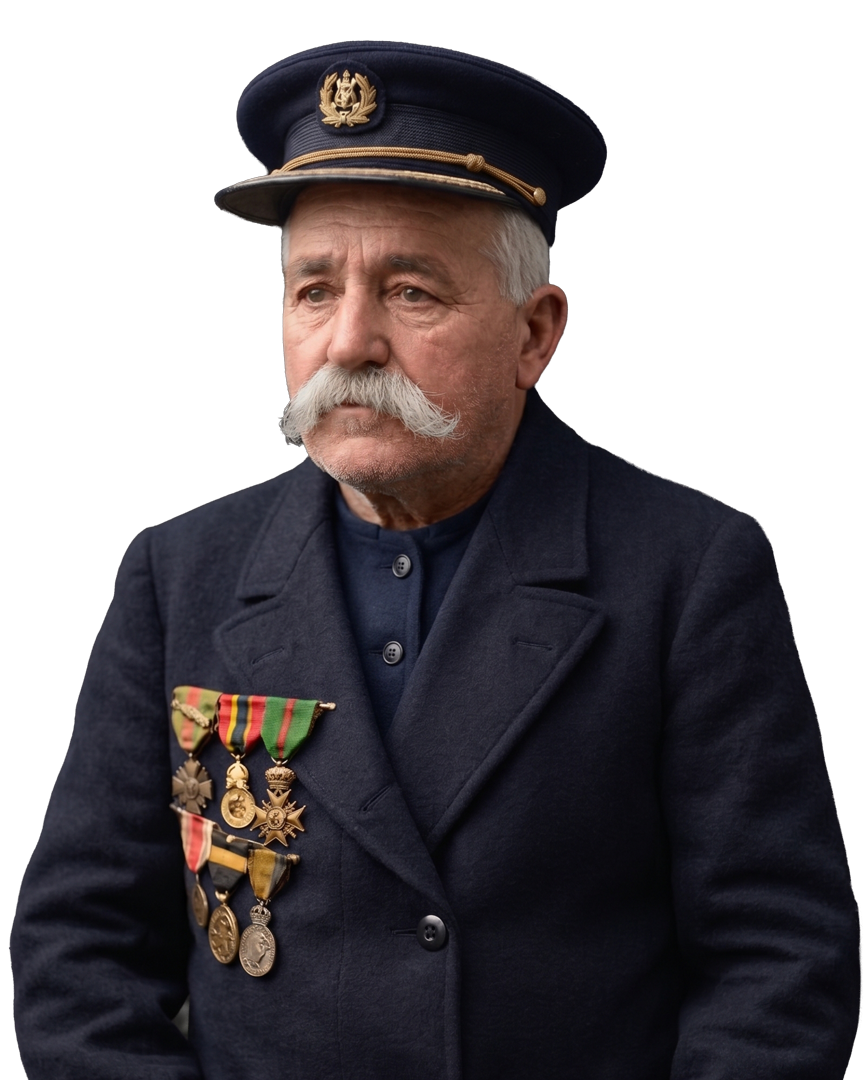
- Likes a drinkQuite a lot, by all accounts.
- Buys the next roundInvites every visitor to come and have a drink with him.
- His living relativesAgreed with this portrait, and with letting him talk through AI.
Hendrik Geeraert, the WWI hero visitors talk to at Westfront Nieuwpoort.
There is a fine line between historical accuracy and a friendly visitor assistant.
Depicting a historical freedom fighter that visitors can talk to is all fine and well. But what if he says he dislikes, or hates, a group of people or an entire country? Historically accurate, and not great for the visitors from that particular country standing in front of him. Before you choose a historical figure, decide with your supplier where that line sits: what the character says about his enemies, his era’s prejudices and the things he did that we now see differently. For Hendrik Geeraert, the WWI hero who answers back at Westfront Nieuwpoort, that line was the museum’s to draw, and it is the museum’s to draw for every historical figure.
And what about descendants who are still alive? They should be informed. Nobody wants to discover unexpectedly that an AI version of a family member is talking to strangers. Contact the family before looking for a voice actor.
What kind of personality do you want?
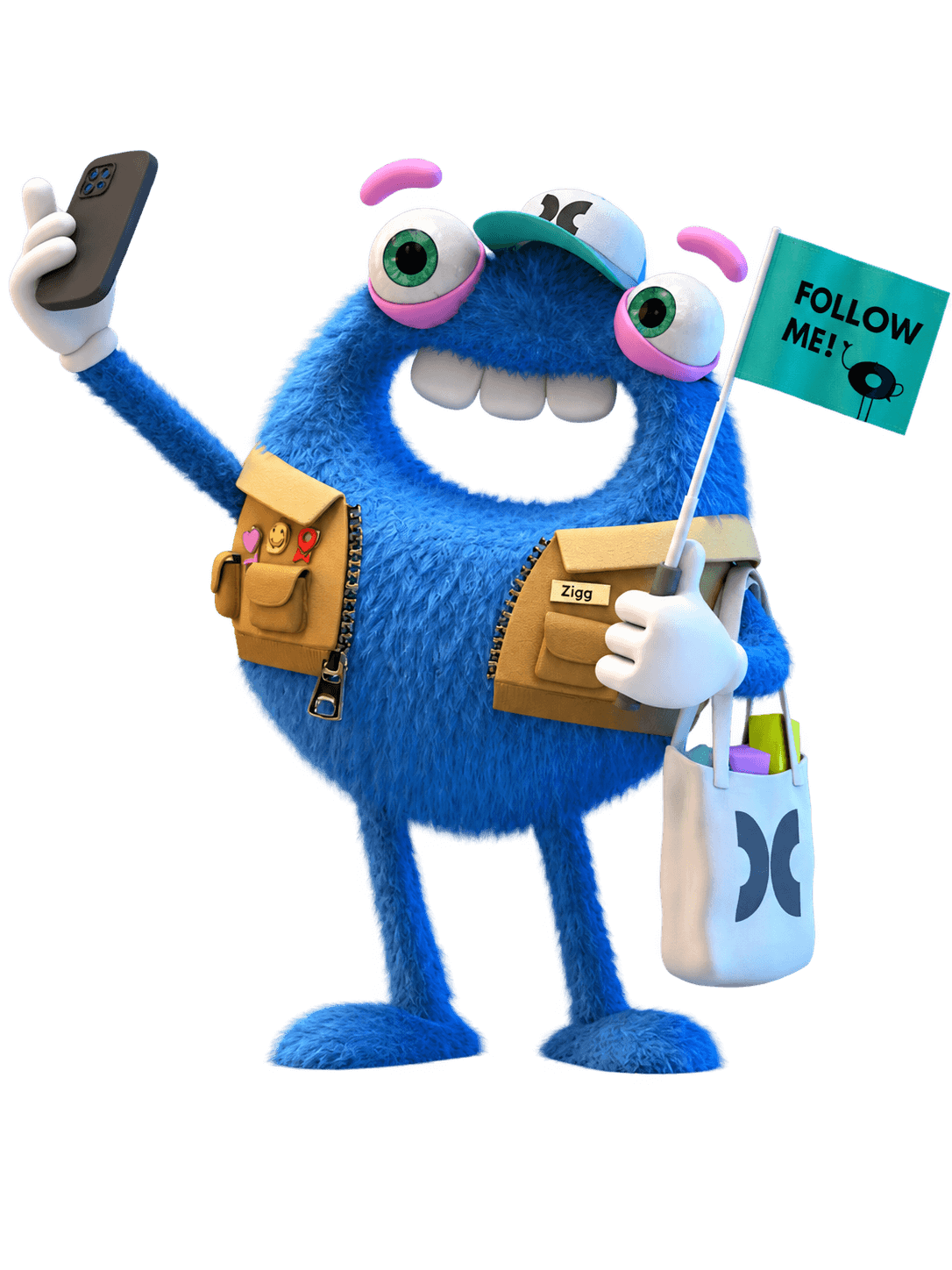
You are Wowza, the fluffy blue mascot at the entrance of Technopolis, the science center in Mechelen. Visitors ask you questions out loud and you answer out loud, in their language. Be playful and joke in most answers, preferably about yourself. Be enthusiastic: science is the best thing ever and you cannot hide it. Answer in 2 or 3 short sentences. Use simple words a 10-year-old understands. Only answer from Technopolis’s own information, and say so when you do not know.
Wowza, the mascot of Technopolis. Move the sliders and watch its personality prompt, the written instructions the AI follows, change.
Quirky and fun, or professional and purely informative? Decide it, write it down, and test it.
The tone
Do they use specific words or phrases? Do they joke? Loes is friendly and practical, like a helpful reception colleague. Juan, the AI cactus at Technopolis, is grumpy on purpose, because a grumpy cactus is funnier than a polite one. Both are written down in the character’s instructions, and both are tested with real visitors before launch.
The hard questions
Racist or discriminatory questions will come. Decide in advance how the assistant should respond: does it get angry, does it set a boundary and move on, or does it brush everything under the rug? We prefer a short, in-character refusal and back to the subject. Whatever you choose, the museum decides it, not the AI.
Watch out for the uncanny valley
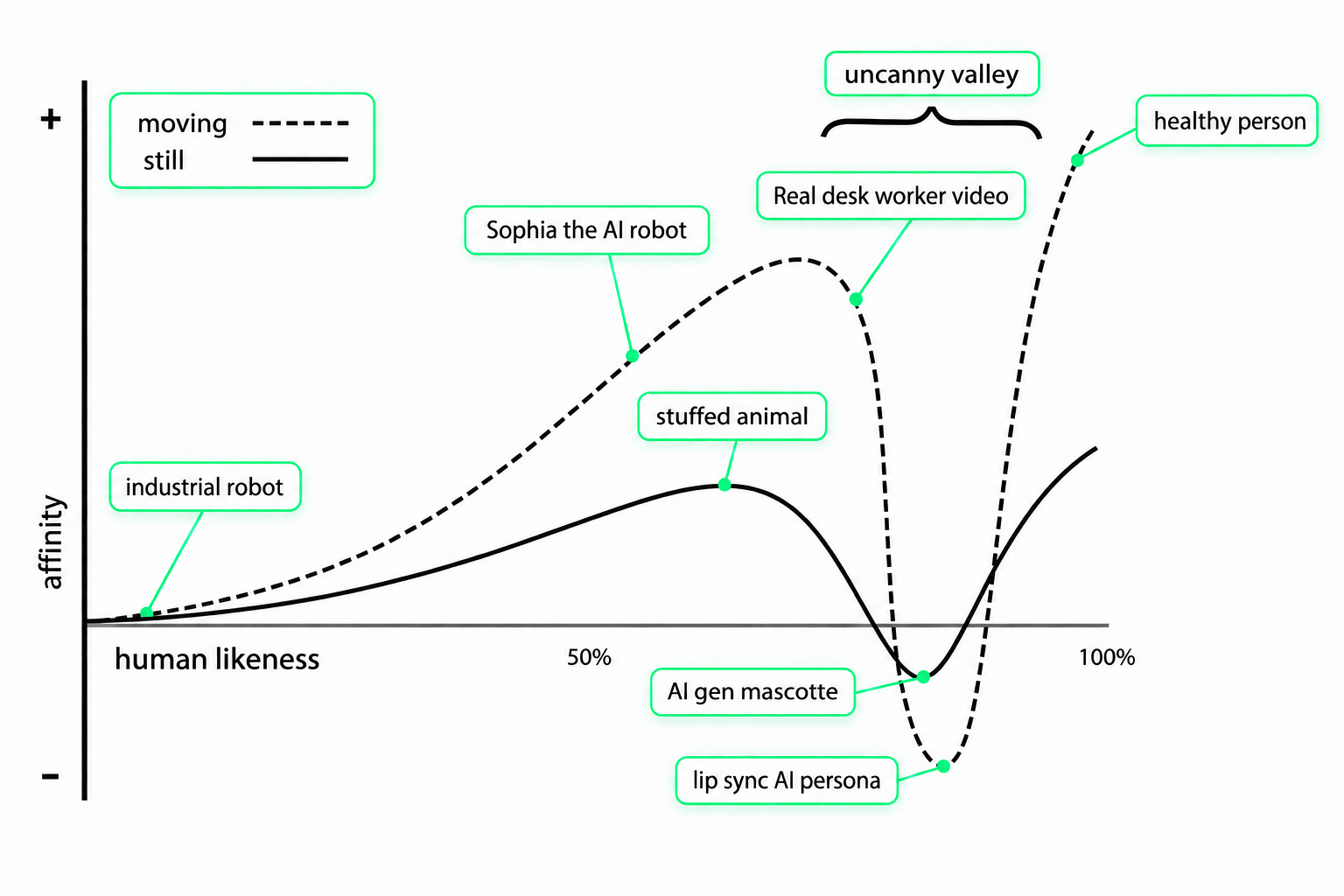
The uncanny valley: affinity rises with human likeness, then drops sharply for AI-generated mascots and lip-synced AI personas, and recovers only for a real person.
A visitor assistant can draw people into your theme. It can just as quickly do the opposite.
The uncanny valley is the point when a digital character appears nearly human, visitors tend to focus on everything that looks unnatural. This is why we avoid fake AI personas and automatically generated lip movements. The technology is not always convincing, and visitors notice the artificial appearance immediately.
Loes avoids this problem by using pre-recorded videos of the real person. Her answers are generated in the moment and spoken in her voice, but the image is not artificially animated to make her appear to be talking. Visitors see and hear a real person, which makes the experience feel much more natural.
What museums ask us before they choose
Can we use one of our own employees?
Yes, if they want to. Loes lent her face and voice to the Zwin kiosk, and she is the example we point to. Ask the colleague first, then ask us.
Does it have to look like a person at all?
No. A painting, a cactus, a Lego stork and a Roman mannequin all work. What matters is that visitors recognize it and that it has enough to say.
Does it take long to install?
From start to finish, a project usually takes about 3 months. Most of that is collecting the information and testing the character with real visitors.
A visitor assistant is a branding touchpoint
A good visitor assistant does more than answer questions. It is one of the first things visitors meet, and an unsatisfactory experience there shows up in your visitor satisfaction. If you are choosing one and want a second opinion, tell us who your visitors would want to talk to.