
How to keep an AI kiosk running reliably
An AI kiosk answers visitors out loud, every hour the venue is open. Here is what keeps it working.
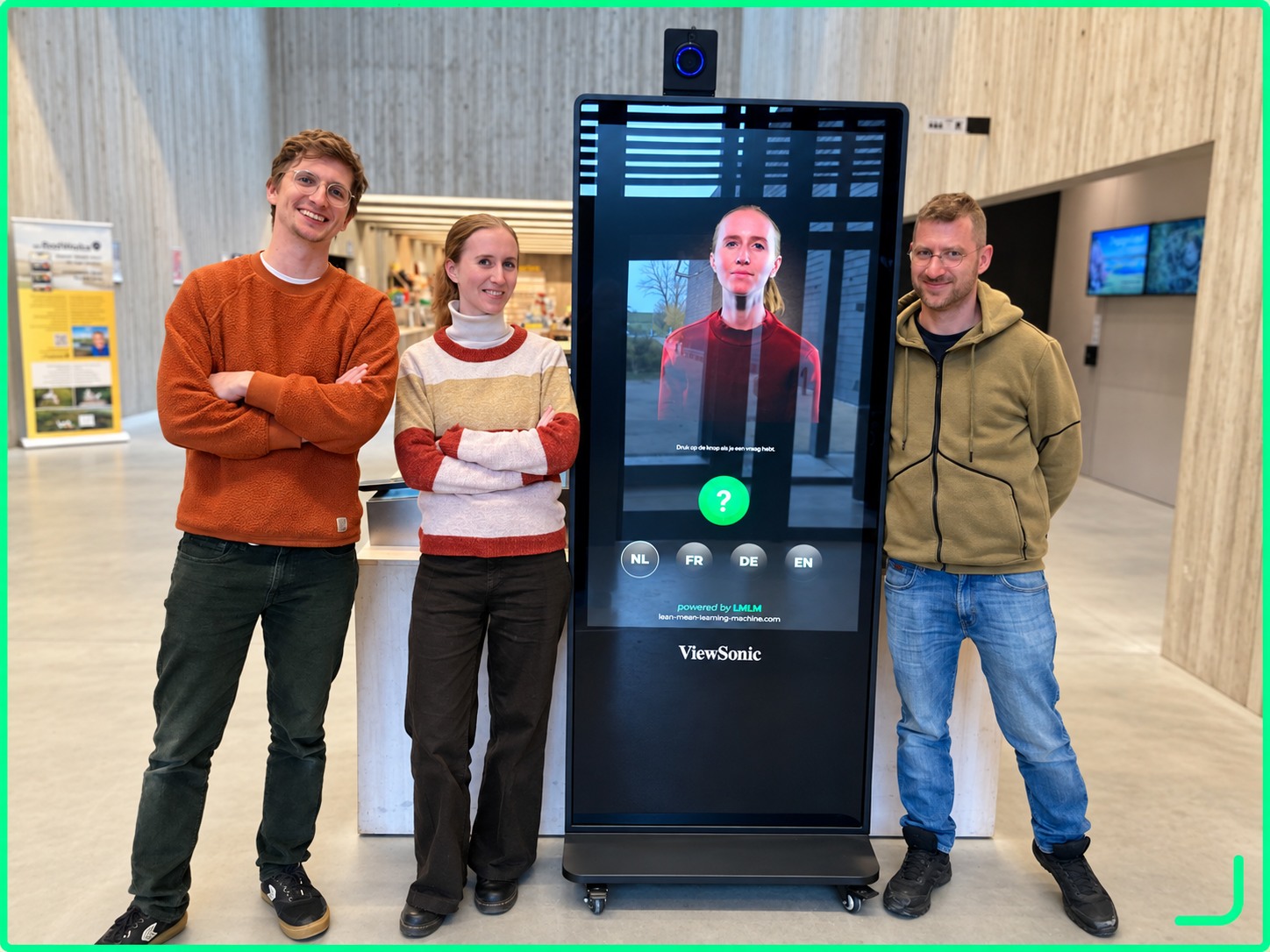
AI Loes, the AI kiosk at the entrance of Zwin Nature Park in Belgium, with creators Dries and Dennis and the real Loes, the front desk colleague she is modeled on.
An AI kiosk answers in 4 steps
- 1. Understand1.0 seconds to turn speech into text.
- 2. Find4.2 seconds to search the venue’s material. The slowest step.
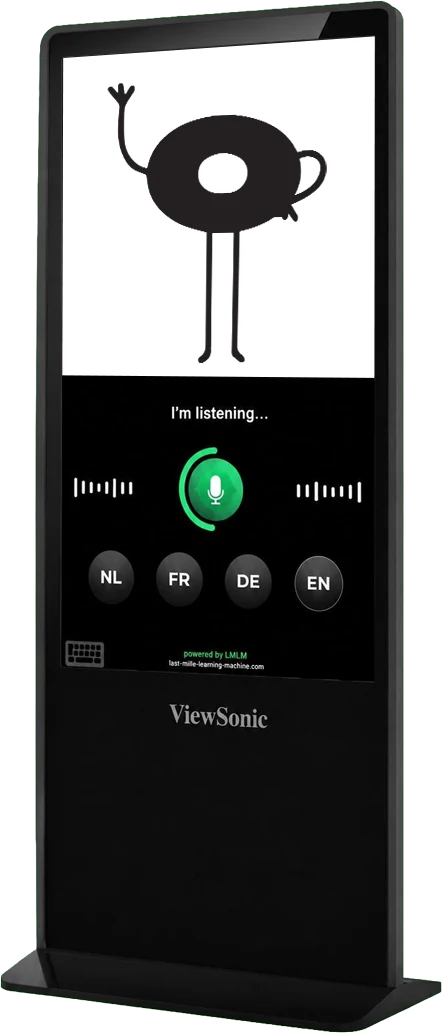
- 3. Generate0.8 seconds to write the answer.
- 4. Speak1.1 seconds to turn the answer into a voice.
A Talking Point kiosk. Timings measured on heyWowza at Technopolis in February 2026.
If 1 step has a problem, the whole conversation is affected.
An AI kiosk is a screen or a character in a museum, at a fair or in any other venue that answers spoken questions on the spot. Ours is called a Talking Point: a visitor pushes a button, asks a question out loud and gets a spoken answer. Between the question and the answer, 4 things happen.
1. Understand the visitor
A visitor asks “Where can I leave my coat?” Speech recognition turns the spoken question into text.
2. Find the right information
The kiosk searches the venue’s own material and finds the page about the lockers.
3. Generate an answer
An AI model writes a short answer from that page: “The lockers are next to the entrance, on your left.”
4. Speak out loud
A voice reads the answer to the visitor, through the speaker of the kiosk.
Keeping a kiosk reliable means looking after every one of those steps, and the machine they run on. heyWowza, the Talking Point at the entrance of Technopolis, the science center in Mechelen, Belgium, had 5,012 conversations in its first 9 days. 99.8% of them went through without a hitch. The rest of this post explains what goes into that.
Answers come from the venue’s own information
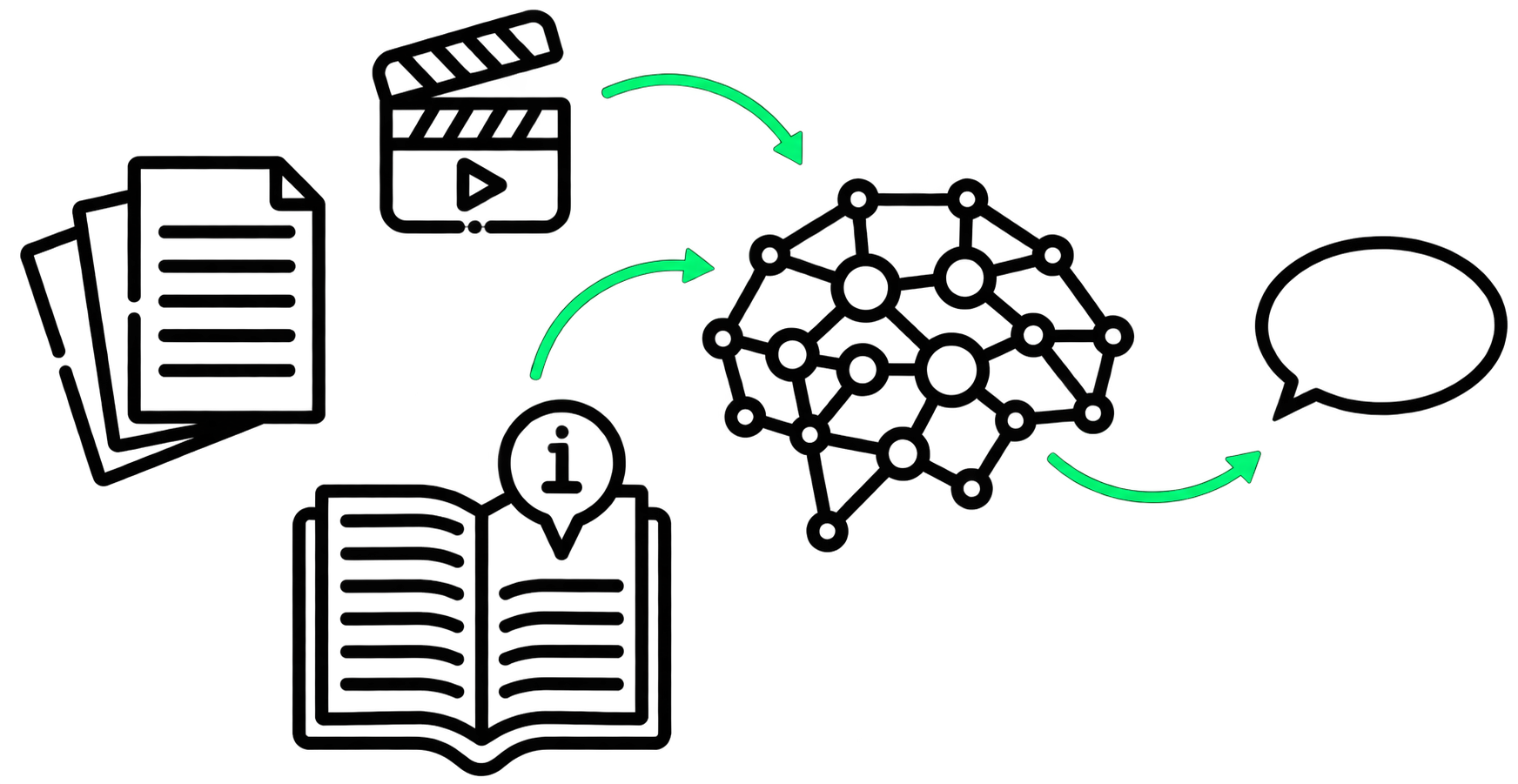
Documents, videos and guides from the venue go in. Answers come out.
A reliable answer is one the venue can stand behind.
A Talking Point answers from the documents, videos and other material the venue supplies. When a question falls outside that material, it is designed to say so and point the visitor to a staff member. That lowers the risk of a confident but unsupported answer about something important, such as directions or visitor rules.
A question the material covers
“Can I bring my dog?” The answer comes straight from the visitor rules the venue supplied.
A question outside the material
“Is the restaurant next door any good?” The kiosk says this is outside what it knows and points the visitor to the front desk.
Backup AI keeps the kiosk answering
Flip the switch to take the main AI service down.
The AI model in step 3 runs at an outside provider, and every provider has an off day.
In the summer of 2026 we updated the Talking Point. It now runs on a faster AI model on European servers, with a backup AI provider on standby.
Reviewing conversations to improve the AI
Visitor How does the plasma ball work?
AI There is gas inside the glass ball. A high voltage in the middle makes it glow, and your finger gives the electricity an easy path, so the light follows your hand.
Video it picked: an enthusiastic explanation
Our call: Approve. Short, correct and taken from the exhibit text.
Visitor Is the science show at 2 pm today?
AI Yes! The science show starts at 2 pm in the main hall. Get there a few minutes early for a good seat.
Video it picked: pointing the way
Our call: Disapprove. The kiosk repeated the schedule it was given, but the venue moved the show to 2:30 for the holidays. Update the schedule and every answer is right again.
Visitor Can I eat my own lunch here?
AI Good question! I don’t have the rules for picnics, so please ask my colleagues at the front desk. Hungry right now? The food stand is open.
Video it picked: the food stand
Our call: Approve. It said it did not know instead of guessing, and still helped. The question lands in the report, the venue adds its picnic rules, and next time the kiosk answers it.
Visitor Why does the Maxwell wheel go back up?
AI On the way down, its height turns into rotational energy. That spinning energy winds the string back up, so the wheel climbs again.
Video it picked: explaining
Our call: Disapprove, for a small fix. The answer is correct, but this visitor was 8 years old and “rotational energy” is a big word. Ask for simpler words with young visitors.
Example conversations, written for this page. Each video is the clip the kiosk picked to go with its answer.
We read what visitors asked and how the system responded.
At Technopolis we read every conversation of heyWowza’s first 9 days. Most answers are fine as they are. The ones that need work usually point to the venue’s own material (outdated or missing) or to the tone, and each has its own fix, as the review above shows.
Suzanne Verheyen, programming manager at Technopolis, says working with LMLM went smoothly, and that the team’s involvement and quick action helped their AI Talking Point become faster and more accurate.
Reports show what visitors keep asking
“How does the Maxwell wheel work?” Asked 31 times.
Visitors stand at it and still do not get it. Rewrite the exhibit text.
“Where are the toilets on the first floor?” Asked 46 times.
The floor plan leaves them out. Add them.
“When does the next science show start?” Asked 58 times.
Everyone wants to go. Show the times at the entrance.
“Is there a student discount?”
Answered from the price list. Nothing to fix.
“Are you a robot?”
Answered in character. Nothing to fix.
An example week. Pick a topic to see what the report flags.
Your team gets an email report of what visitors asked.
At Zwin Nature Park it works like this: a question AI Loes has no answer to lands in the weekly report, the park adds the answer, and the next visitor gets it.
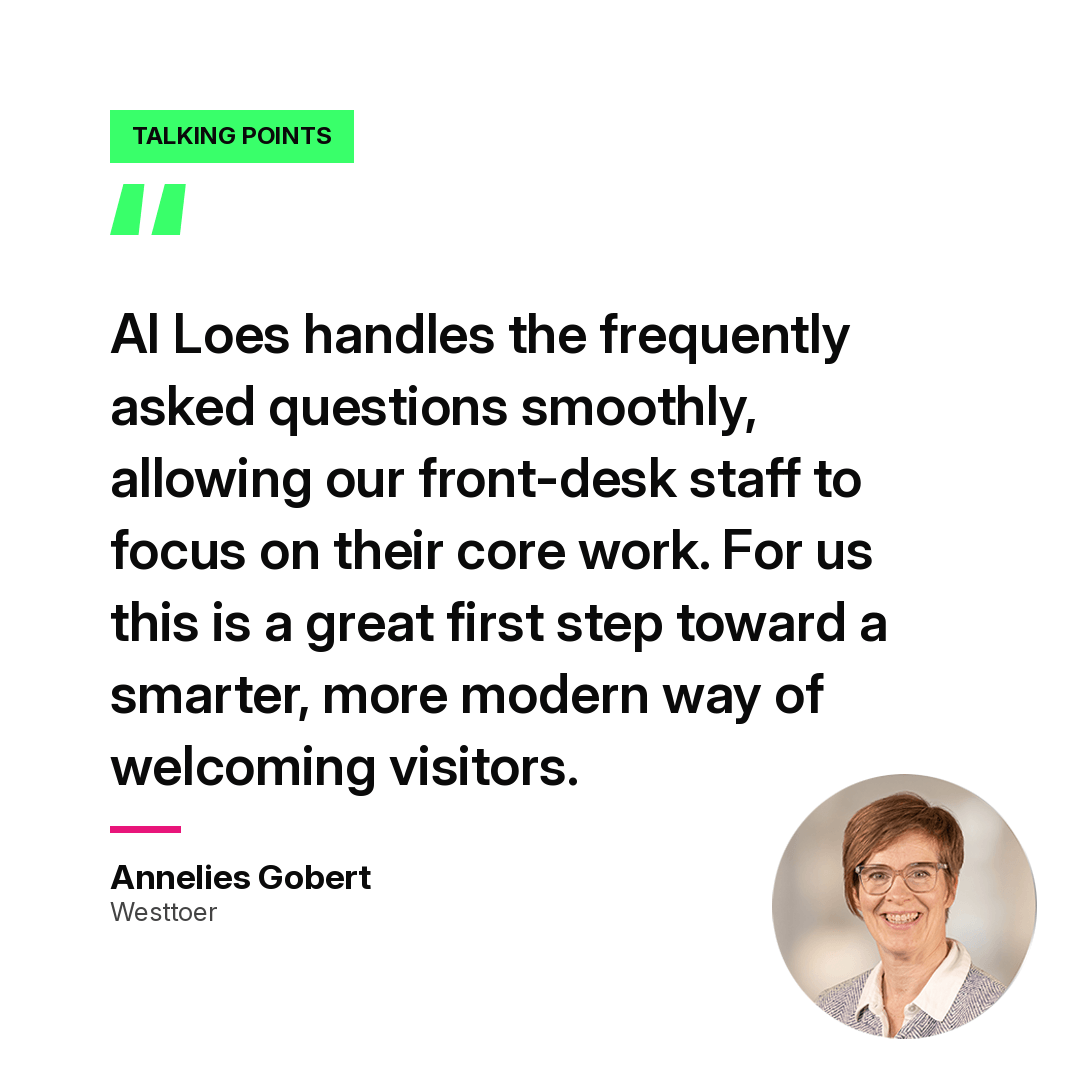
Annelies Gobert of Westtoer, the tourism organization of the province of West Flanders, says AI Loes handles frequently asked questions smoothly, giving front desk staff more time to focus on their main work.
Repeated questions can reuse an existing answer
heyWowza’s answers that came from memory, day by day
heyWowza at Technopolis, February 2026. By day 9, 1 in 4 answers came from memory.
A remembered reply is around 3 times faster than a fresh one.
When heyWowza recognizes a question similar to one it answered before, it retrieves that answer from memory instead of generating and recording a new one. Visitors wait less for the familiar questions, and those are the ones that come up most.
Support and maintenance continue after installation
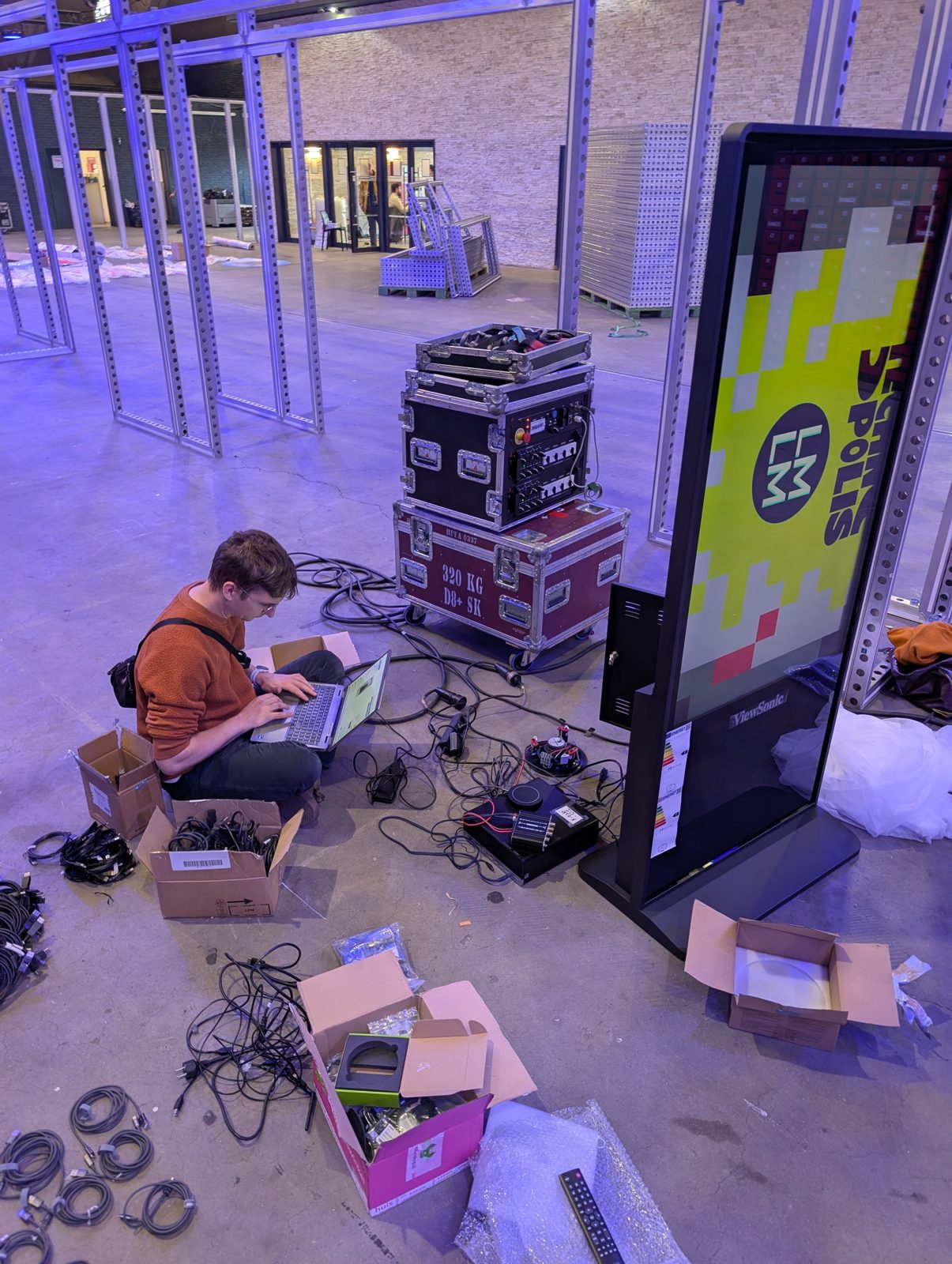
Dennis, one of the 2 founders, installing and checking a kiosk at the FTI festival.
A kiosk keeps getting attention after opening day.
We provide ongoing support and maintenance for every installation, and the 2 founders who build a kiosk are the ones who look after it. heyWowza is an example: it launched in February 2026, and the summer update brought it 20 changes.
A reliable kiosk needs reliable hardware
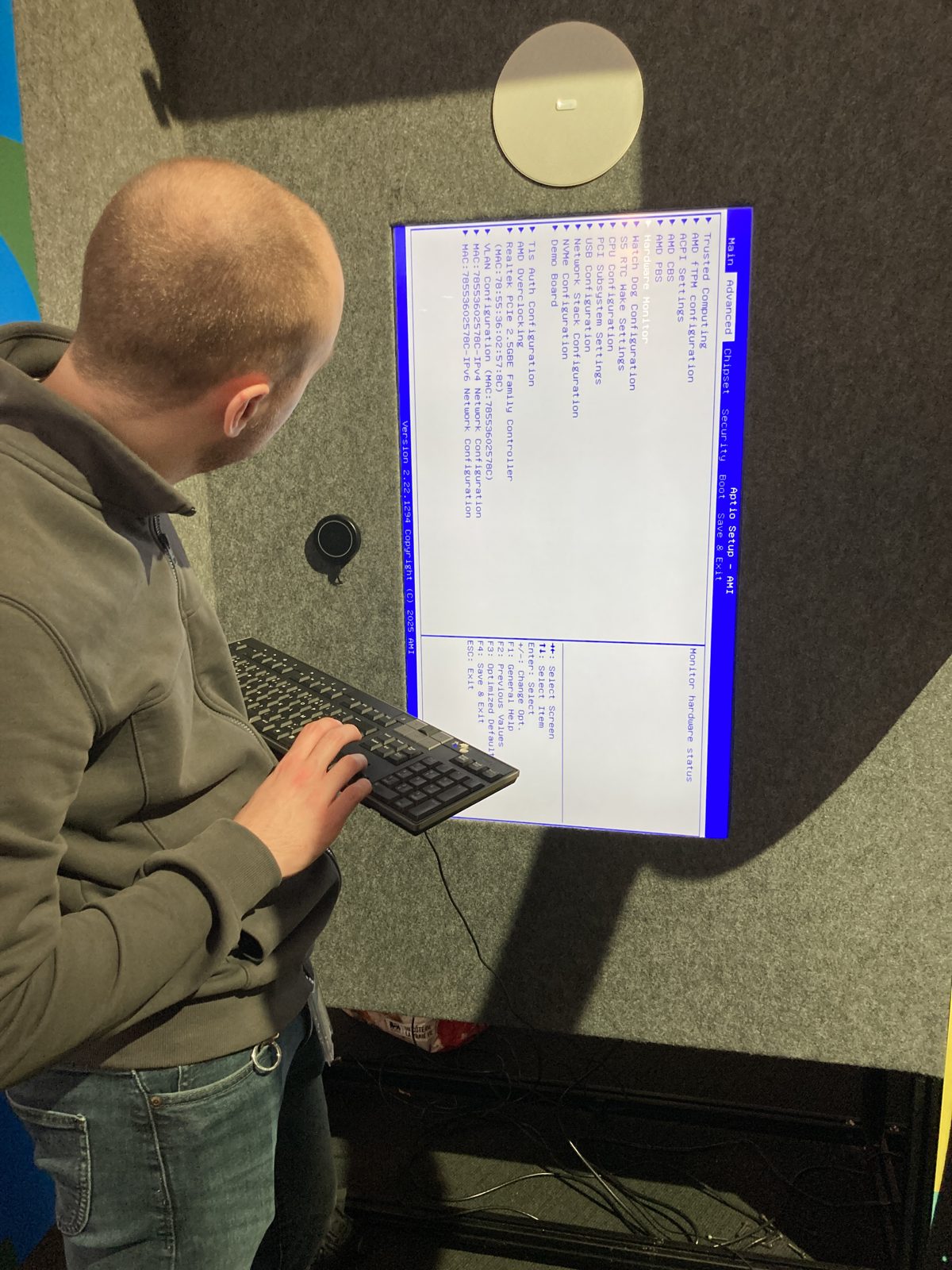
Checking the hardware of heyWowza at Technopolis, down to the BIOS settings.
The kiosk needs good hardware as well as good software.
Ask about every step
Planning an AI kiosk for your museum, venue or fair? Ask any supplier how they cover each of these points. If you want to compare notes, tell us where it would stand.