
A fine arts museum might be the last place you expect this
MSK Ghent holds work from the Middle Ages to the twentieth century. Talking tech is … not the house style.
The Museum of Fine Arts Ghent (MSK) is one of Belgium’s oldest and most prestigious art museums, with a collection that runs from medieval panels to twentieth century modernism. Its authority rests on careful, curator led interpretation, so an AI that talks to visitors was never going to be an easy sell. But the first run proved successful enough to warant a second installation.
These talking paintings are another way of getting to know the painting, the artist, its history and time period. It allows visitors to ask any question they want. They get an answer regardless of how difficult, funny or absurd their question might be.
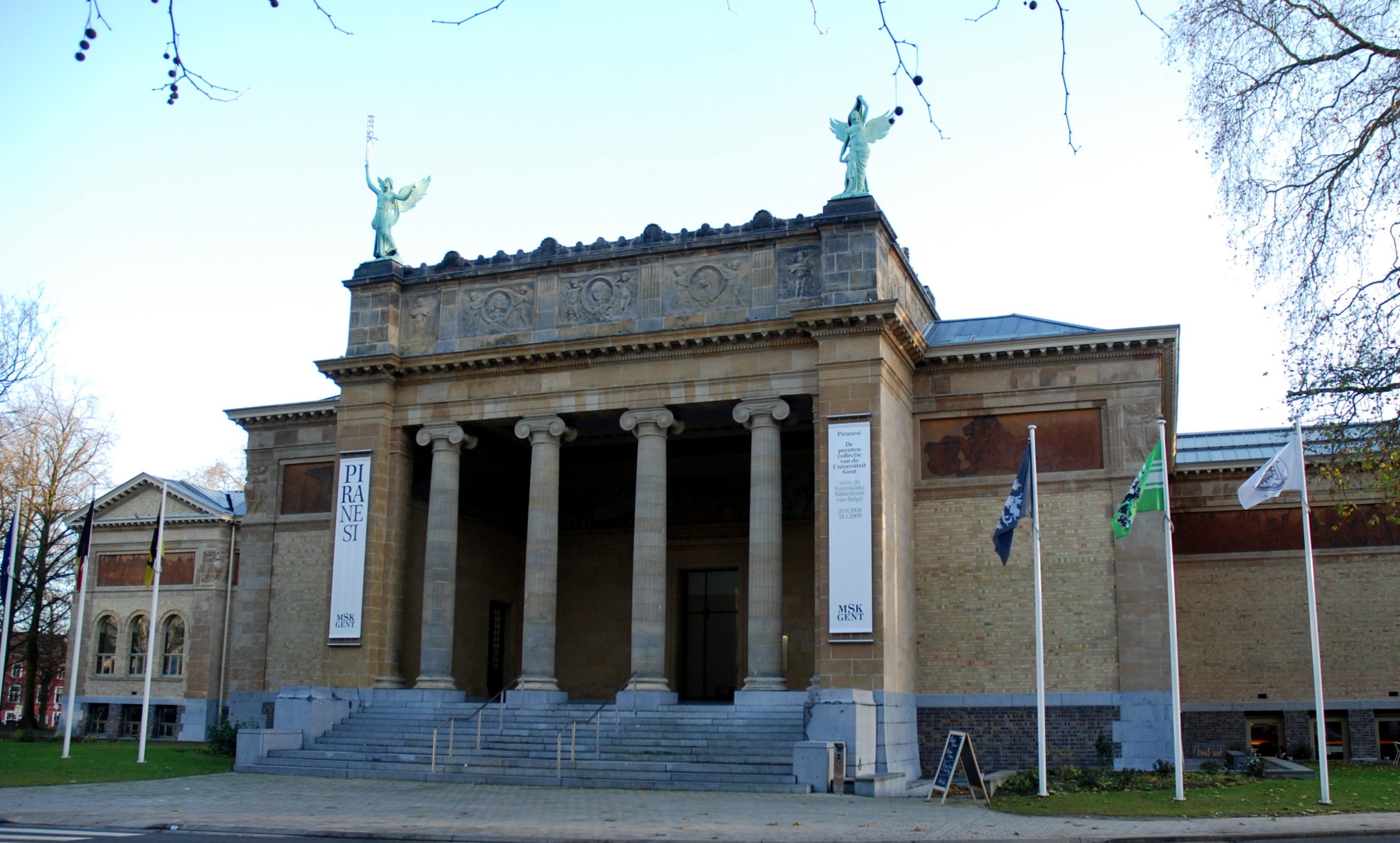
Museum of Fine Arts Ghent, Belgium. Photo © 2008 Stuppie.
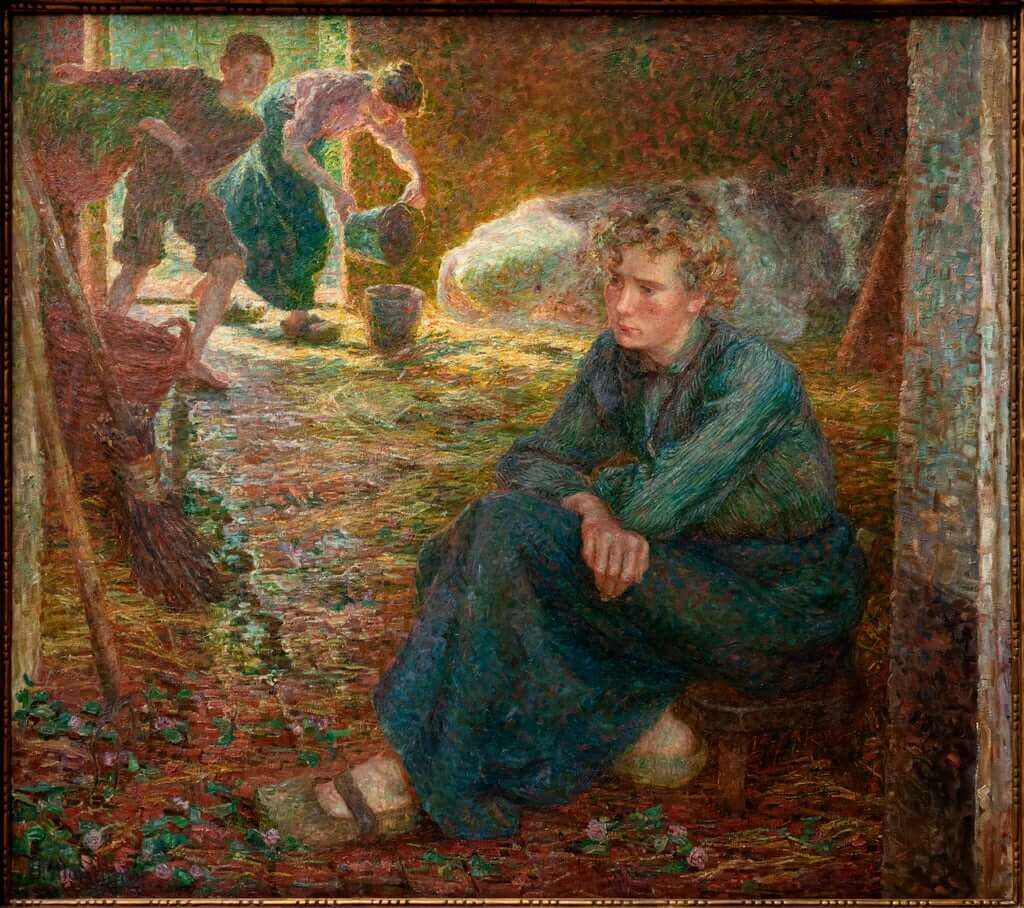
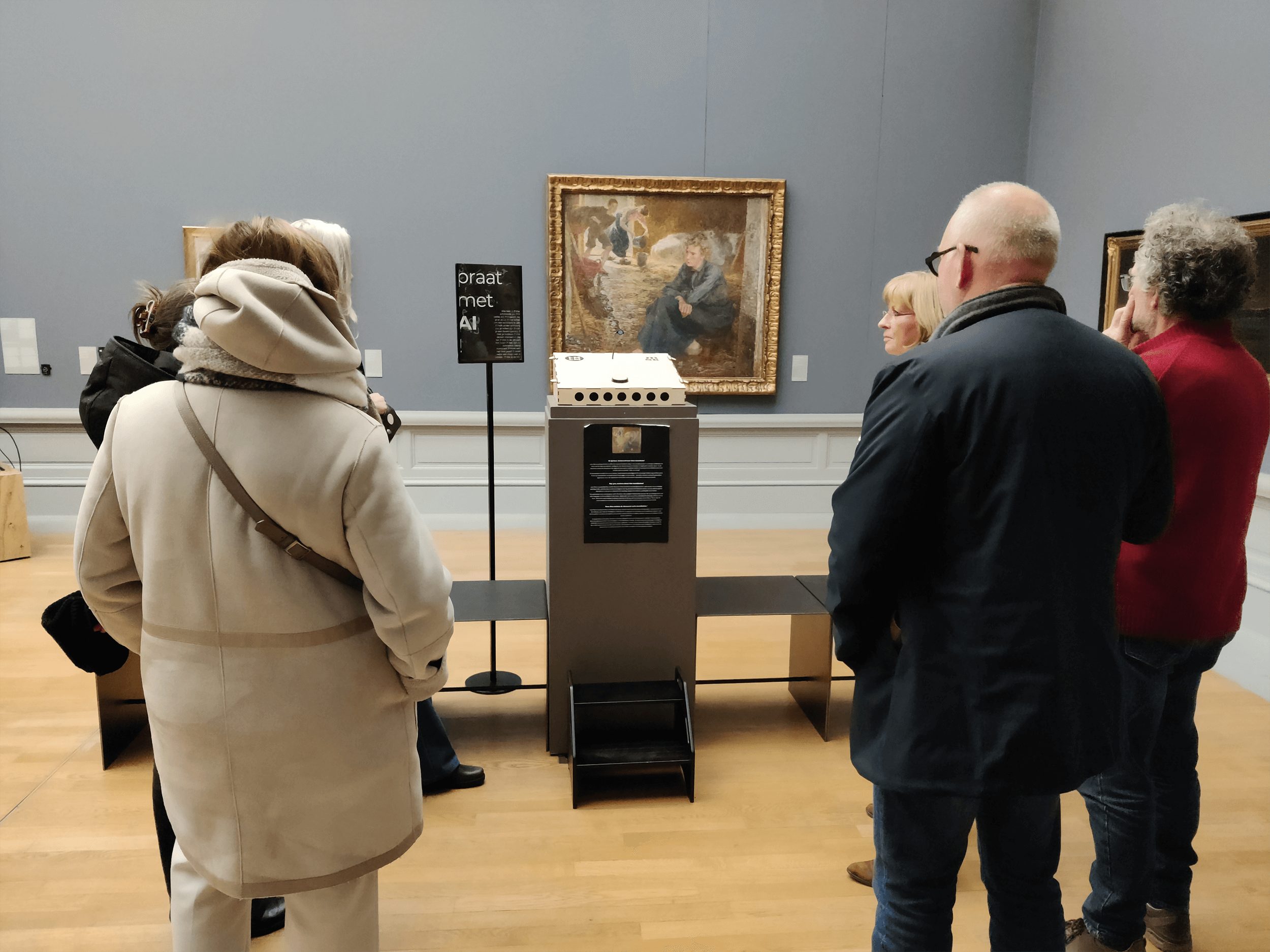
The Cattle Shed by Jenny Montigny
The first painted figure to speak was a humble anonymous woman sitting in a shed.
Jenny Montigny painted Flemish rural life in the early twentieth century. In The Cattle Shed a woman sits with children and a cow behind her. She looks sad because farm life isn’t particularly easy. Possibly the kids are annoying, and we can’t imagine it smelled great in there. Visitors are intrigued by this sad mystery woman, but now they can ask her directly, and she answers as a woman of her own time and place.
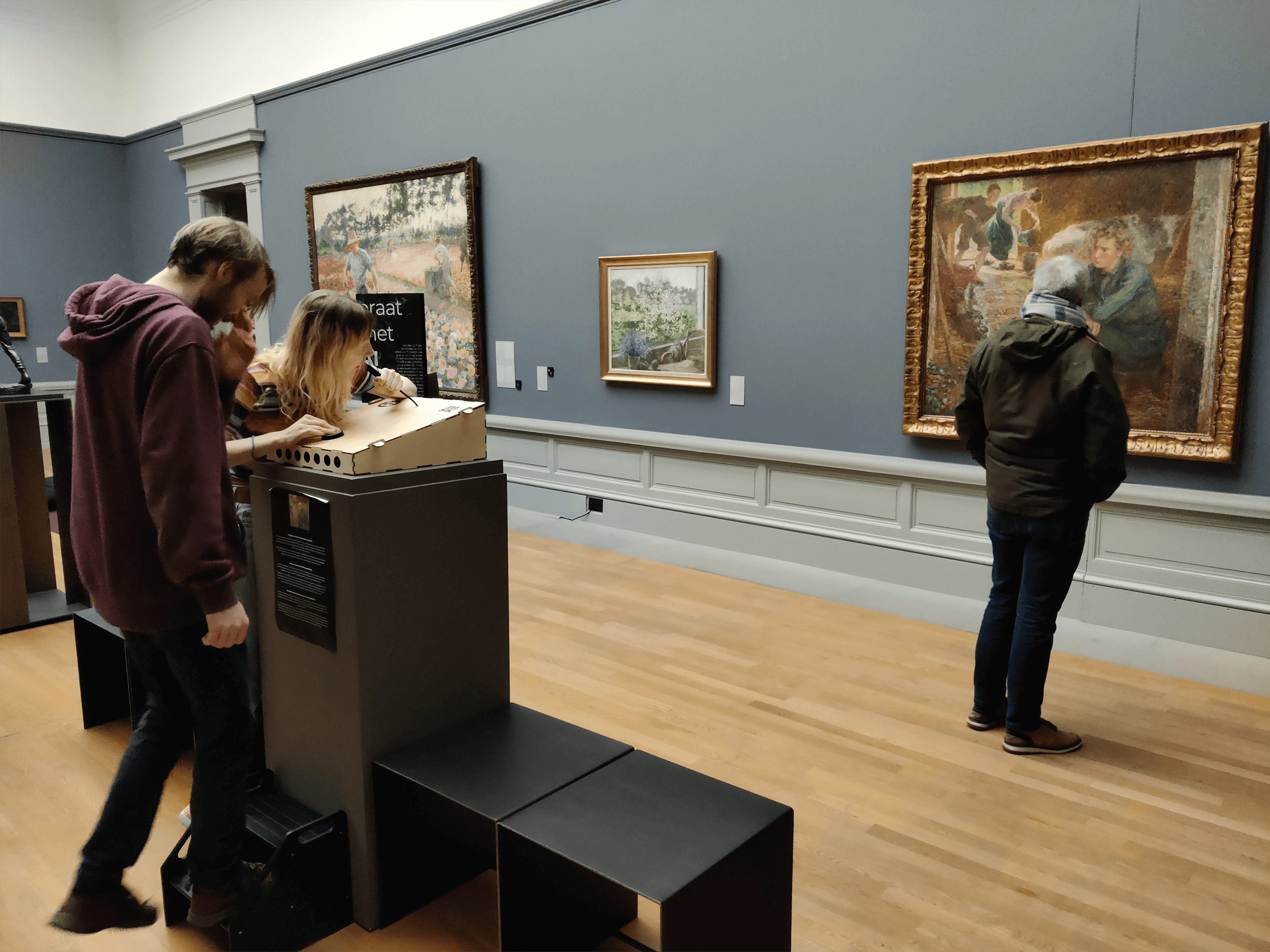
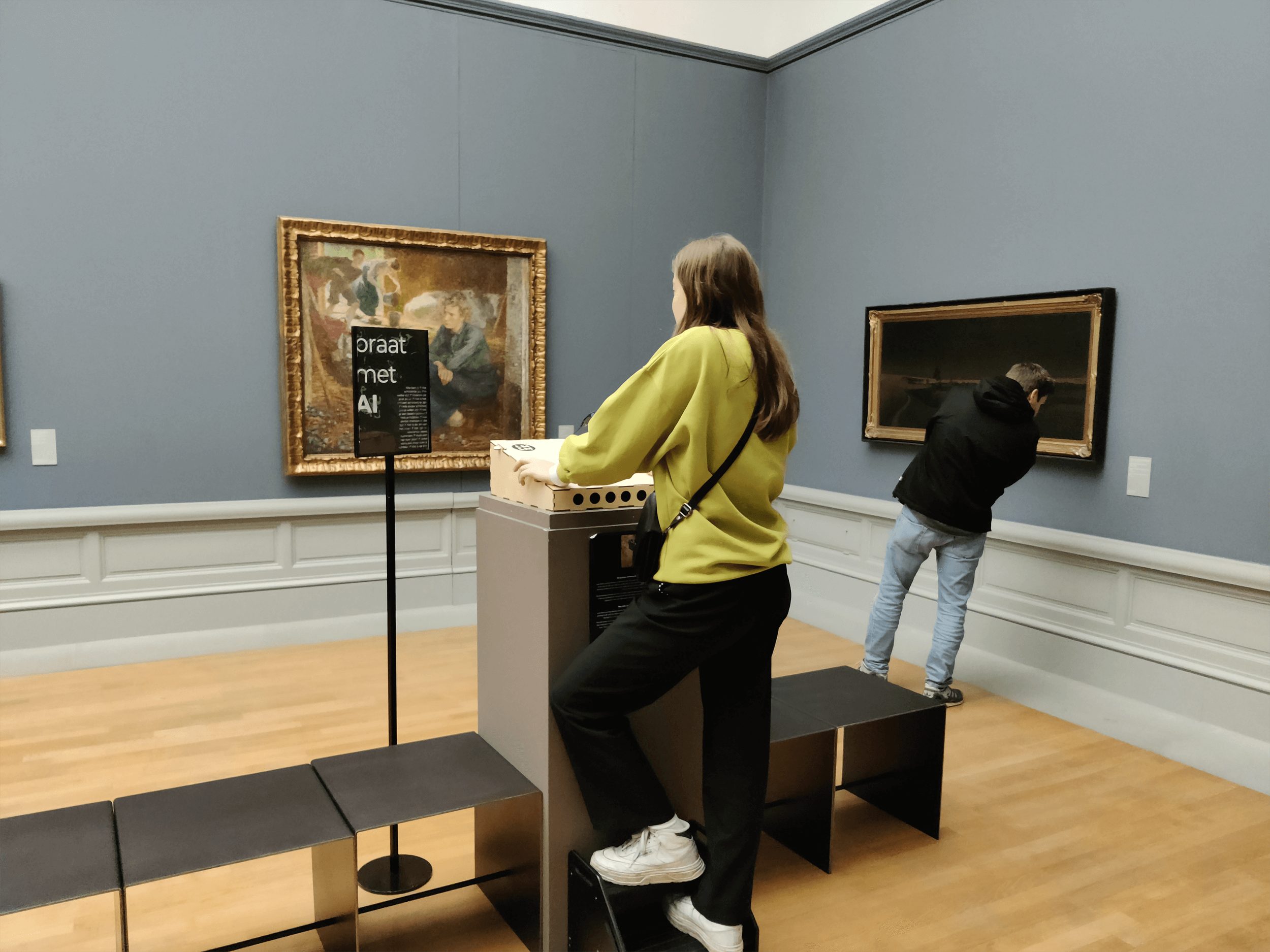
Hear a real conversation
Recorded on an early voice model. Voice quality today is considerably better, but the answers give a fair sense of what the painting can handle.
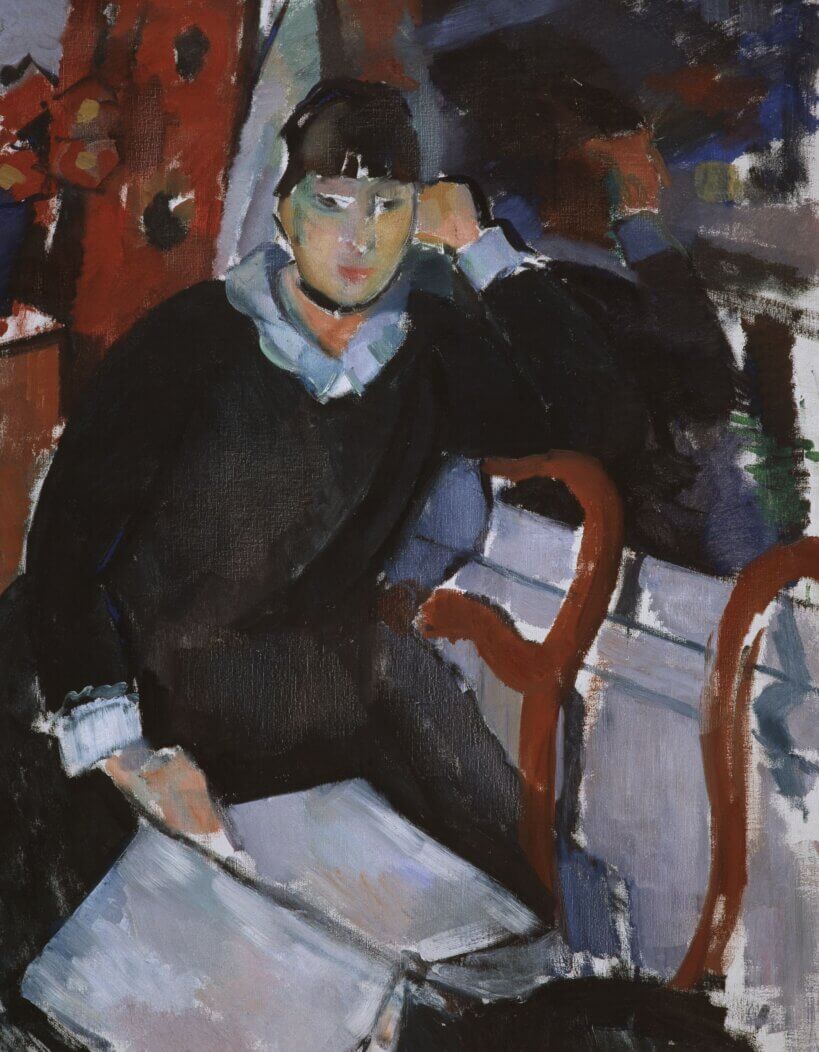
Nel Deurinckx by Rik Wouters
The first painting drew crowds, so MSK added a second voice.
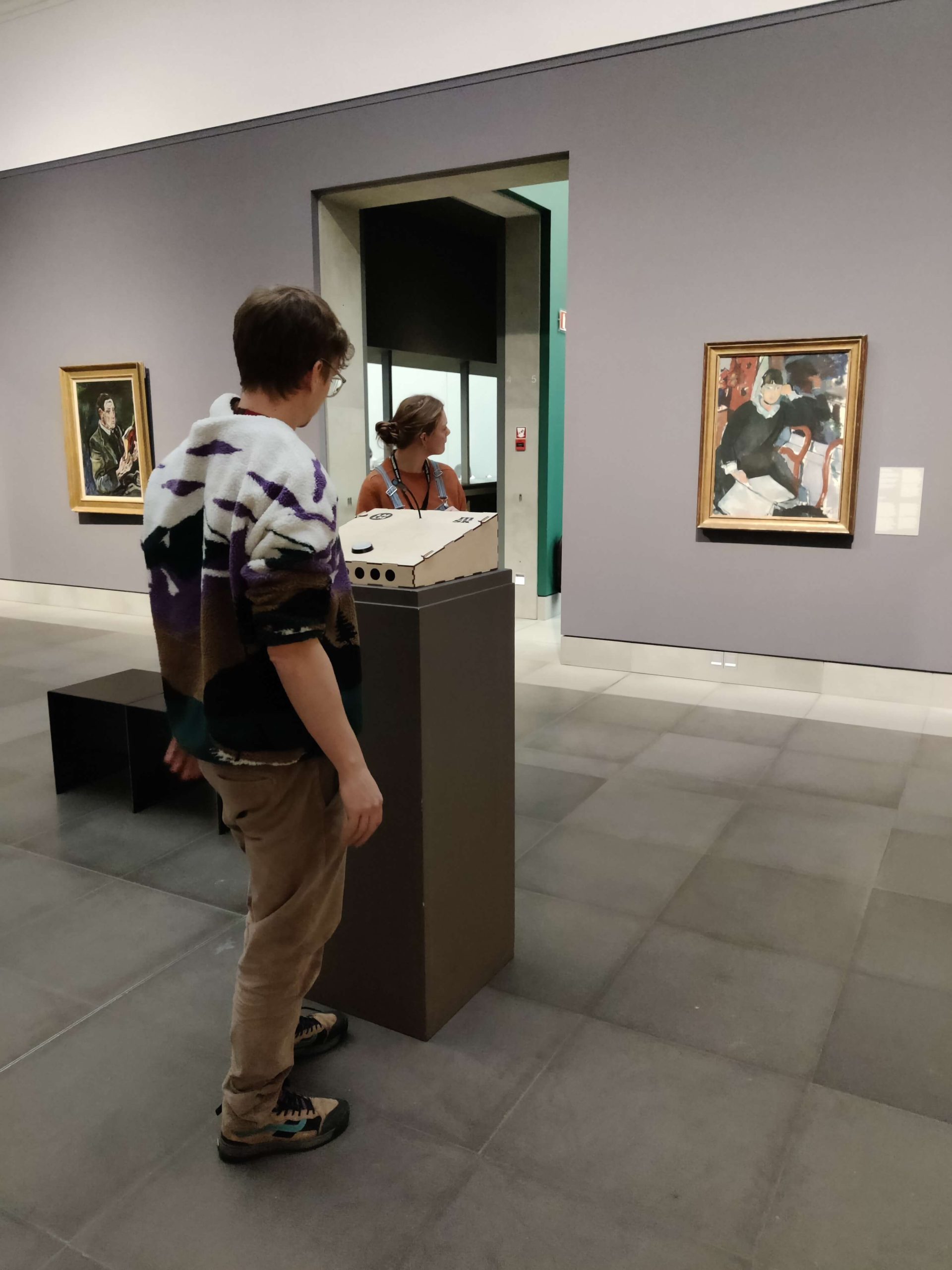
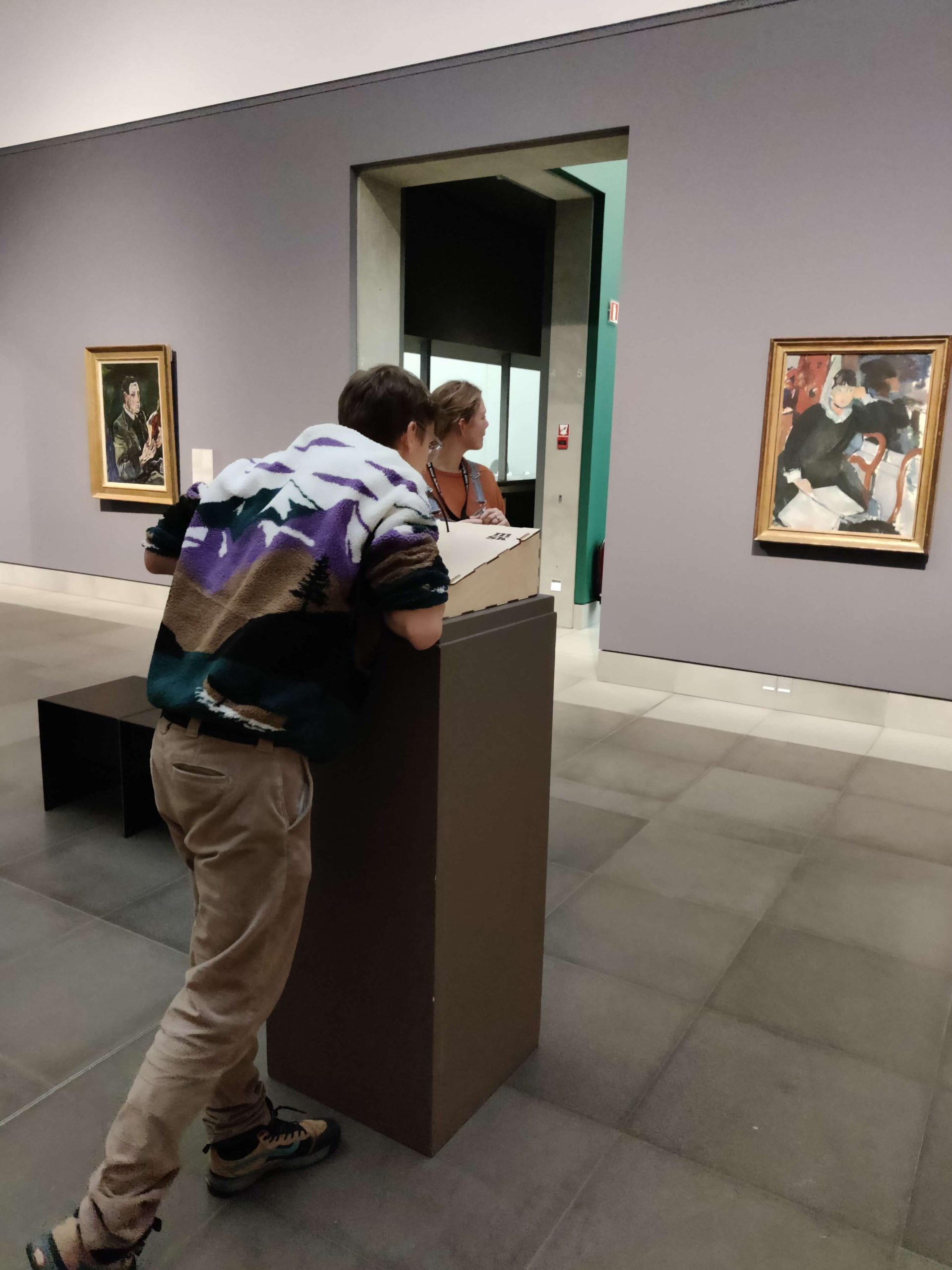
Hélène “Nel” Deurinckx was the wife and muse of the Belgian Fauvist painter Rik Wouters, the subject of dozens of his canvases. She answers in real time, and she is happy to talk about what it is like to be painted, over and over again, and sitting still and being stared at for god knows how many hours.
Hear a real conversation
Filmed during installation at the Museum of Fine Arts in Ghent. Every answer is generated on the spot.
Two national news items and a room full of teenagers
The museum expected a quiet experiment but the talking paintings got national coverage and a noticeably younger audience.
The installation on national news.
Getting young people to think about AI, in front of a painting.
What visitors said
Unscripted reactions, filmed in the gallery.
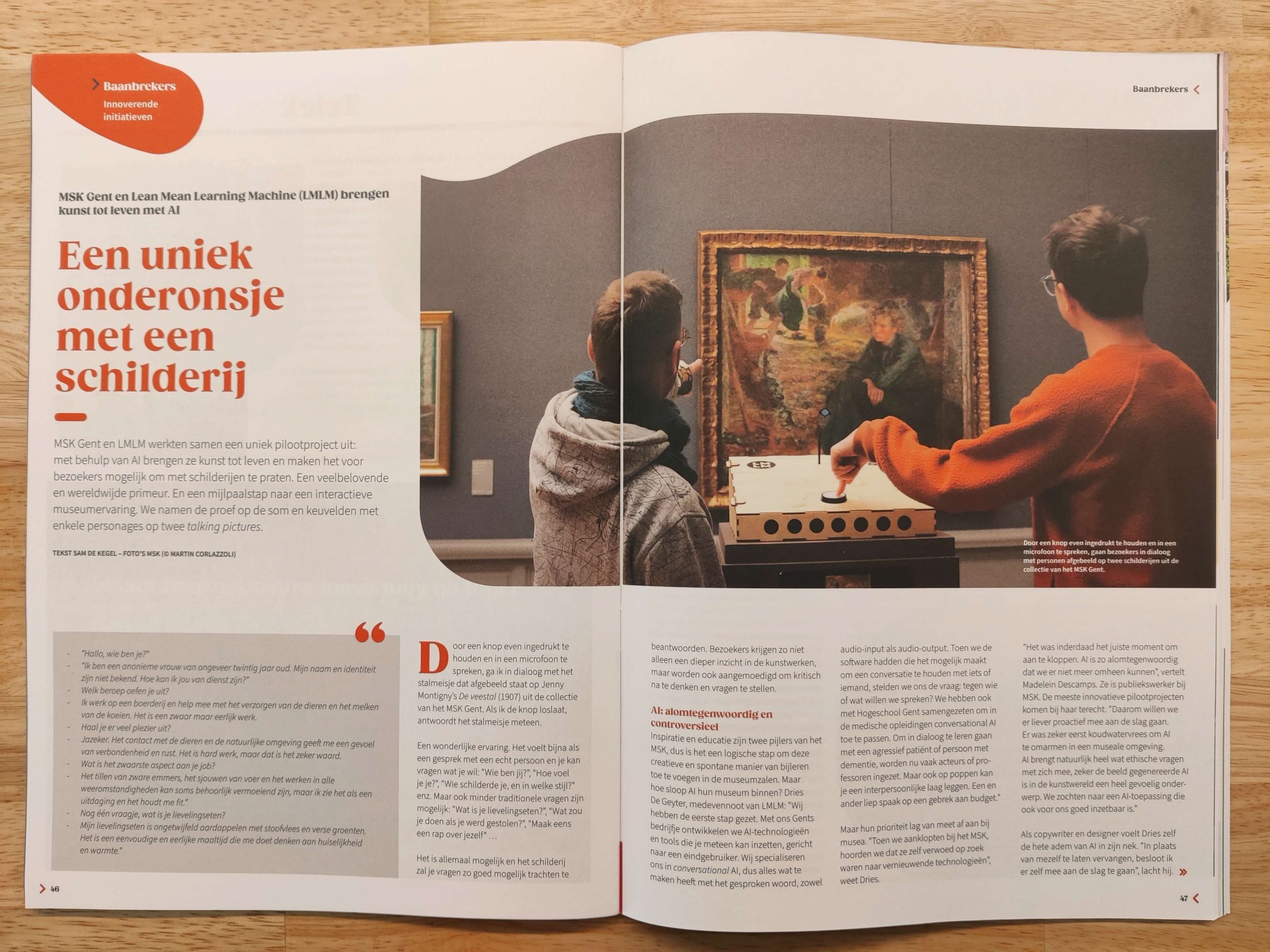
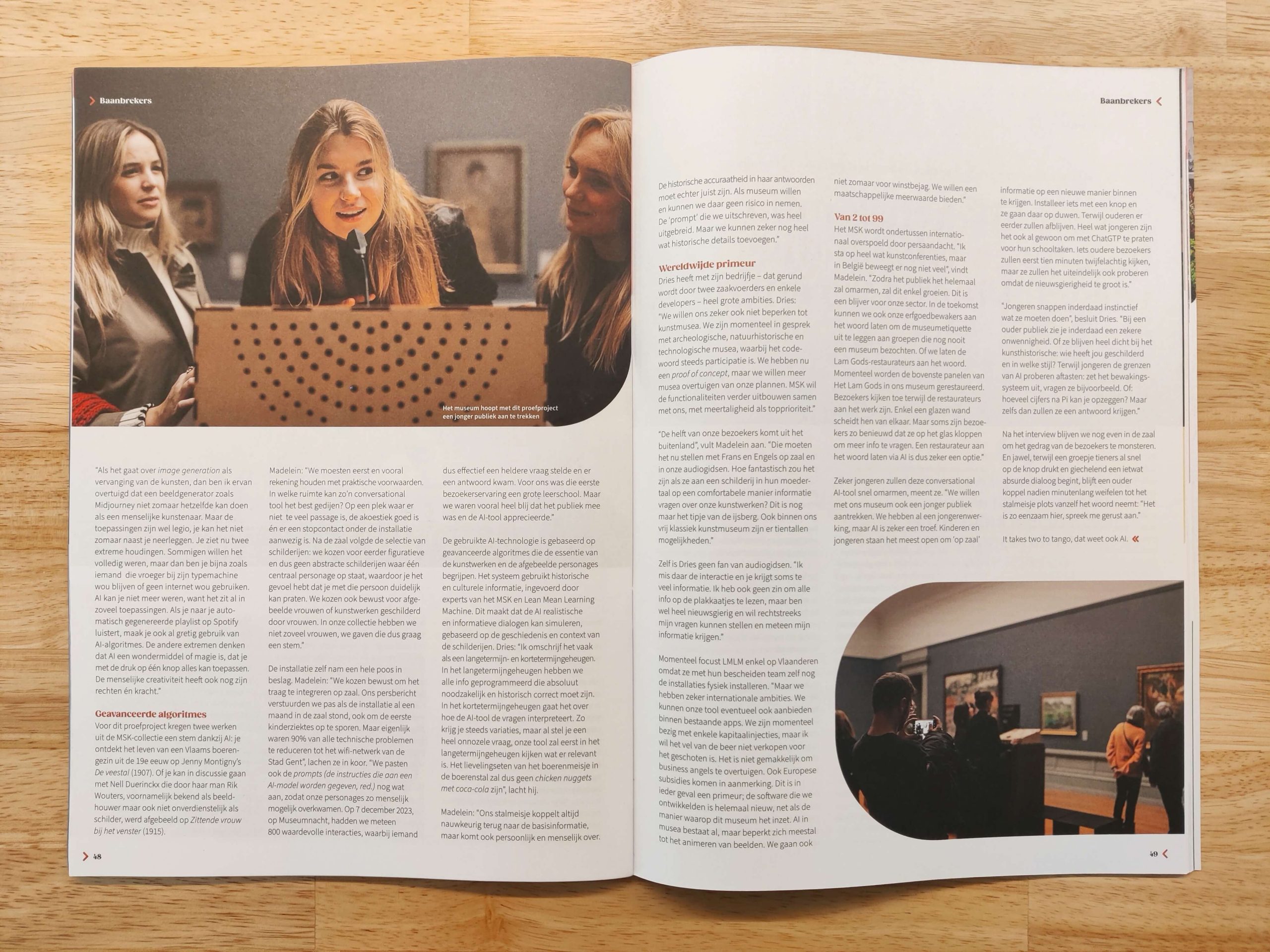
Click a page to read it full size.
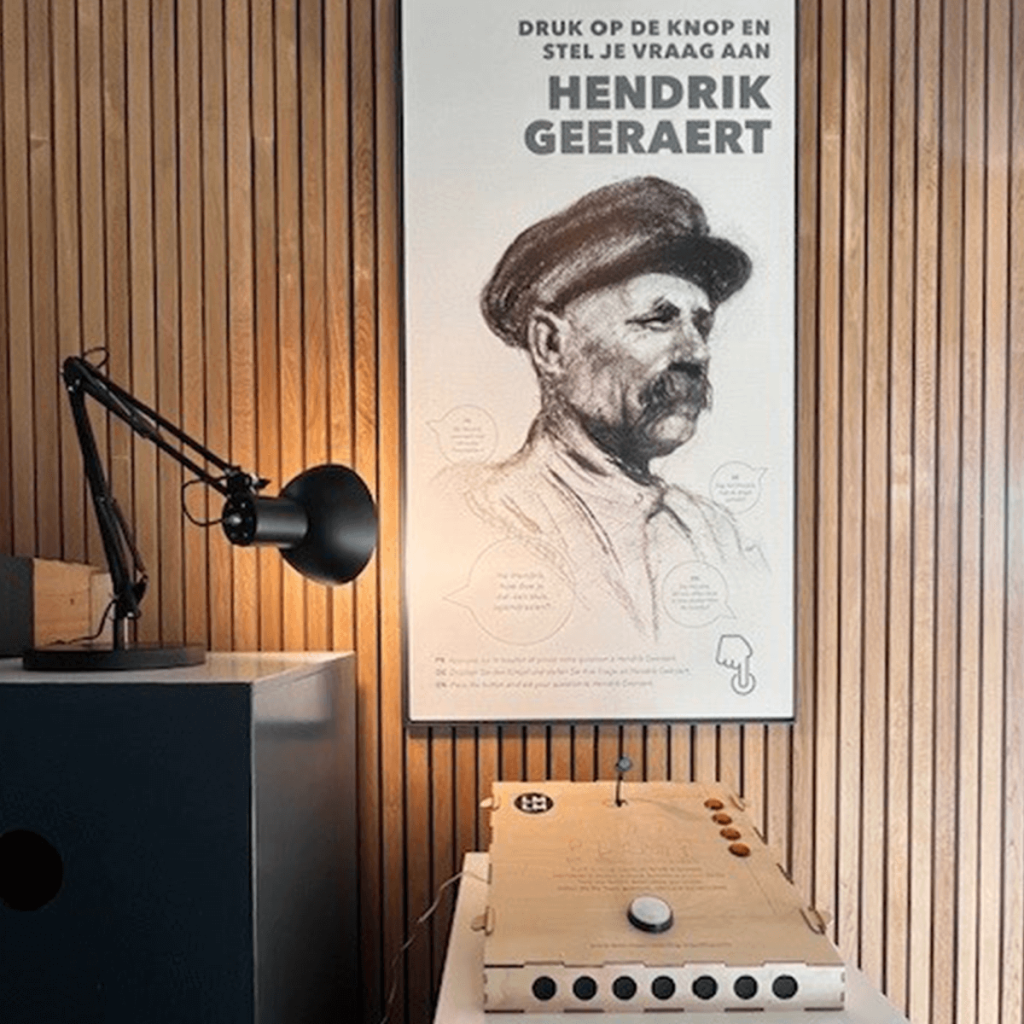
Hendrik Geeraert, the WWI hero who answers back at Westfront Nieuwpoort
Hendrik Geeraert opened the sluices at Nieuwpoort in 1914. At Westfront he now answers visitors' questions himself, grumpily, in four languages.
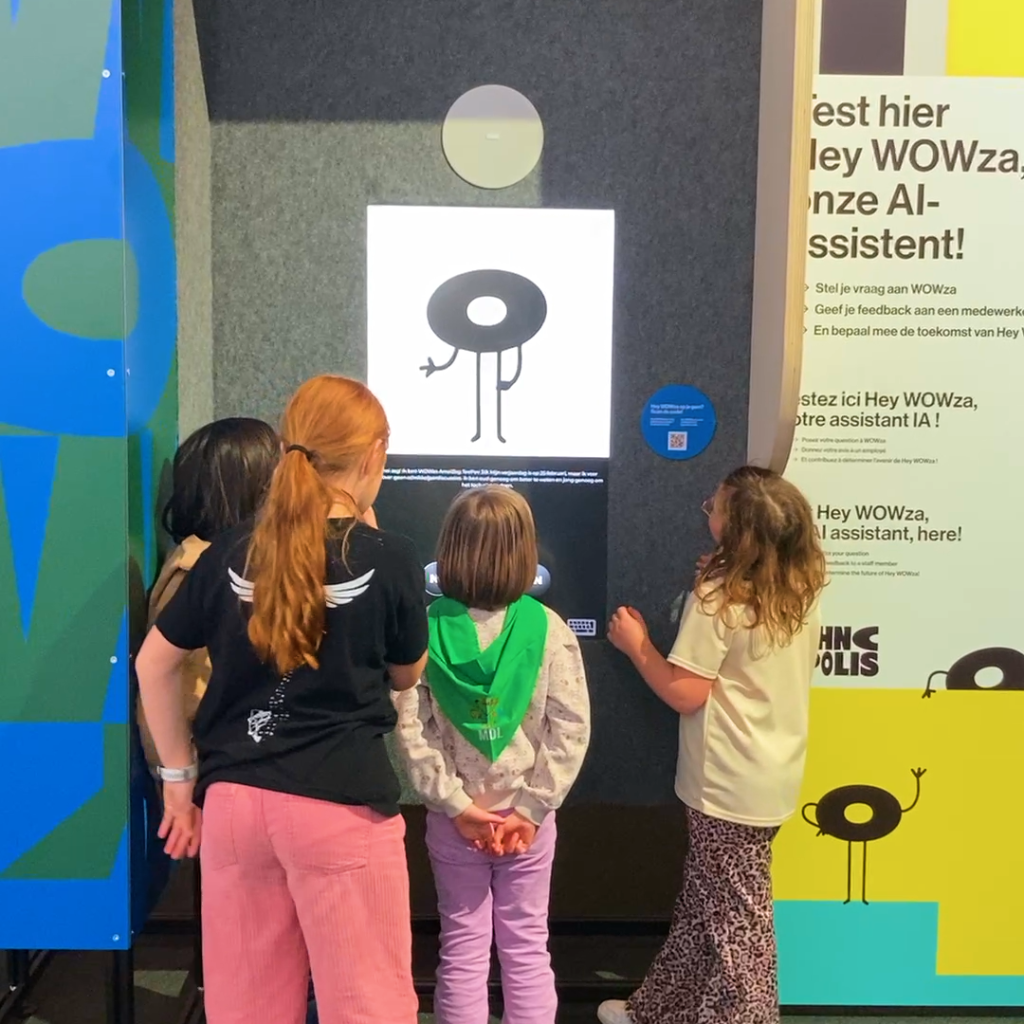
heyWowza, the Talking Point that greets every visitor at Technopolis
For nine days heyWowza answered anyone who pressed the button at Technopolis. 5,012 conversations later we know what visitors ask, and how…
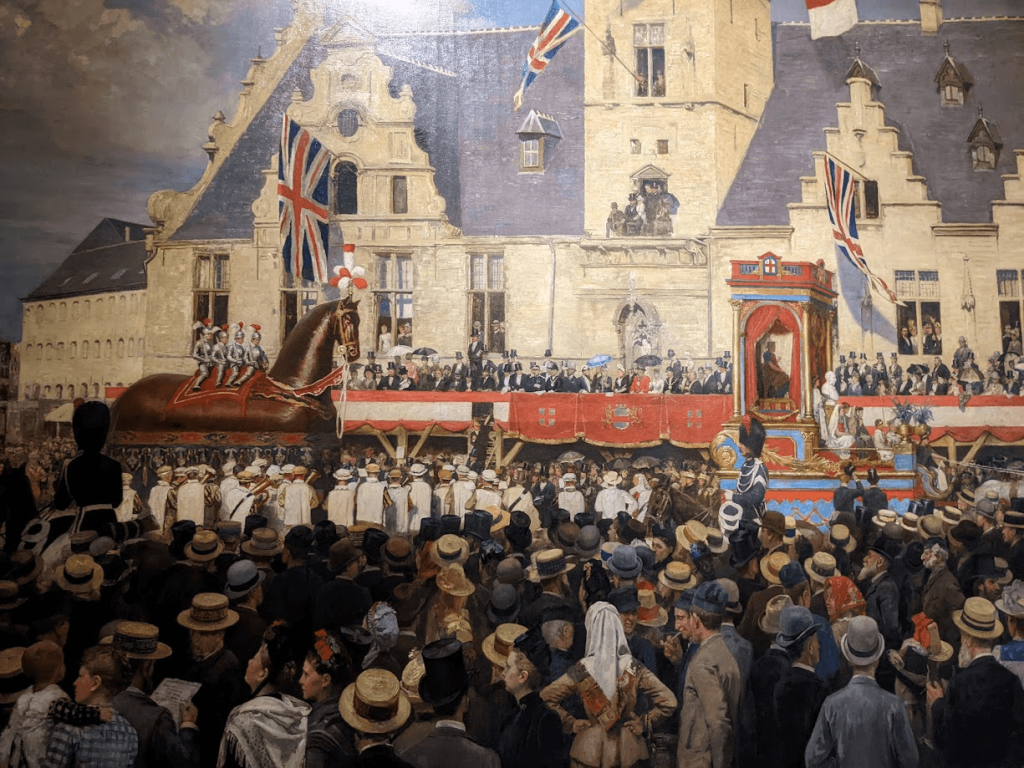
The Ros Bayard painting talks back in Dendermonde
A painting of the 1888 Ros Beiaard procession hangs in the town hall of Dendermonde. Since May 2025 it answers visitors' questions…