
Hendrik’s story, told by Hendrik himself
Westfront Nieuwpoort tells the story of the 1914 flooding through the man who made it happen.
Hendrik Geeraert (1863 to 1925) was a boatman by trade, later appointed lock keeper. In 1914 he helped open the sluices at Nieuwpoort, flooding the Yser plain and halting the German advance. It earned him several military decorations and a permanent place in Flemish history.
The visitor centre of the city of Nieuwpoort wanted more than a portrait and a label, so we gave Hendrik his voice back. A microphone, four language buttons, and his documented character: rebellious, grumpy yet humorous, refreshingly straightforward. Hold the button, ask him anything, and he answers as himself in one to two seconds. The whole thing runs on a small computer inside the console and has been on duty since March 2025.
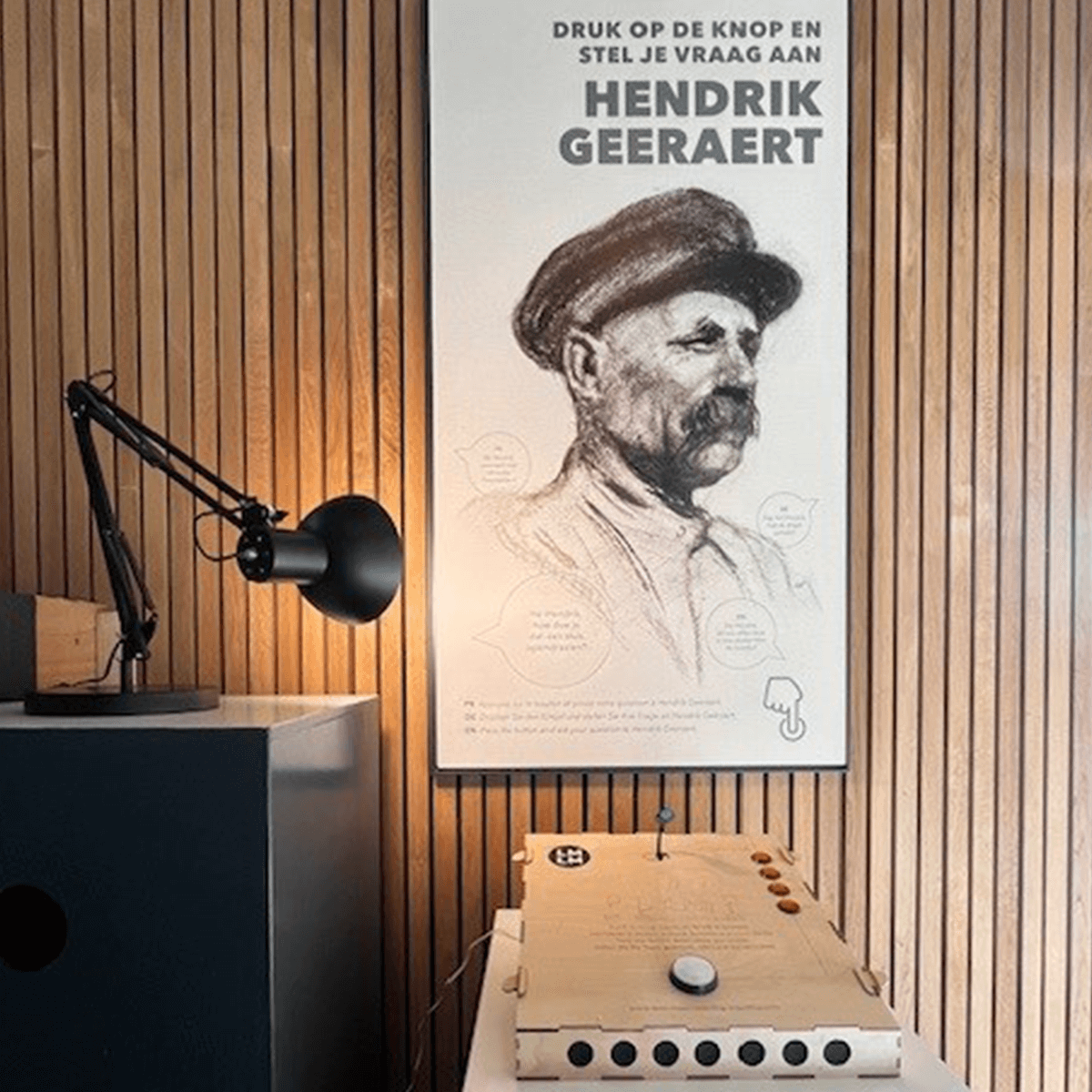
Press the button and put your question to Hendrik Geeraert. The wooden console is the whole installation.
Grumpy, funny and straight to the point
Hendrik was no polished statesman, and the installation does not pretend he was.
A boatman who knew the water, a lock keeper who used it, and a personality the sources agree on: rebellious, grumpy yet humorous. That character is exactly why the conversation works. Visitors are not talking to a museum, they are talking to a man with opinions. They do not just learn about history, they hear it from the person who lived it. Questions visitors put to him, straight from the exhibition floor:
- “What was the war like for you?”
- “Why did you become a hero?”
- “What did you eat during the war?”
- “Why do you wear your moustache like that?”
- “What do you think about the Germans?” (touchy subject)
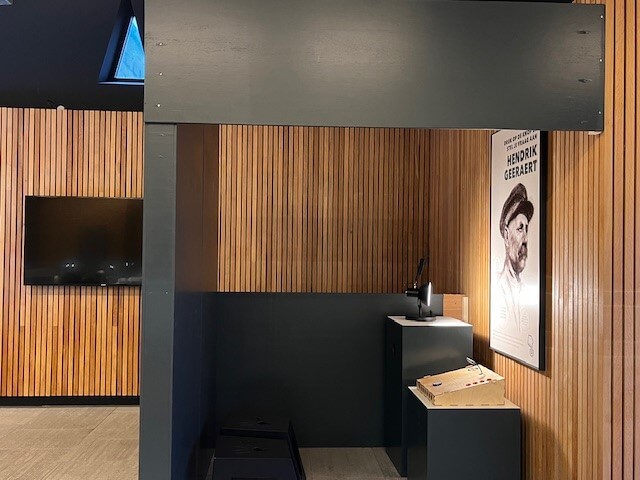
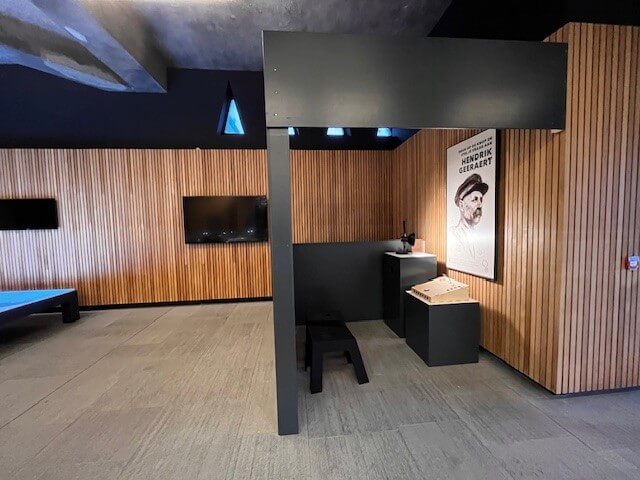
The Hendrik corner at Westfront Nieuwpoort, the visitor centre of the city of Nieuwpoort.
Two minutes with a war hero
This is what a conversation with Hendrik sounds like.
A conversation with a WWI hero
Recorded at Westfront Nieuwpoort. Every answer is generated on the spot, in character.

Talking with history beats reading about it
The museum feared silly questions and got serious ones instead.
Young and old join in
Hendrik lowers the threshold. Children and grandparents both end up in a real conversation with a historical figure, and a story from long ago suddenly feels concrete and close.
People take it seriously
Westfront expected a stream of joke questions. That is not what happened: most visitors take the chance seriously and ask Hendrik real ones.
Always in character
Hendrik answers as the rebellious lock keeper he was, not as a search engine. Ask him something outside his world and he responds as a man of 1914 would.
Four languages
English, Dutch, French and German, so international visitors on the coast get the same conversation as locals.
Mieke Dobbels, Curator and Project Manager Westfront, City of Nieuwpoort.
And in 2025 Westfront came back for a second job: Toeba, a little audio dog written by the museum and recorded in Dutch by Johannes Verschaeve. From 23 minutes of Dutch recording we cloned his voice with AI and produced the French, German and English versions. The first project earned the second one.
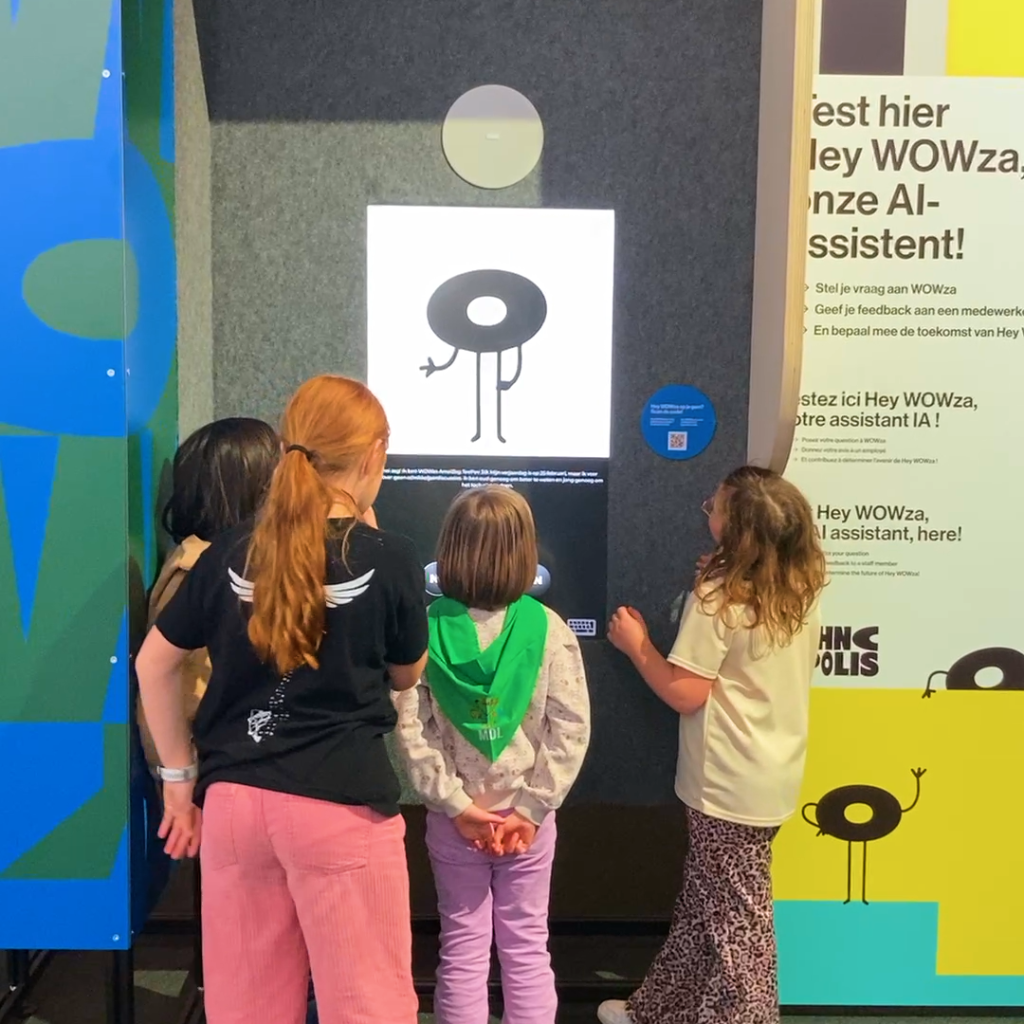
heyWowza, the Talking Point that greets every visitor at Technopolis
For nine days heyWowza answered anyone who pressed the button at Technopolis. 5,012 conversations later we know what visitors ask, and how…
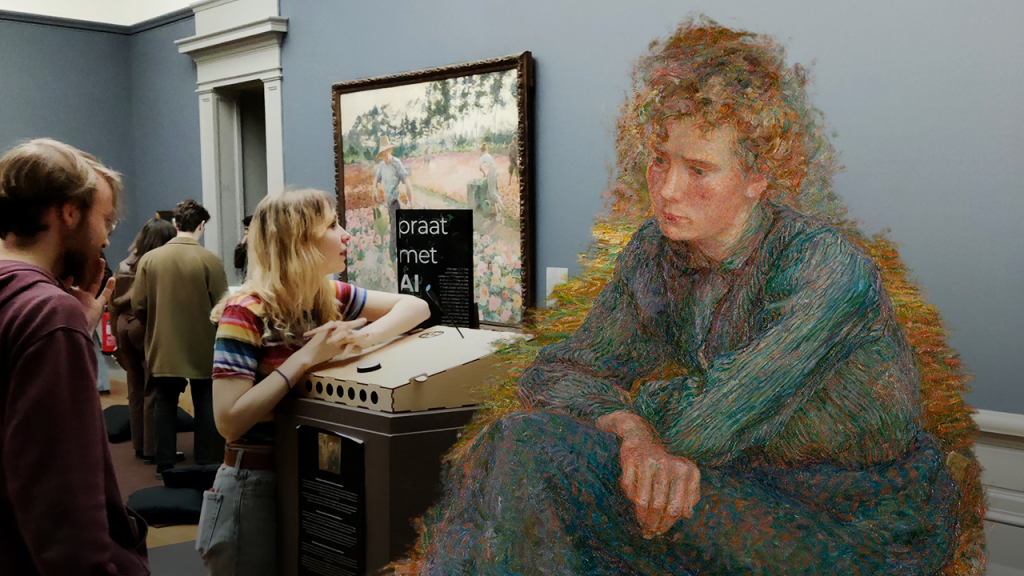
Talking Paintings at MSK Ghent
Two paintings at the Museum of Fine Arts Ghent (MSK) answer visitor questions out loud. Here is how the installation works and…
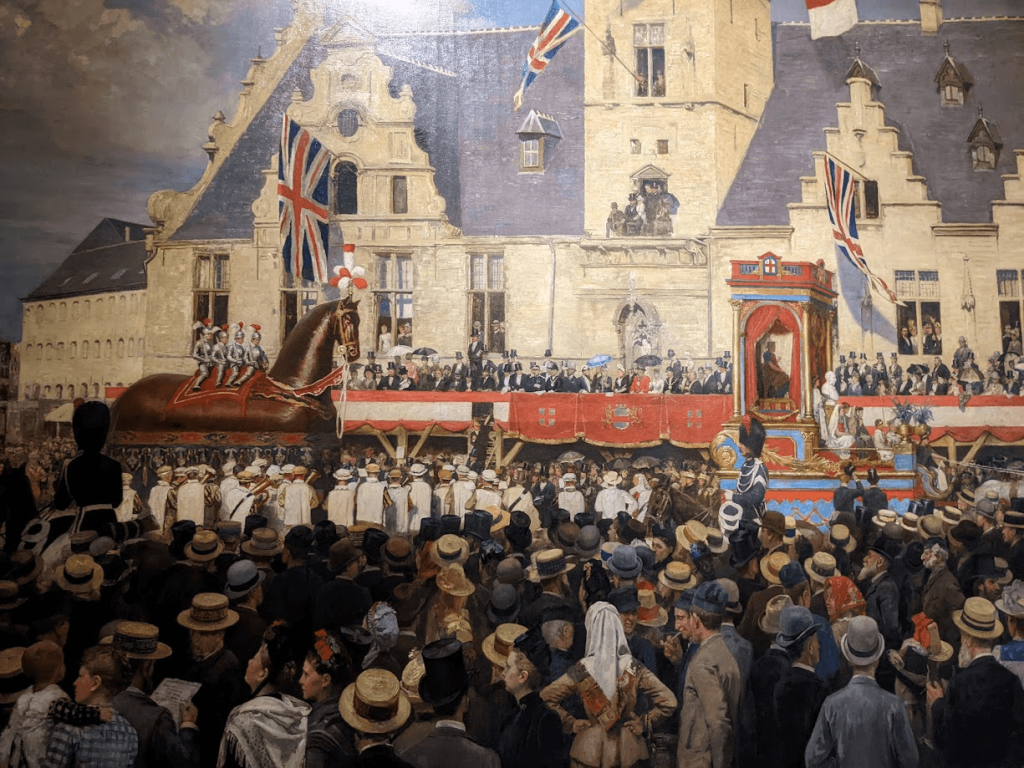
The Ros Bayard painting talks back in Dendermonde
A painting of the 1888 Ros Beiaard procession hangs in the town hall of Dendermonde. Since May 2025 it answers visitors' questions…