Portfolio · In Flanders Fields Museum, Ypres

An AI interviews visitors at the In Flanders Fields Museum

The IFFM is designing an entirely new permanent exhibition. To learn what works in the museum today, an AI interviewer asked departing visitors, in their own words, what stayed with them so the museum could read, filter and act on every answer.

1,840Interviews started
95%Categorised correctly
7Questions per interview
74%views change after visit


Planning something like this for your venue? Tell us about it.

The brief

What should they keep?

The museum is designing an entirely new permanent exhibition, and needed input.

The In Flanders Fields Museum in Ypres tells the story of the First World War in the region where it was fought. Right now it is preparing its biggest change in years: an entirely new permanent exhibition. Before you rebuild a museum, you want to know what works and what does not in the one you have. A five star rating cannot tell you that, you want to know what your visitors felt and what stays with them after their visit, what made the biggest impact.

So the museum and Westtoer’s knowledge centre put an AI interviewer near the exit, from early 2025 to October 2025. Visitors had a natural conversation that listens, asks a follow-up that fits the answer, and takes stories instead of scores. Every response was categorised automatically, 95% of them correctly, into a dashboard the museum could filter.
New exhibition in the making Natural conversation Follow-up questions Live dashboard
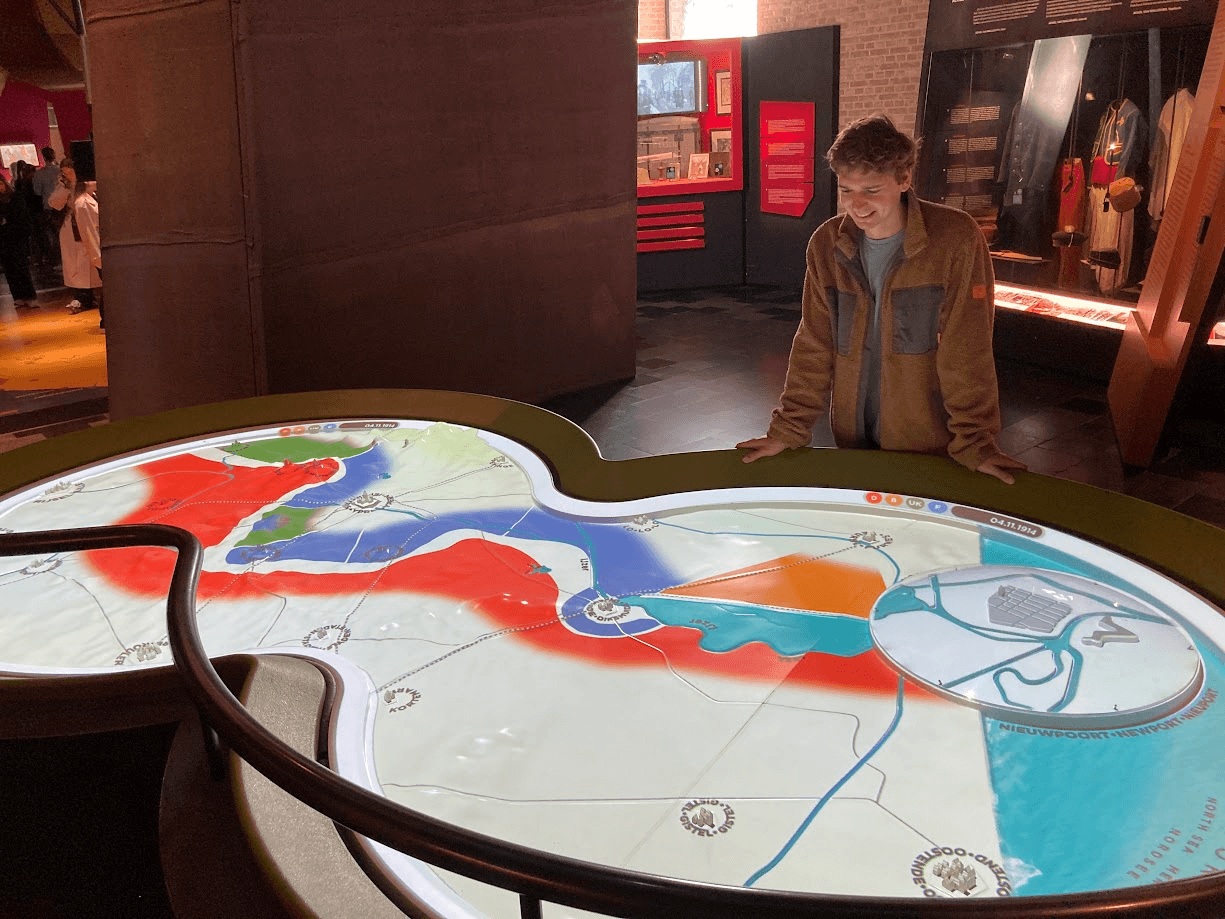
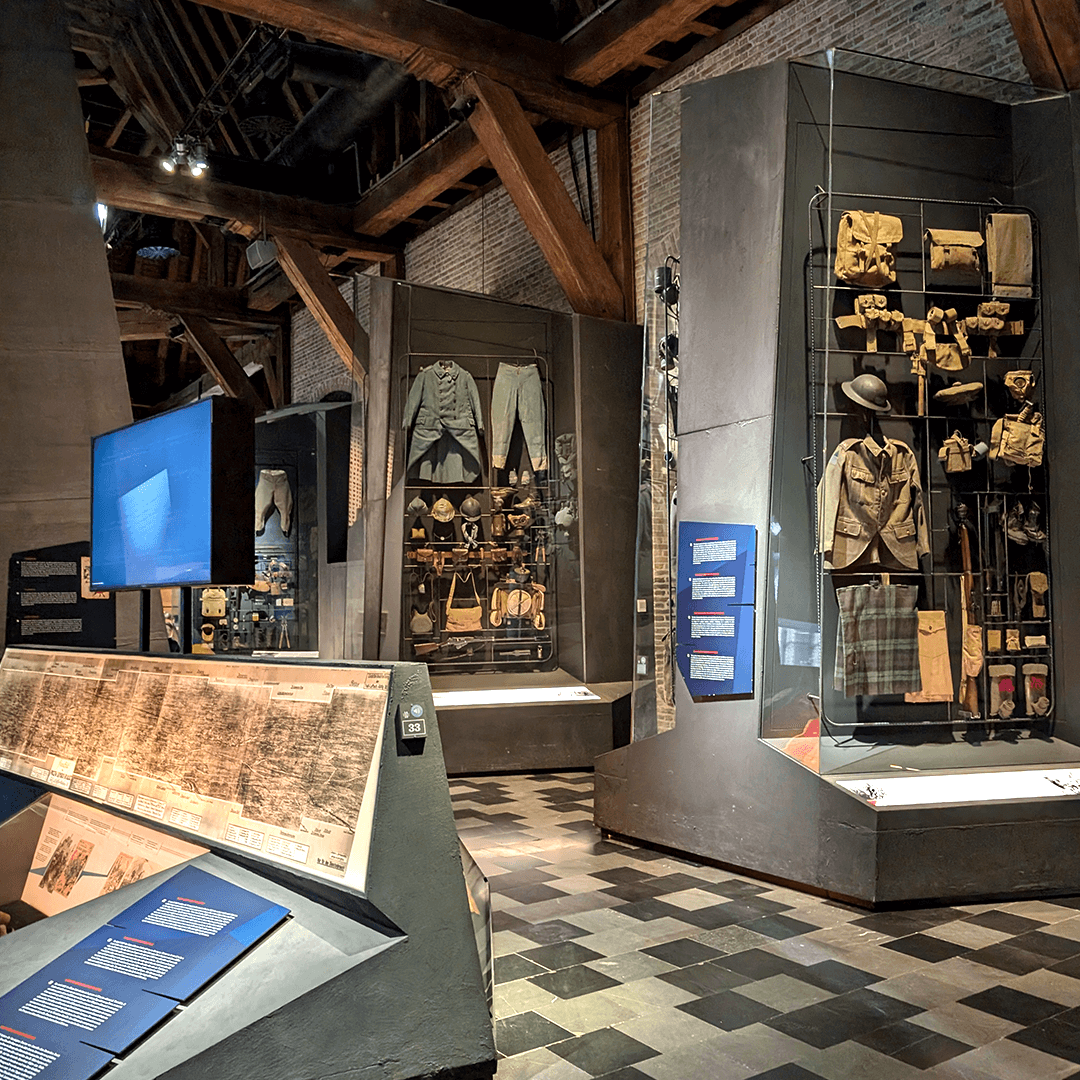
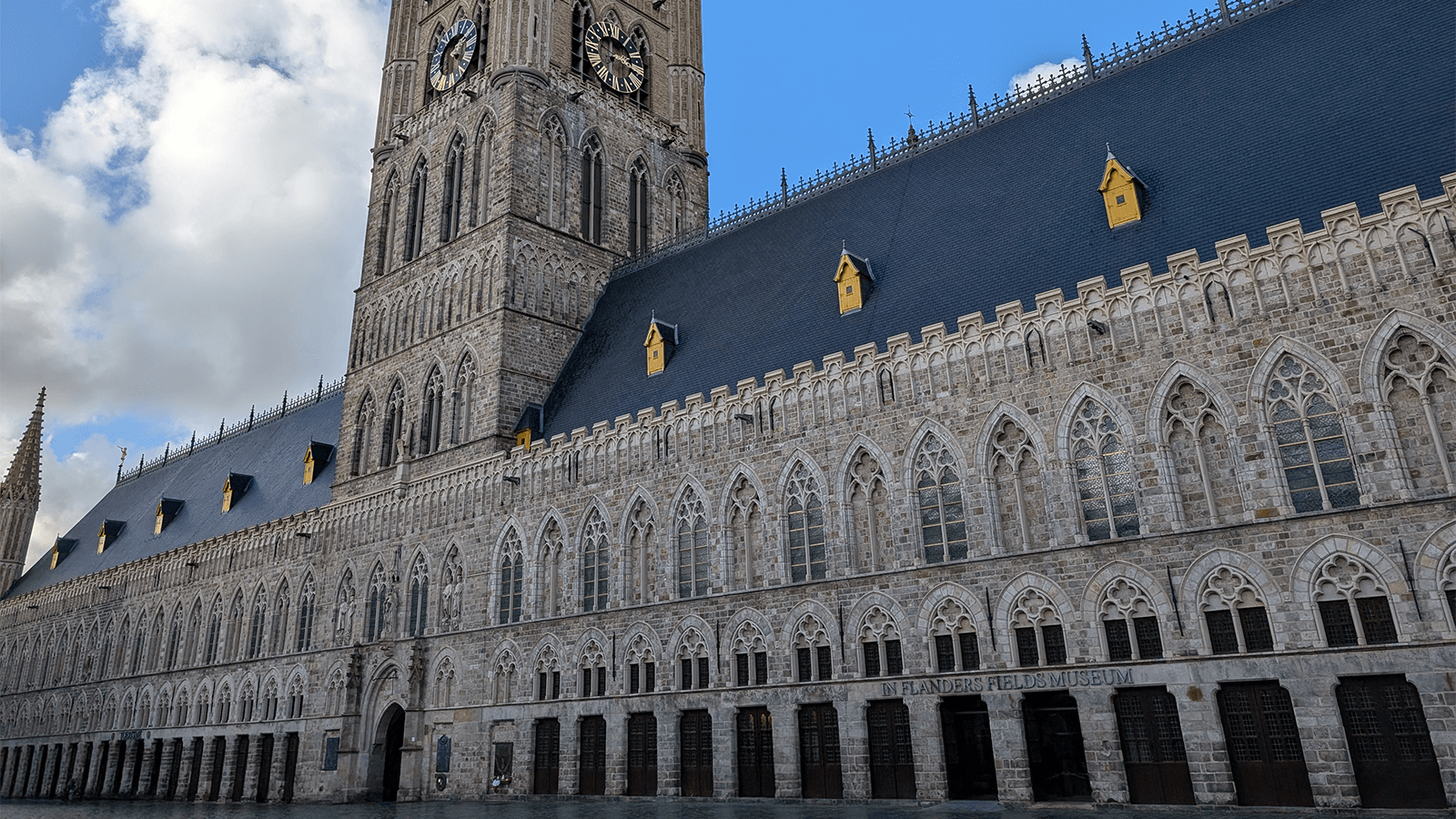
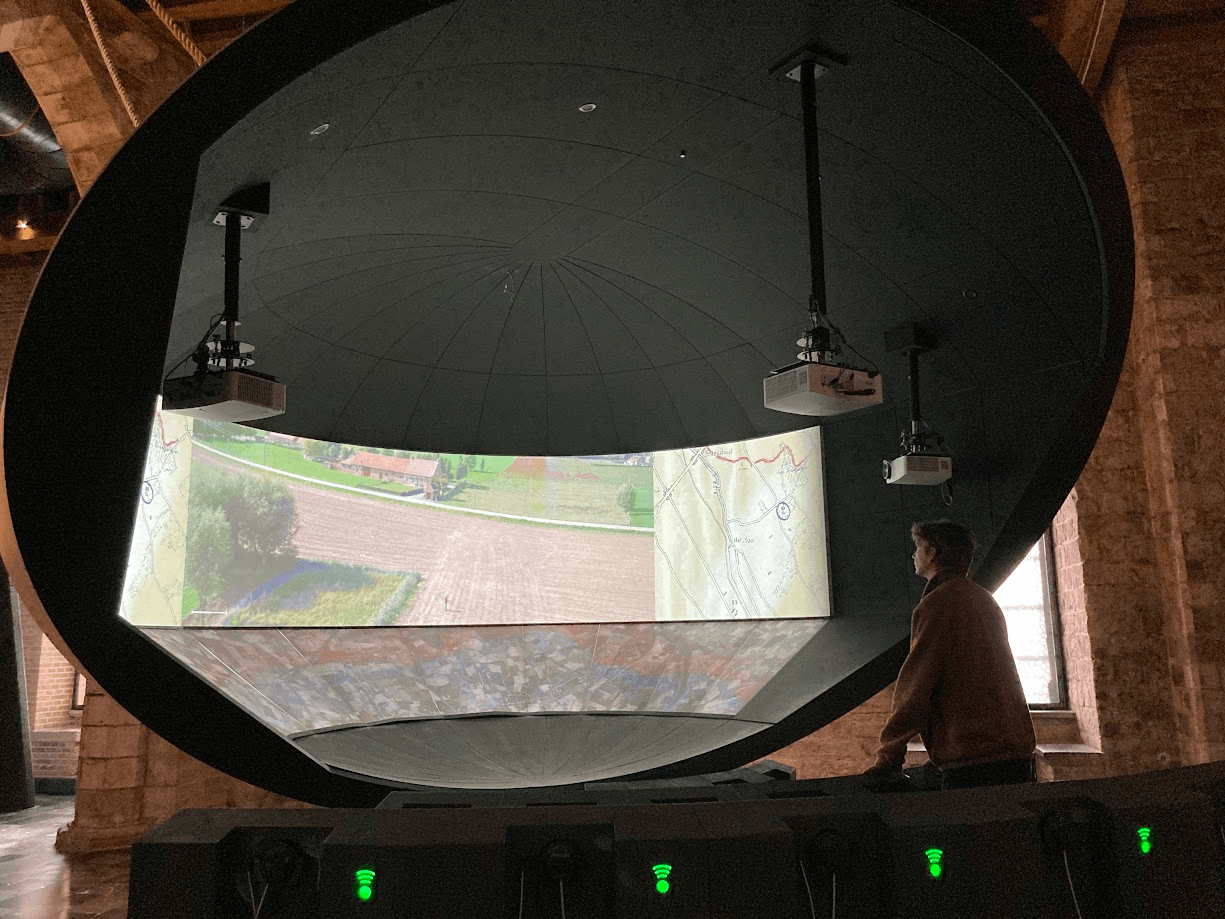
The Cloth Hall in Ypres that houses the In Flanders Fields Museum The large video dome inside the In Flanders Fields Museum, projecting footage above visitors A visitor studying a wall sized military map inside the In Flanders Fields Museum First World War soldier uniforms in tall lit display cases at the In Flanders Fields Museum

The Cloth Hall in Ypres and the museum inside. Only things that make an impact will be kept.

Seven questions

Seven questions, written with experts

What do you ask? We put our heads together with the IFFM and Westtoer to get this crucial step right, because every answer feeds the plans for the new exhibition.

  • Which item in the museum made the biggest impression on you, and why?
  • Whose story, for example of a soldier, nurse, refugee or poet, did you find most special, and why?
  • Did the visit change your view on wars today?
  • What would you like to see added to the museum?
  • Who did you visit the museum with?
  • Did the museum meet your expectations?
  • What could improve your visit?

Try the trick yourself. “Which item in the museum made the biggest impression on you?” Pick the answer you would give, and watch the follow-up fit it.

The interviewer follows up with

“What was it about the gas masks that stayed with you?”

The interviewer follows up with

“What exactly stood out to you about the uniform?”

The interviewer follows up with

“What made her story special to you?”

The interviewer follows up with

“That is a fair answer. Was there a moment during your visit that surprised you, even a little?”

A form would have moved on to question two. The AI interviewer digs deeper.

See it work

Watch a visitor being interviewed

A real time interview at the In Flanders Fields Museum, recorded on site.

1,410
interviews conducted in total
The transcripts

What visitors actually said

Every interview is a small story with its own title. These two are verbatim.

Personal stories

AI: Interesting! And which story did you find most special, and why?

Visitor: The story of the nurses and doctors helping the wounded in the war

AI: What did you find special about the story of the doctors and nurses?

Visitor: They’re often overlooked and forgotten in a war story, It’s nice to hear personal stories it makes it more personal and real.

AI: Is this something you often find more interesting, those personal stories?


A Soldier’s Uniform

Visitor: The costumes of the soldiers.

AI: Interesting! What exactly stood out to you about those costumes?

Visitor: That a person once wore them. They suddenly make the war so real.

AI: That’s indeed a powerful thought.
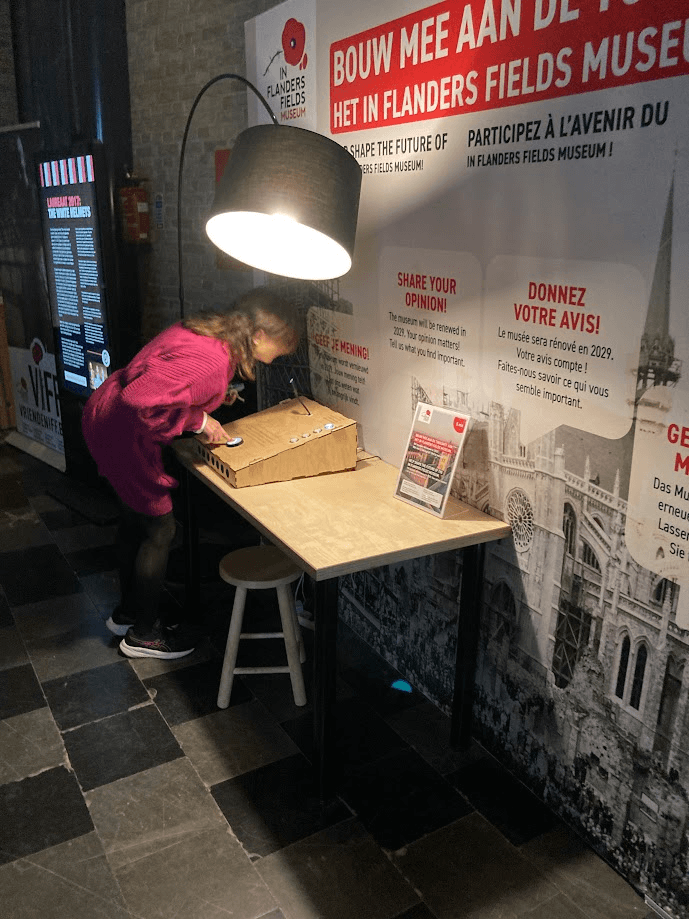

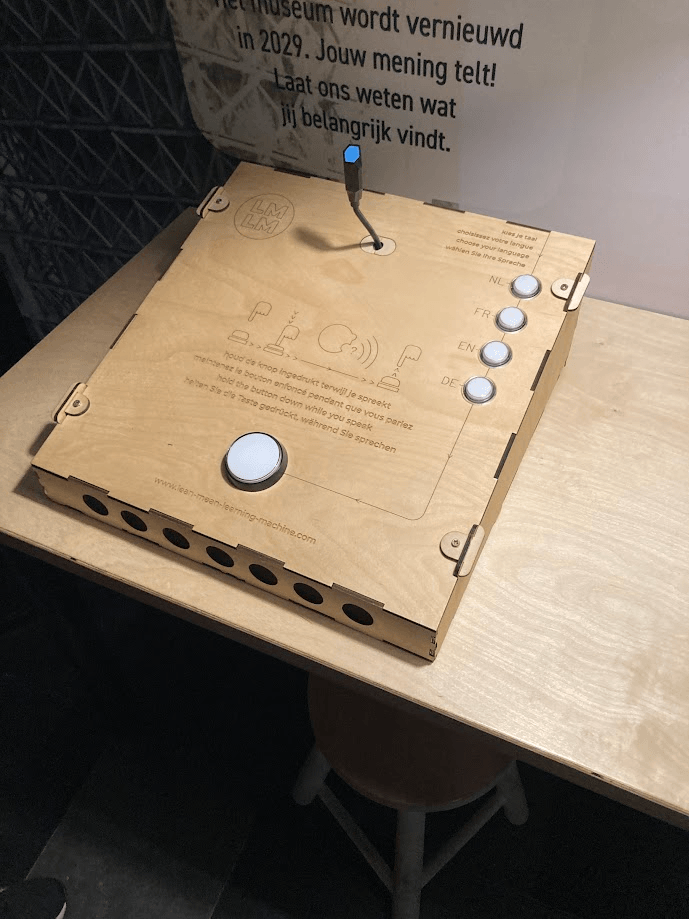
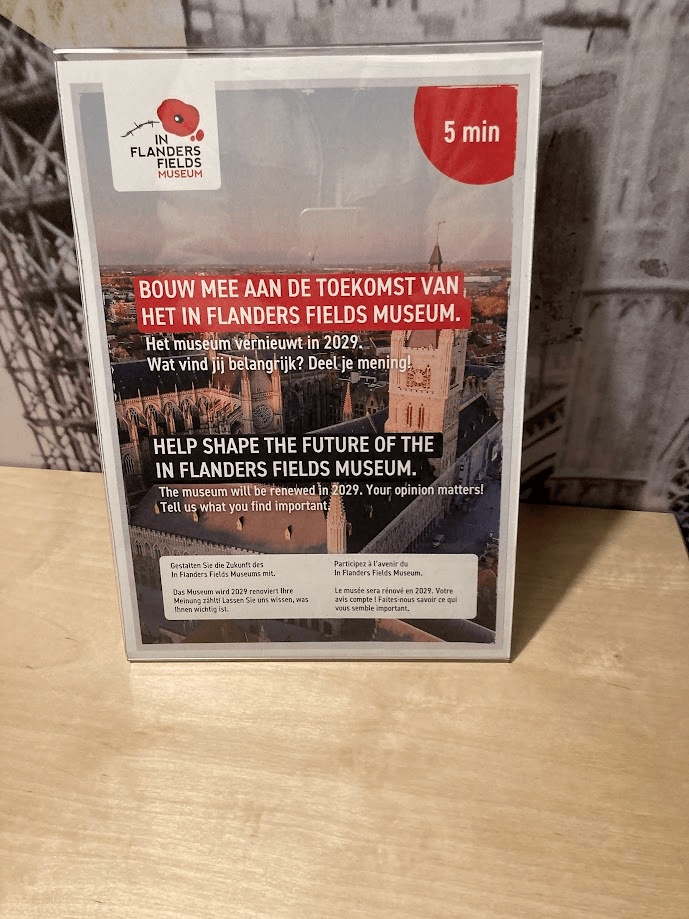
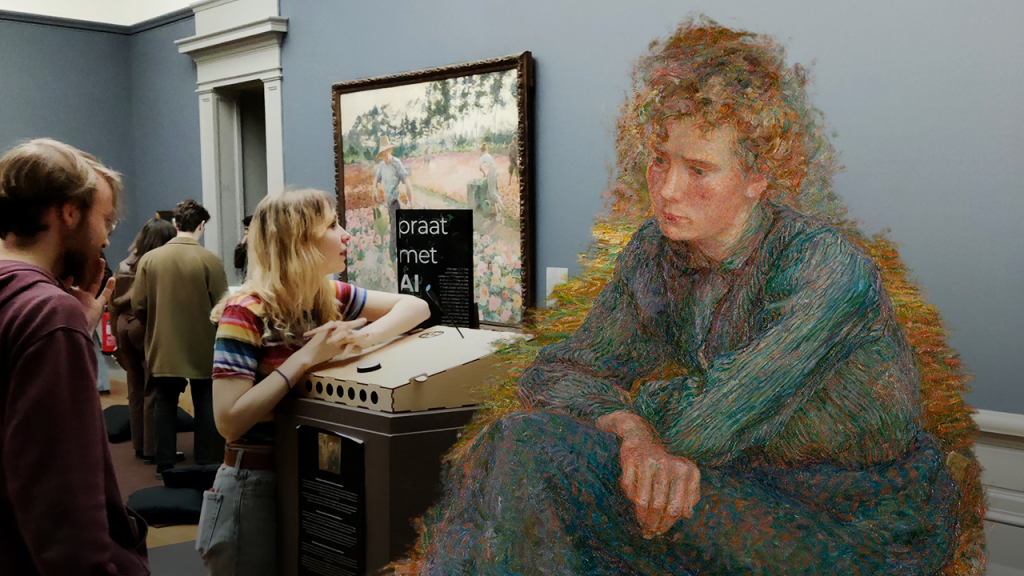
A visitor being interviewed at the AI interview console at the In Flanders Fields Museum The AI interview console in full view on its table at the In Flanders Fields Museum The explanatory sign next to the AI interview console at the In Flanders Fields Museum

An interview in progress, the console up close, and the sign that invites you to sit down.

How it works

Three steps, no clipboard

Two chairs and a console near the exit. That is the whole setup.

Step 1

Sit down after the visit

Two chairs by the exit, a console on the table. No app, no QR code, no form on a tablet.

Step 2

Answer and get a follow-up

The interviewer asks a question out loud, listens, and follows up on what you actually said.

Step 3

The museum filters the dashboard

Every answer is categorised, 95% of them correctly, into a dashboard the museum staff can filter.
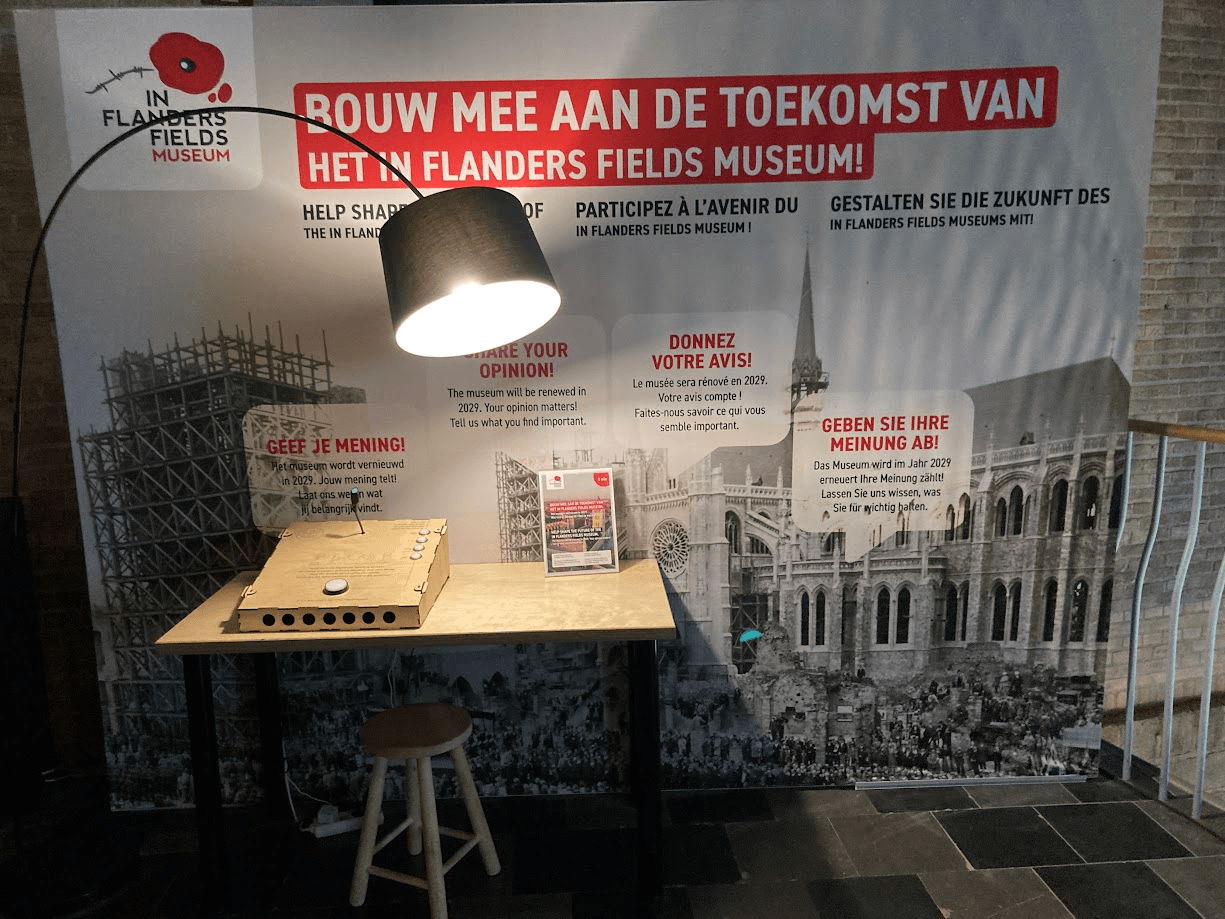
The full interview setup at the In Flanders Fields Museum: the console on its table with the banner and seat near the exit The full interview setup at the In Flanders Fields Museum: the console on its table with the banner and seat near the exit

The whole setup: a console, a banner and a seat. Nothing to install, nothing to explain.

Why it works

Open questions find what closed ones miss

A closed question can only confirm what you expected to hear. An open one tells you something new.

Stories instead of scores

Visitors name the item, the story and the reason it moved them. An open question with a real follow-up reveals what no rating scale or checkbox ever would.

Questions sharpened with experts

The seven questions were decided on together with Westtoer and the museum before a single visitor sat down.

A safe context

AI applied together with experts, in a setting the museum controlled. Interviews are anonymous, and the tone of the interviewer fits the setting.

Evidence for the new exhibition

A filterable dashboard, an automatically generated summary of the qualitative analysis, and raw exports for the researchers. What works today flows straight into the plans for the new permanent exhibition, next to the curators’ own vision.
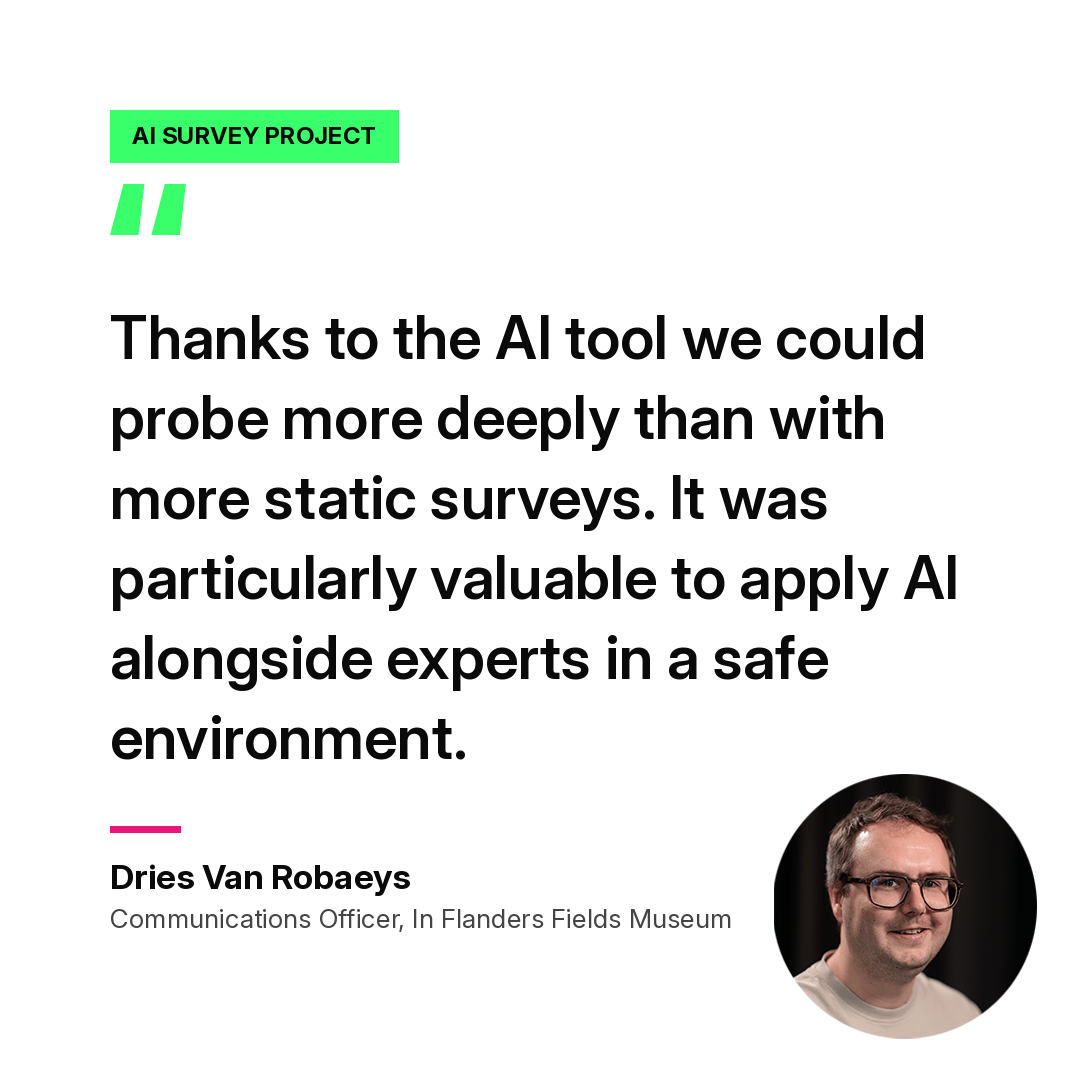
Review: the AI went deeper than static surveys. Dries Van Robaeys, In Flanders Fields Museum

Dries Van Robaeys, communication officer at the In Flanders Fields Museum, on the project.
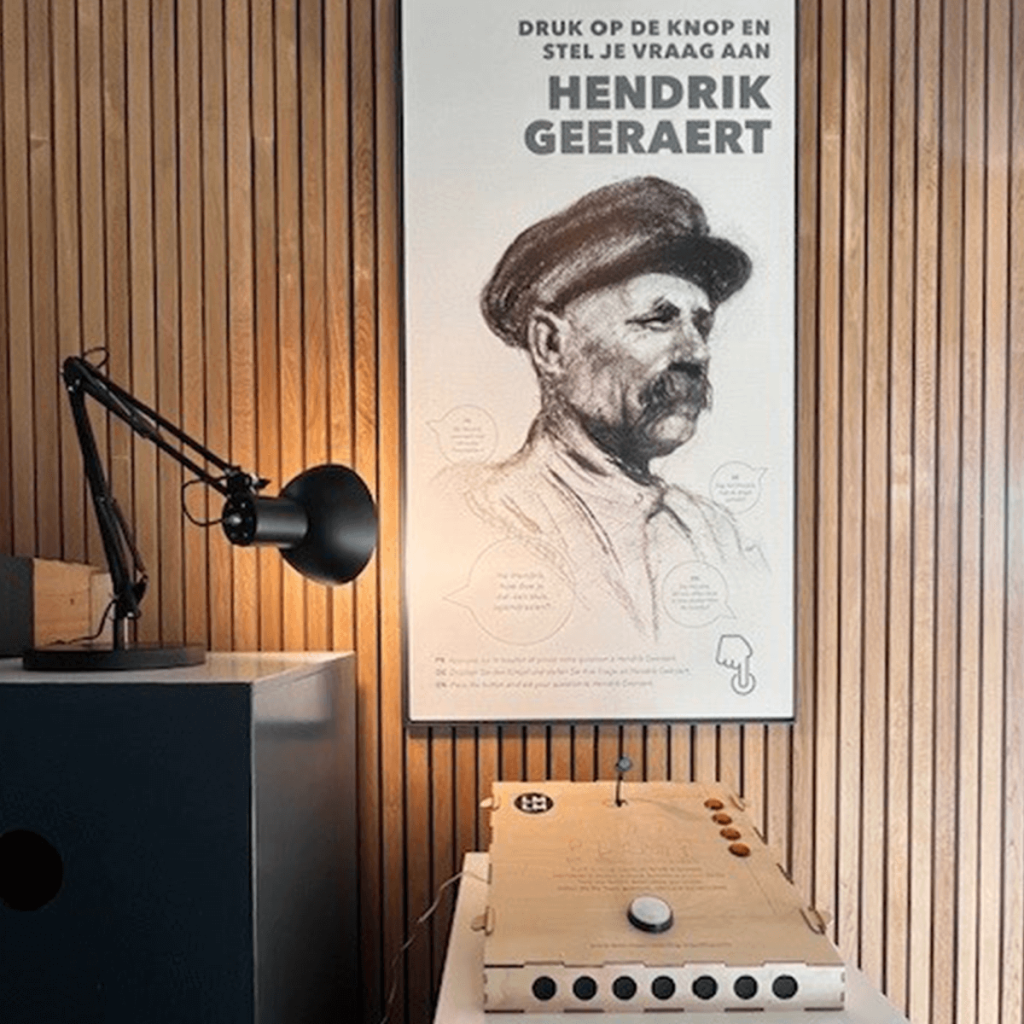
The report

968 interviews, one filterable report

One filterable report, built from 968 interviews that passed the quality filter. Download the real thing below.

74%

of visitors say the visit changed their view on war

  • What hits hardest: the films and the original weapons top the object list, and the personal stories (medical care, civilians, soldiers) carry the museum.
  • What visitors want more of: soldier stories, daily life at the front and the postwar aftermath lead the wish list. Input the new exhibition can build on.
  • What to improve: the number one request, by far, is more interactivity. 85% say the museum met their expectations, with an average rating of 8.3.
  • Who was talking: over half families and one in five school groups, in Dutch, English, French and German.

The exact report the museum works with, exported to PDF.

Questions we get

What museums with hard subjects ask us first

Is an AI interviewer respectful enough for a war museum?

That worry is exactly why the questions were written with the museum and Westtoer before launch, ensuring a respectful and appropriate tone of voice.

Are the interviews anonymous?

Yes. The interviewer records answers, not identities. What reaches the dashboard is what was said, categorised, with no name attached.

Who owns the data?

The museum does. It gets the filterable dashboard, an automatically generated summary of the qualitative analysis, and raw exports for its researchers.

Would this work in our museum?

If your visitors leave with something to say, yes. Read about our other cases, or estimate the payback with our ROI calculator.

More talking installations

The same idea at other venues

The same appetite for real conversations, in very different venues.

Want to know what stays with your visitors?

Tell us which question you would ask them first. We will tell you honestly whether an AI should be the one asking it.