
We gave the two soldiers of Velzeke a voice
The Archeocentrum Velzeke sits on one of the oldest Roman settlements in Flanders.
In the Velzeke Gallo-Roman archeological center, history comes alive. The center already had several life like dolls in their collection, the perfect candidates to infuse with ‘conversational AI’. Now, visitors who walk past are drawn to a button and microphone. And who can resist pressing some random button?! Nobody!
The archeo center has received many positive reviews of visitors. From schoolchildren asking funny questions, to experts testing the knowledge limits of the AI, everyone wants to talk to these Romans. The museum even spotted 2 elderly women frequenting the museum weekly, just to have a talk with Julius and asking him how the past week on standing guard on the wall has been. “He’s such a nice young man”, one of the women said, even if he did brutally murder Barbarians 2000 years ago.
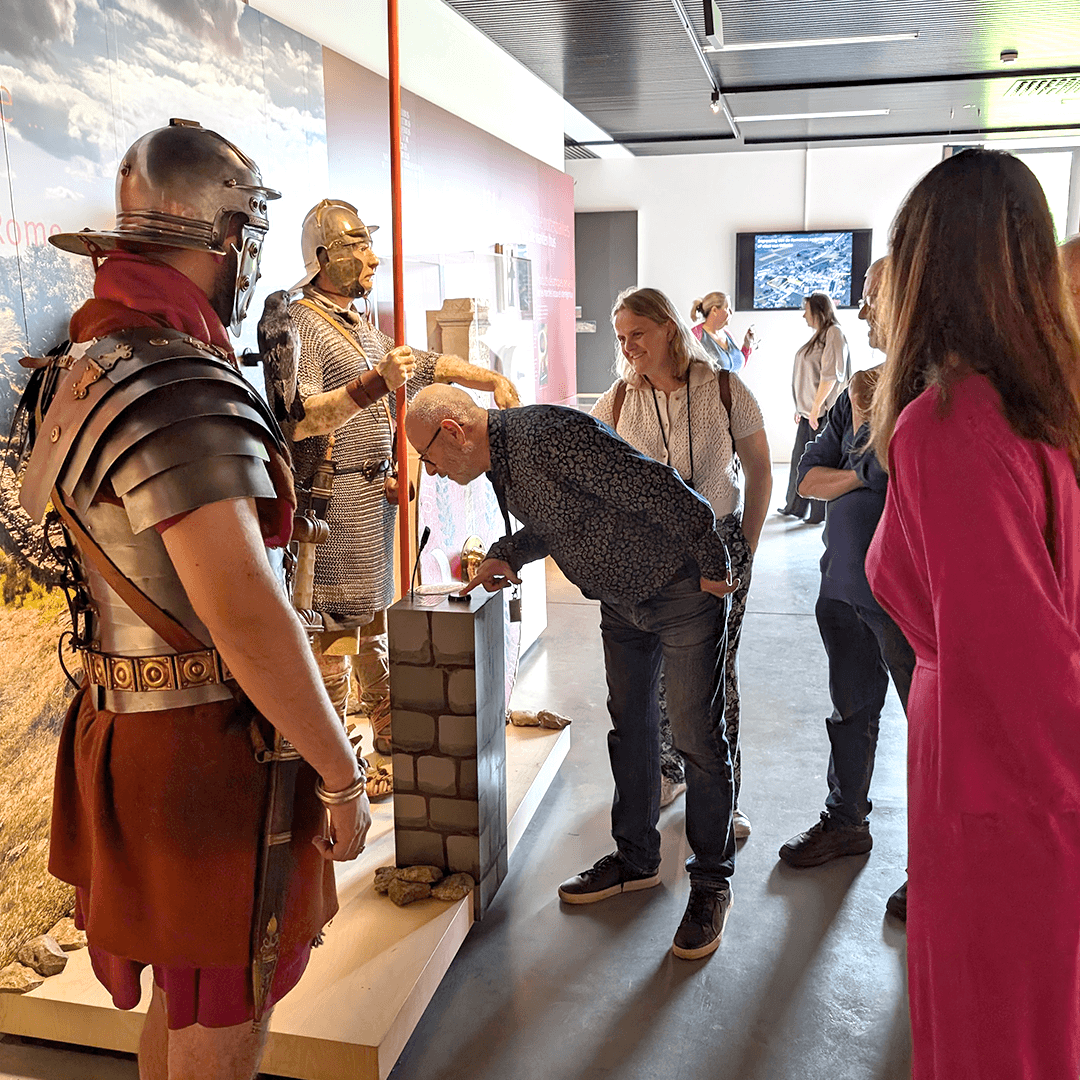
Hold the button, ask out loud, and the soldier answers. No screen, no app.
Julius Felix, Nervian auxiliary on Hadrian’s Wall
A Nervian auxiliary of Cohors II Nerviorum, on watch in Britannia in the second century.
Julius stands in front of Hadrian’s Wall, and that backdrop is no accident. Recruits from this very region crossed the Channel to serve Rome, and Nervian auxiliary troops helped build the wall he now guards. Ask him about it and you get the daily grind at the edge of the empire: wet watches, heavy mail, British beer, and Brana, the clever raven on his shoulder that visitors cannot stop asking about. Everybody’s raving about that Raven!
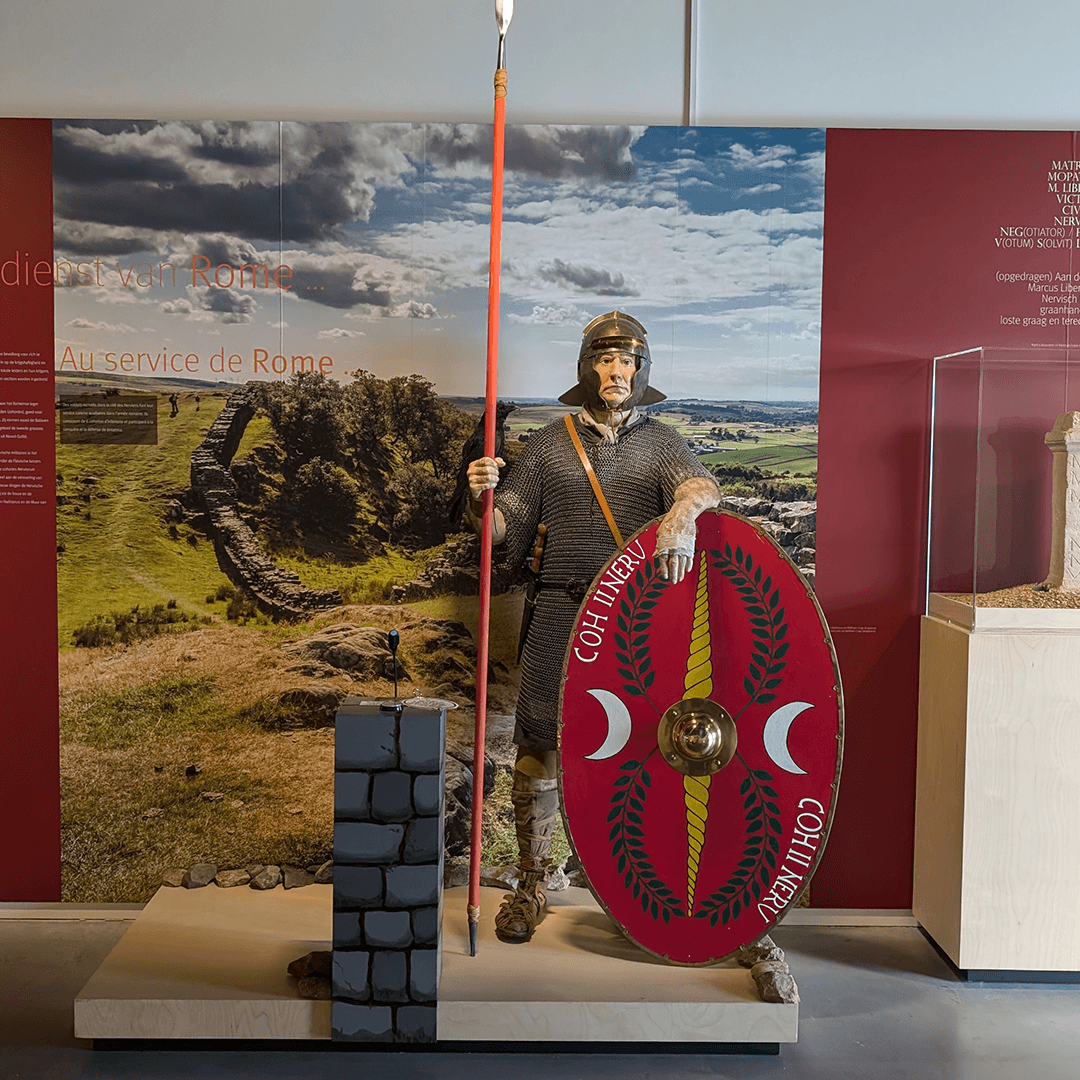
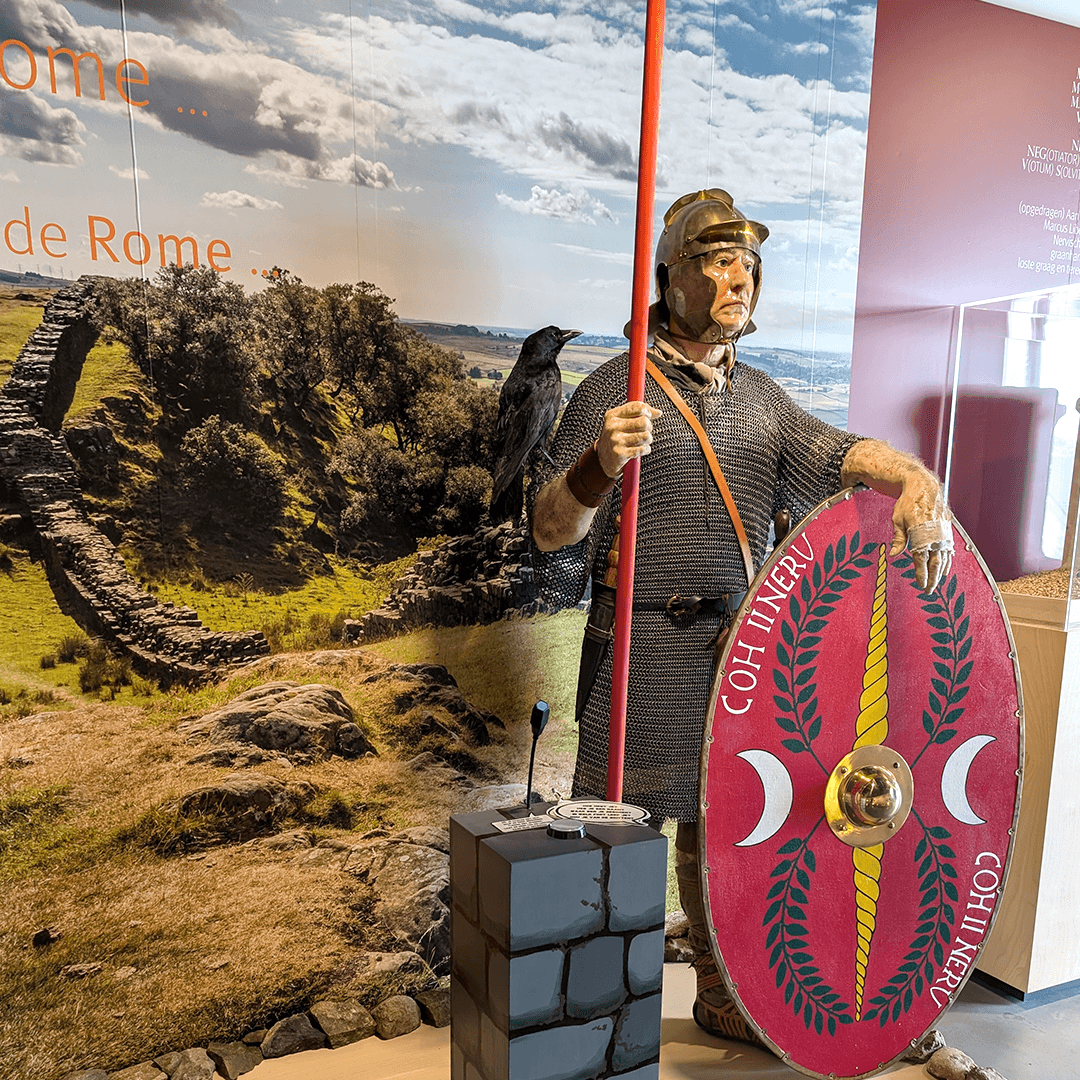
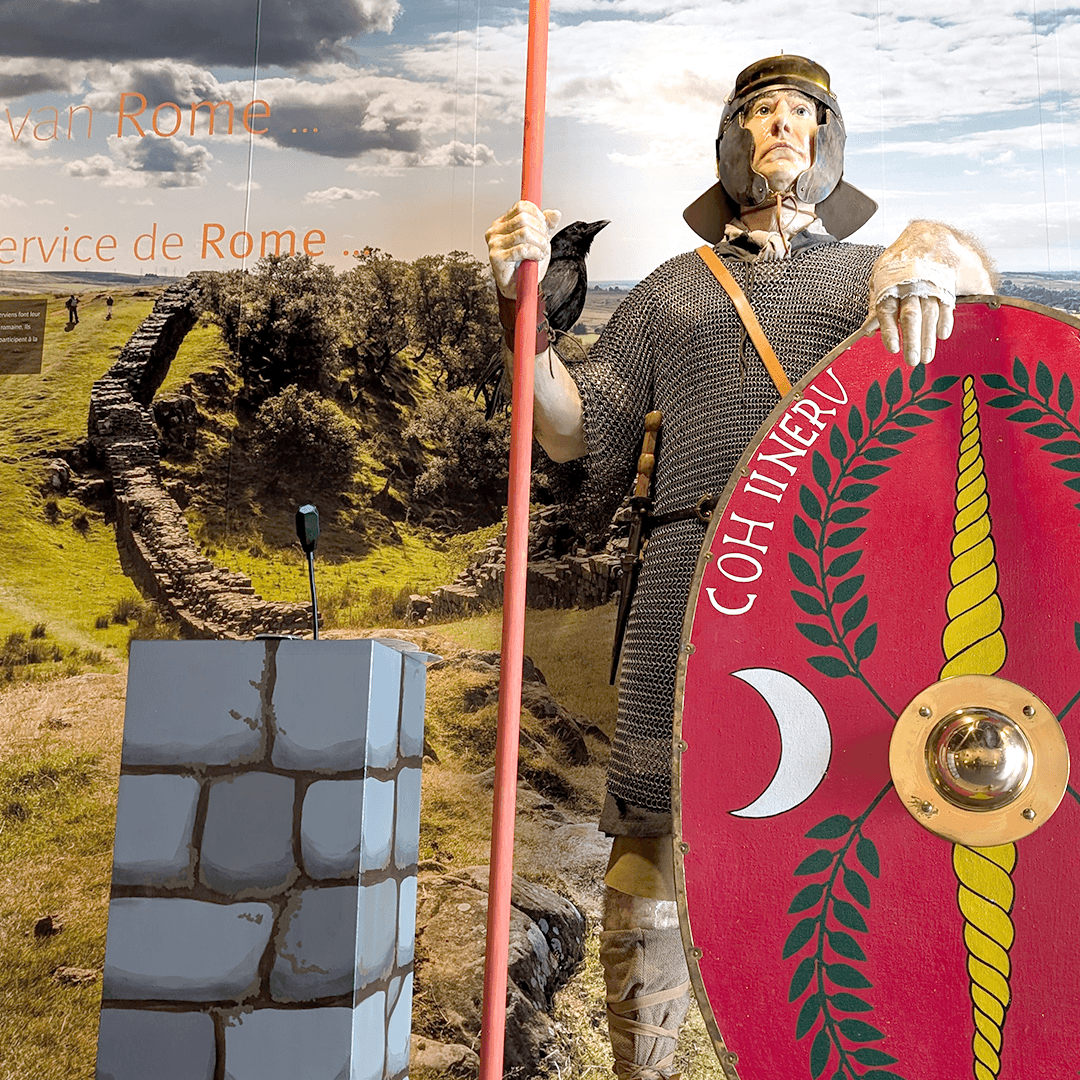
Julius Felix on duty in the Archeocentrum Velzeke. The button beside him is the whole installation.
- “What does it say on your shield?” is the question he hears most… It’s “COH II NERV”: The Second Cohort of Nervians, an auxiliary infantry unit of the Imperial Roman Army.
- “What’s with the raven on your shoulder?” comes a close second. That’s so raven!
- After that: how heavy the kit is, how cold Britannia gets, and whether British beer is any good. Spoiler Alert: it’s not!
Quintus Barbius Velinus, the legionary who stepped out of the mural
A legionary of Legio XI, catching his breath after the battle against the Nervii, 57 BC.
Behind Quintus hangs the centre’s enormous mural of Boduognatus, king of the Nervii, losing to Caesar’s legions. Quintus sits as if he has just stepped out of that painting to rest after the battle, same armour, fresh wound on his nose, and he is happy to tell you what the mural gets right. He is also the one visitors get personal with: his brother, his family’s vineyards, whether the wound hurts, whether he is afraid. He answers all of it, but he can lose his patience if you mess with him too much!
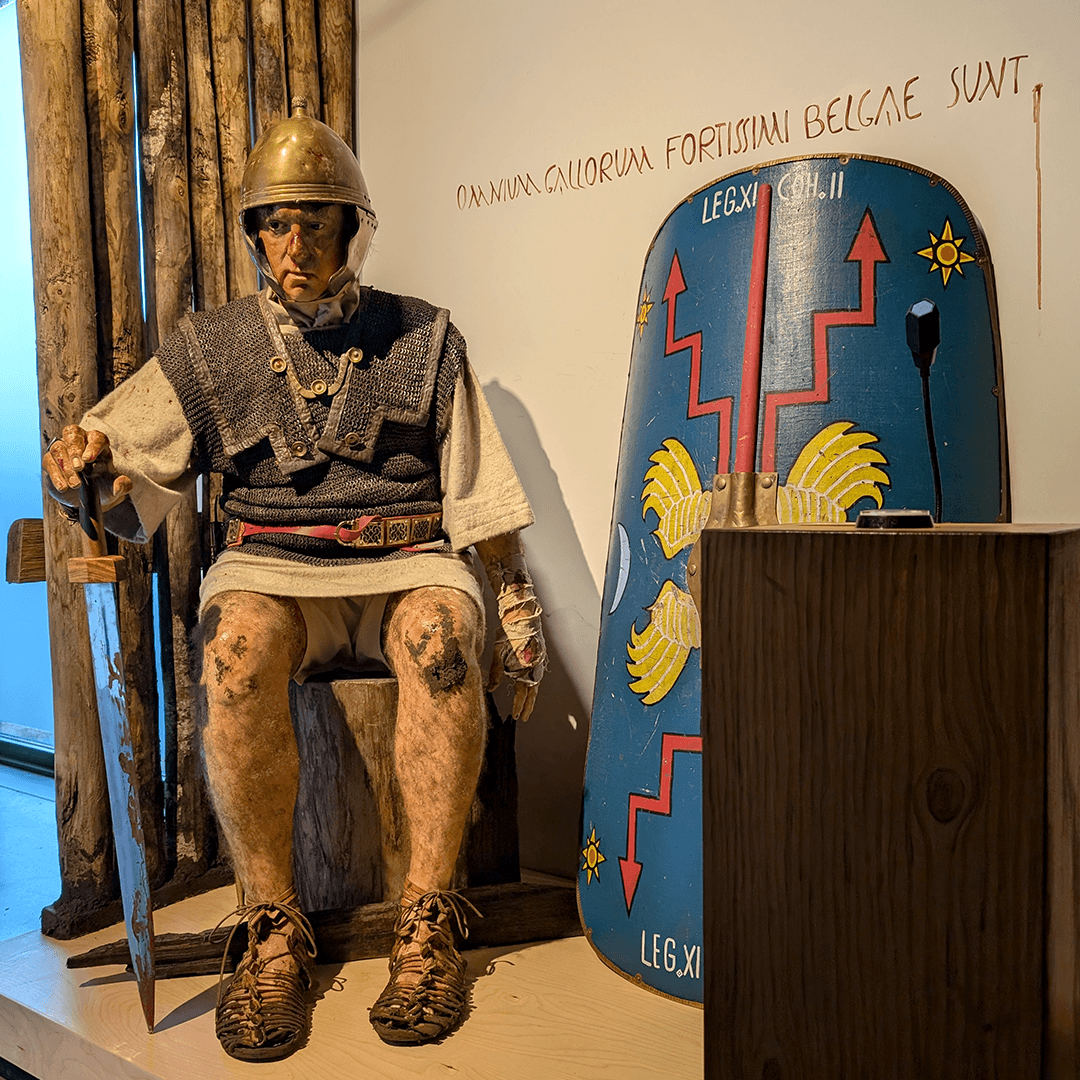
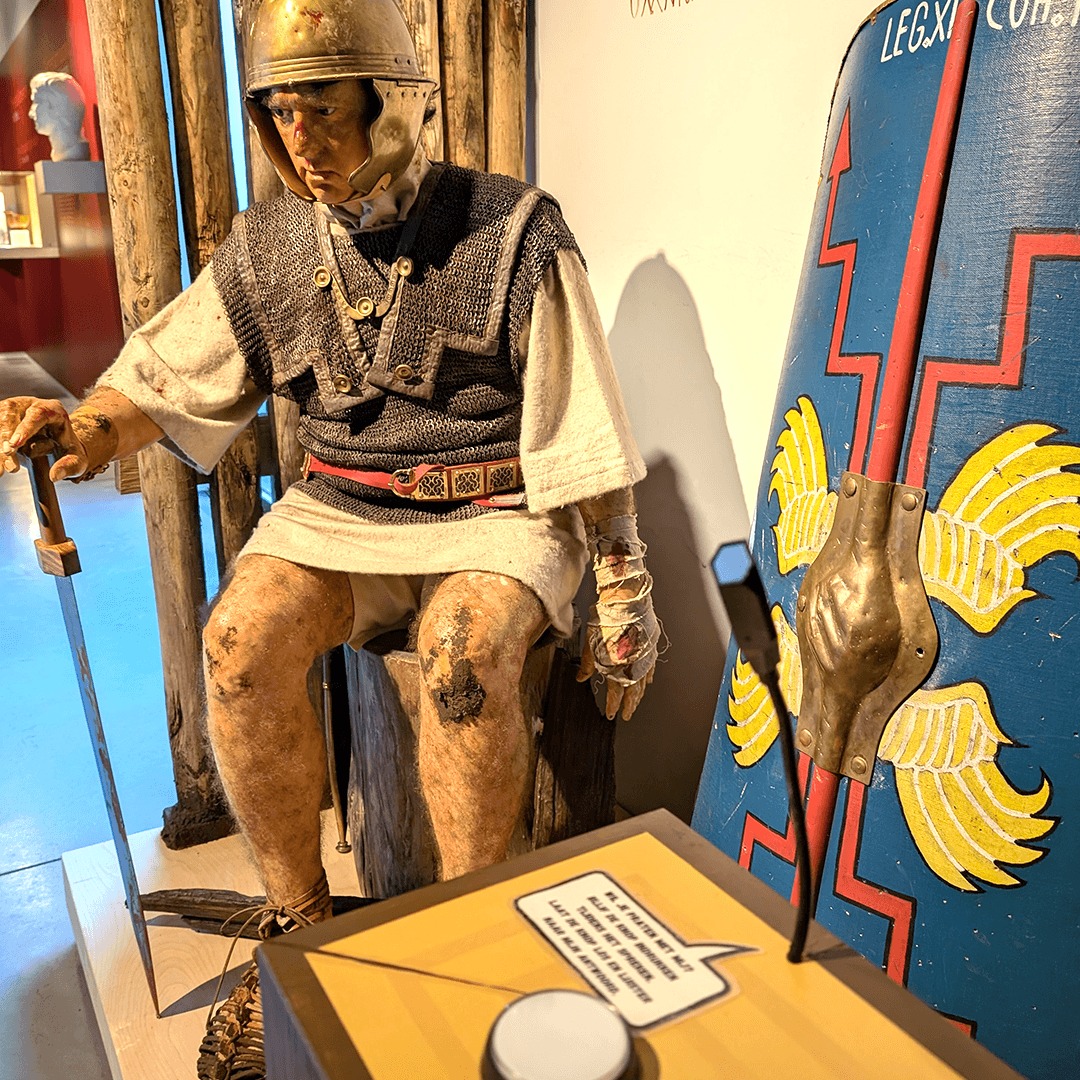
Quintus at rest, a few steps from the mural he walked out of.
The talking Romans on the national news
When the soldiers took their first questions in July 2024, the press came to listen.
VRT, TV Oost and the regional papers covered the opening. Conservator Kurt Braeckman summed up why the centre did it: “A collection of Roman pots and pans alone is outdated today.” The soldiers stay strictly in their own century, and every question they hear helps them keep learning.
Watch the news item
The news report on the opening, 16 July 2024. The soldiers answered for themselves.

Popular with schools, used daily by the guides
Built for visitors, taken over by the professionals.
School groups are the soldiers’ biggest fans. A class does not read about a legionary, it interrogates one, and every pupil gets a turn at the microphone. The centre’s guides lean on them too: they let a soldier introduce himself, then build the story of Roman Velzeke on what he just said. A talking first hand account makes a better opening act than a display case.
For visitors who go blank in front of a two-thousand-year-old soldier, printed question cards sit next to each figure. Few people need them for long. The first question is the hard one; the next three ask themselves.
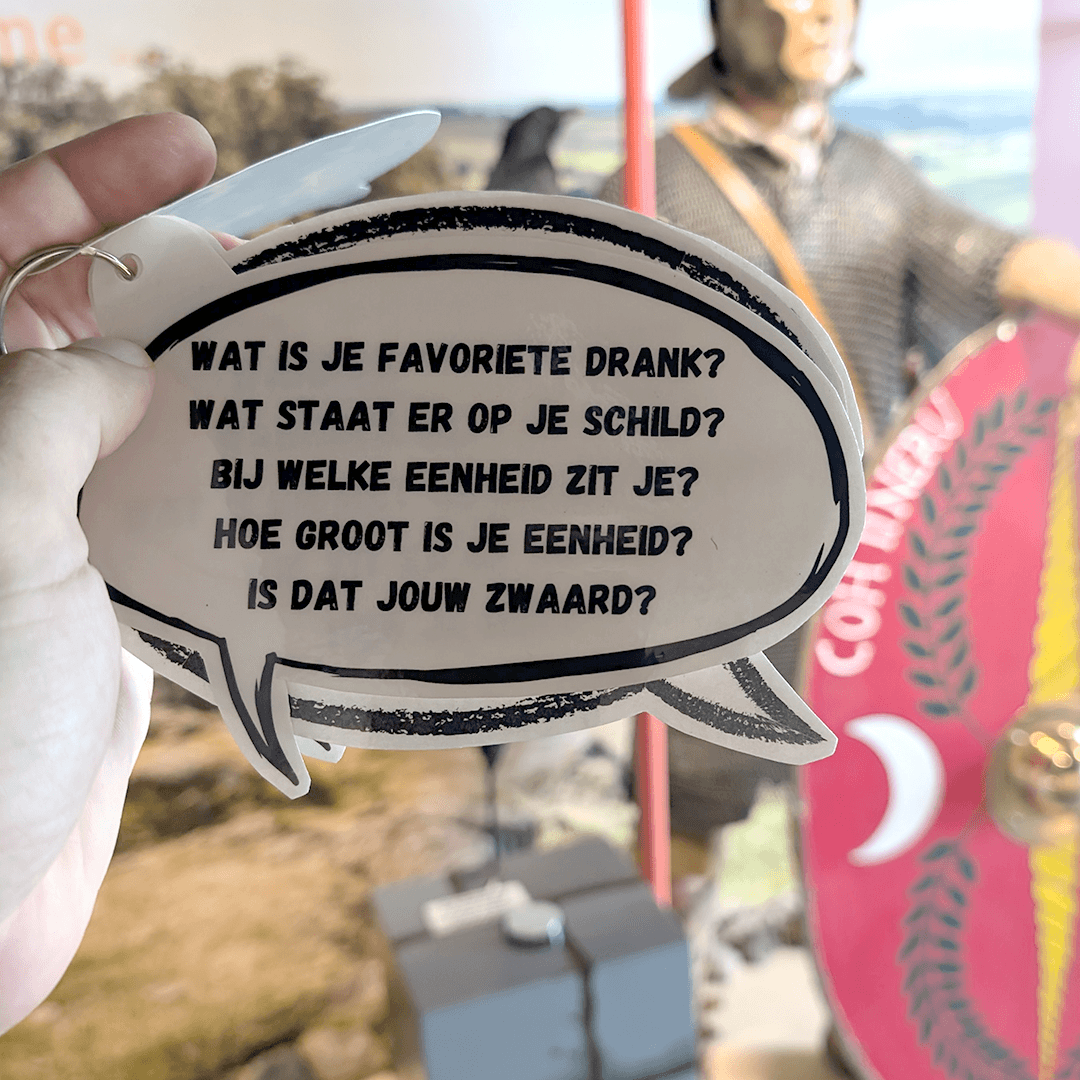
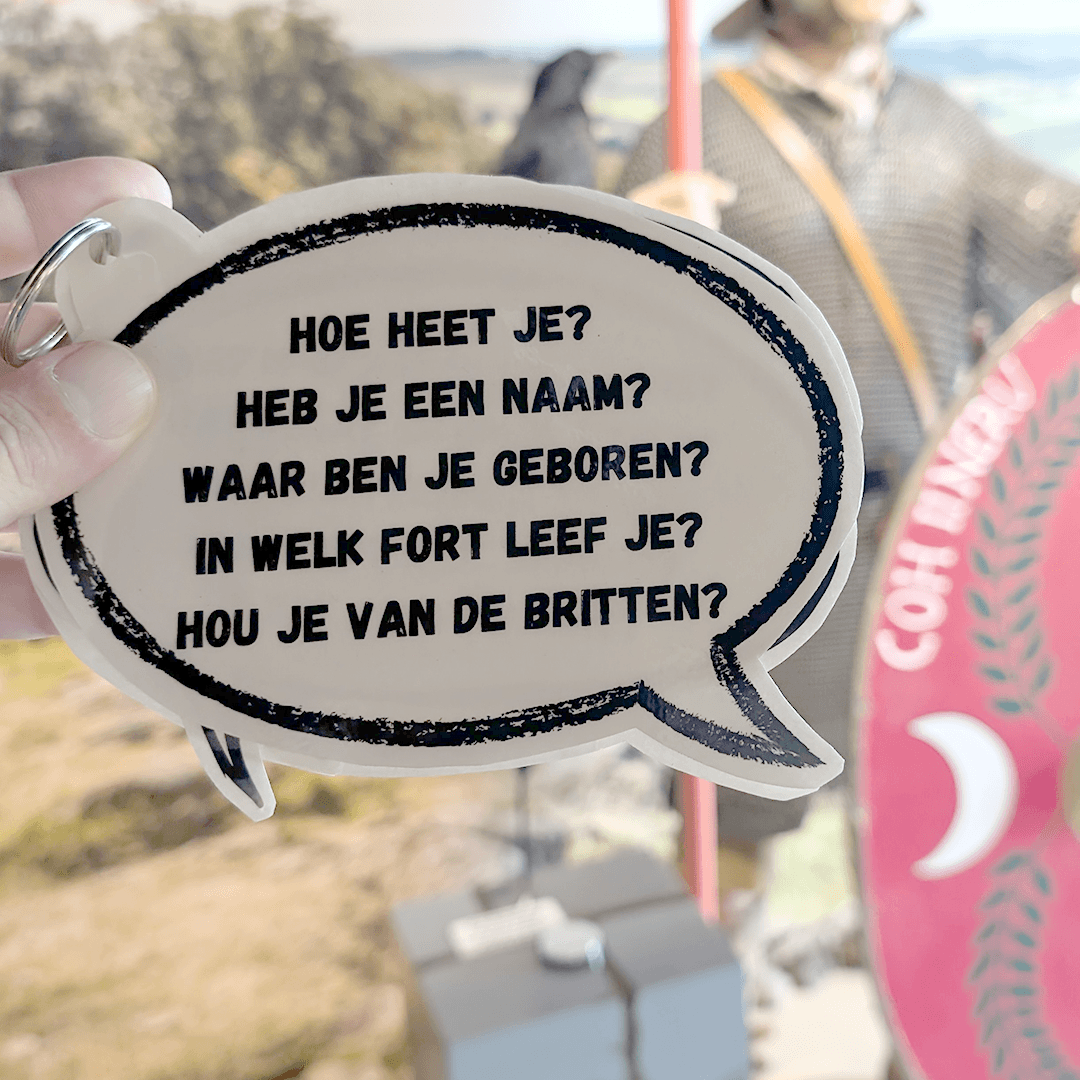
The question cards beside each soldier. Training wheels for a conversation with 57 BC.
Ask both Romans the same question
Pick a question and see how differently two soldiers, 218 years apart, answer it.
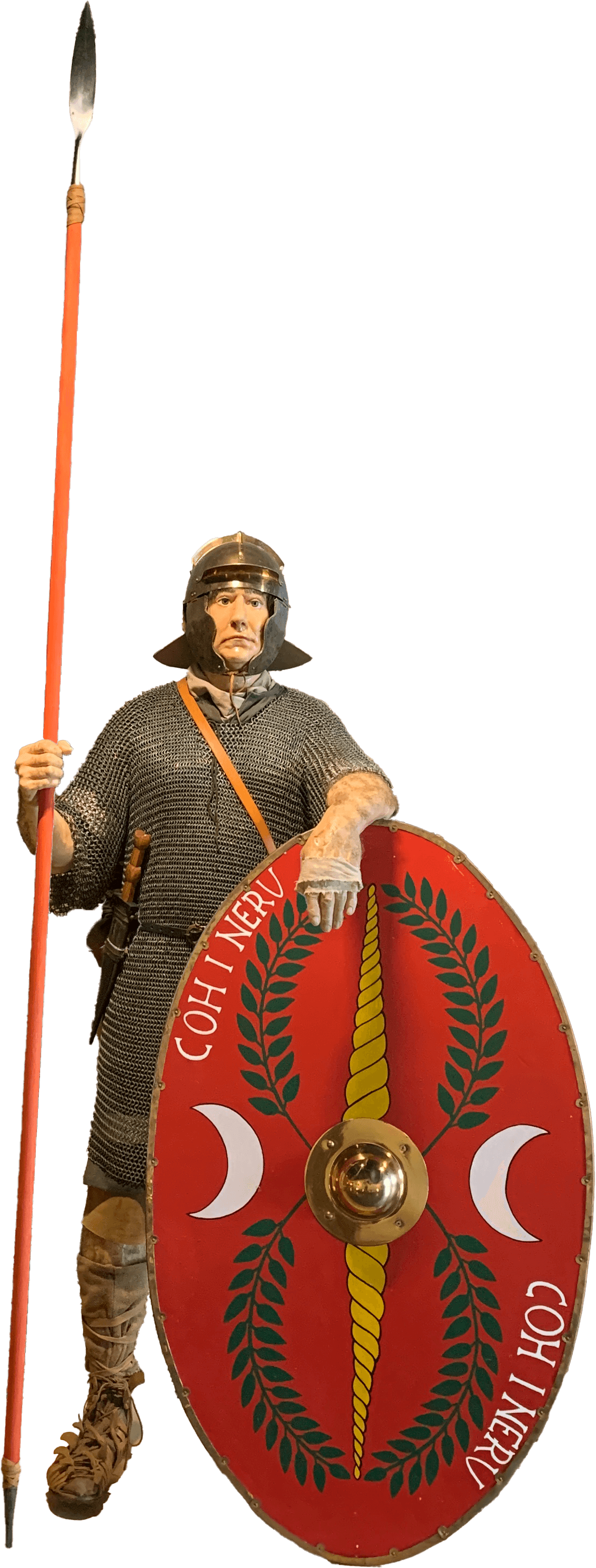 Julius Felix · 162 AD
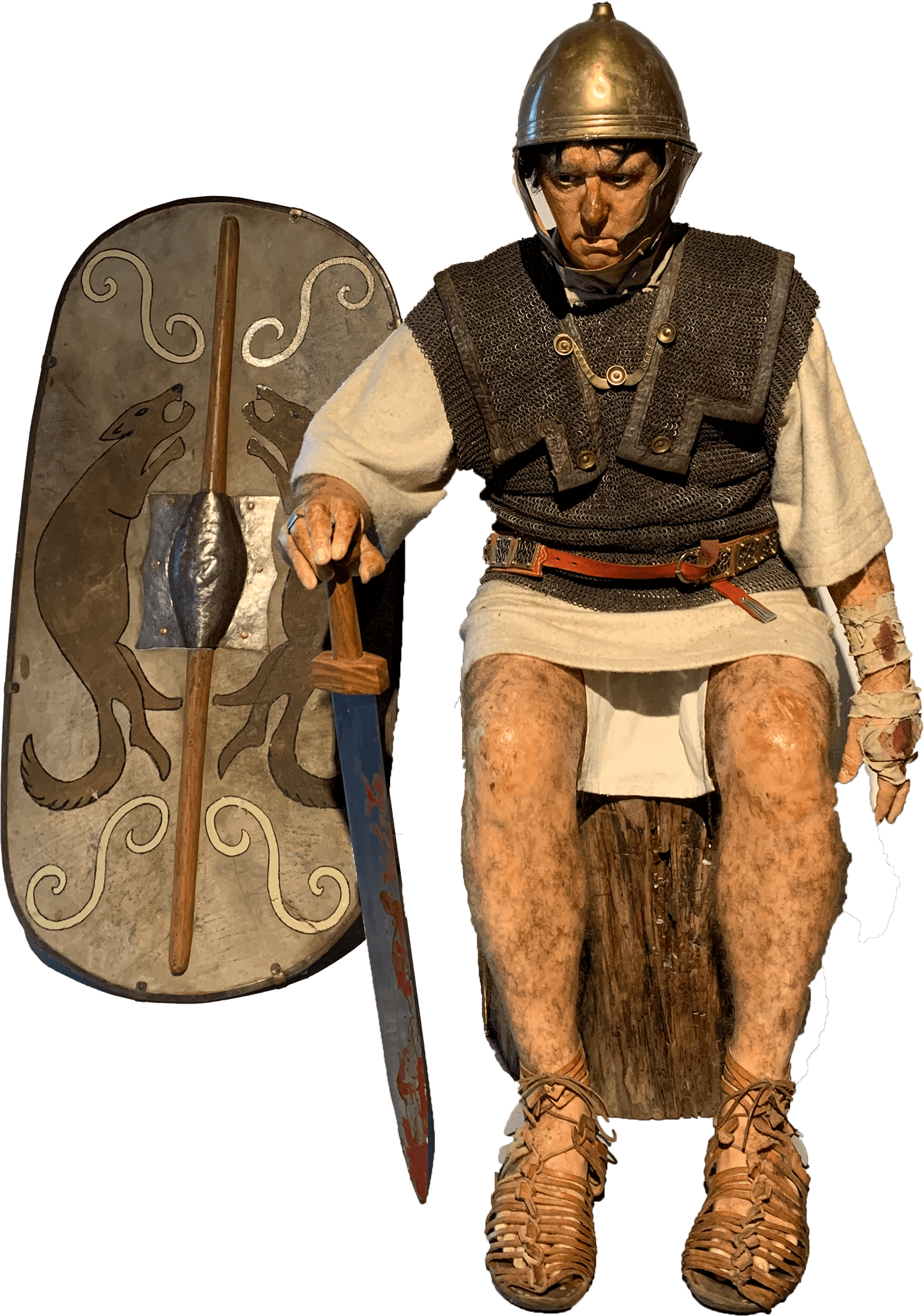 Quintus Barbius Velinus · 57 BC
Standing guard. The wall behind me is Hadrian’s, and my own people helped build it. Nervian hands, Roman orders. I keep watch so you can wander around asking questions.
Resting. You see that painting behind me? Boduognatus losing to us. I was there, and I have earned this seat. Ask the standing one if you need someone vertical.
Bread and porridge, same as yesterday, same as tomorrow. And British beer, which I will be polite about because you might be British.
Hard bread, harder cheese, and posca, which is vinegar pretending to be wine. My family grows real wine near Aquileia. I think about that a lot.
Twenty-five years of service buys me Roman citizenship and a farm. So yes, I like it the way you like a long road home.
I was proud at the Sabis. I was less proud burying my brother. Ask me again after the next war.
He was dead two centuries before I was born. But I know his war: he fought the Nervii, and I am one. Time makes strange neighbours.
The tall one by the wall? A Nervian in Roman armour. I fought his ancestors at the Sabis, and now we share a room. History has a sense of humour.
Written in their voices for this page. In the Archeocentrum every answer is generated live, in character, in about two and a half seconds.
Three steps, no app
A button and a microphone beside each soldier. That is the whole interface.
Walk up
Nothing to download, nothing to scan, nothing to log into. The button is next to the soldier.
Hold and ask
Hold the button, ask your question out loud, let go. Children work this out without being told.
The soldier answers
In his own voice, in character, in about two seconds. Then you ask the next thing. Everybody asks the next thing.
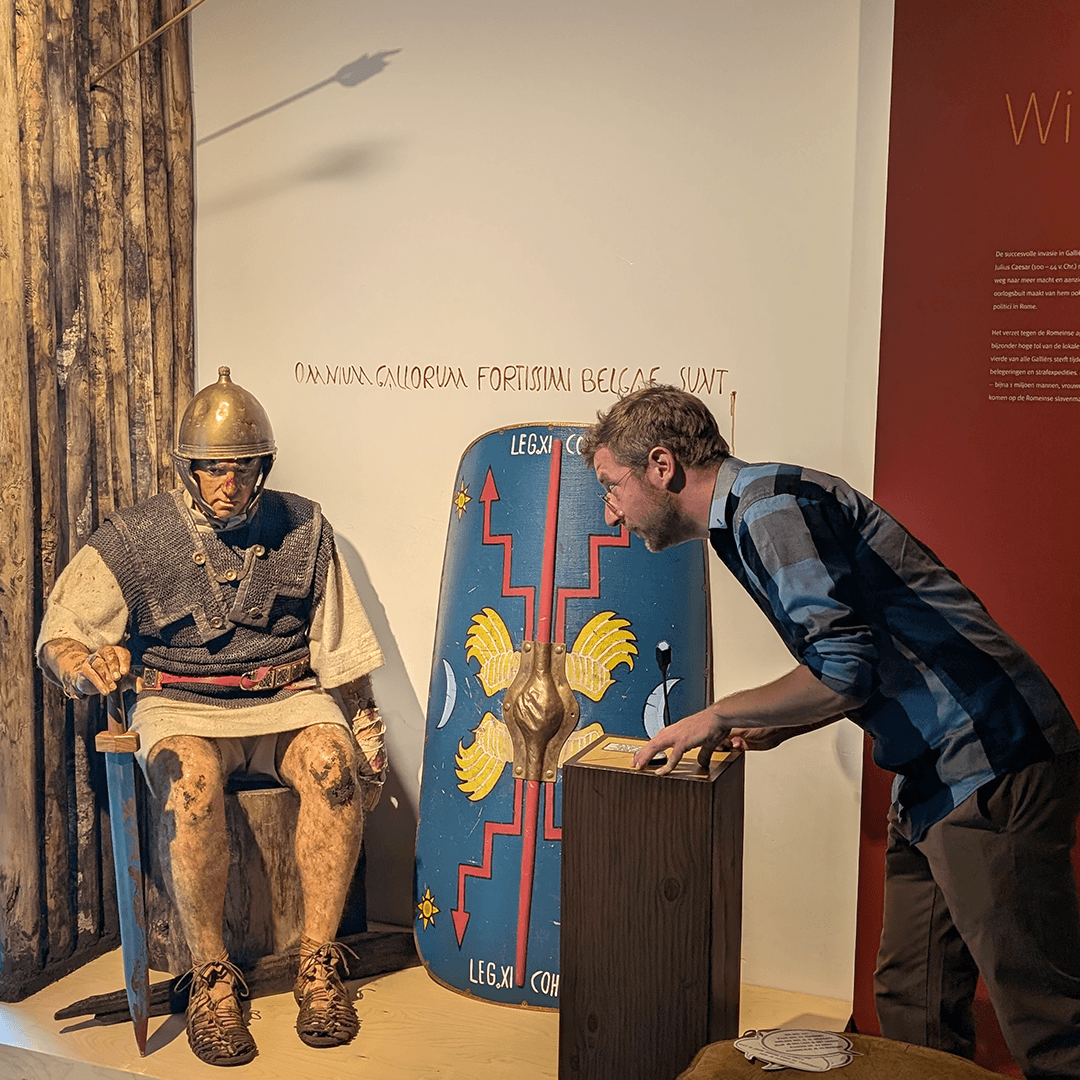
Creator Dries seen here asking this Roman why his knees are muddy.
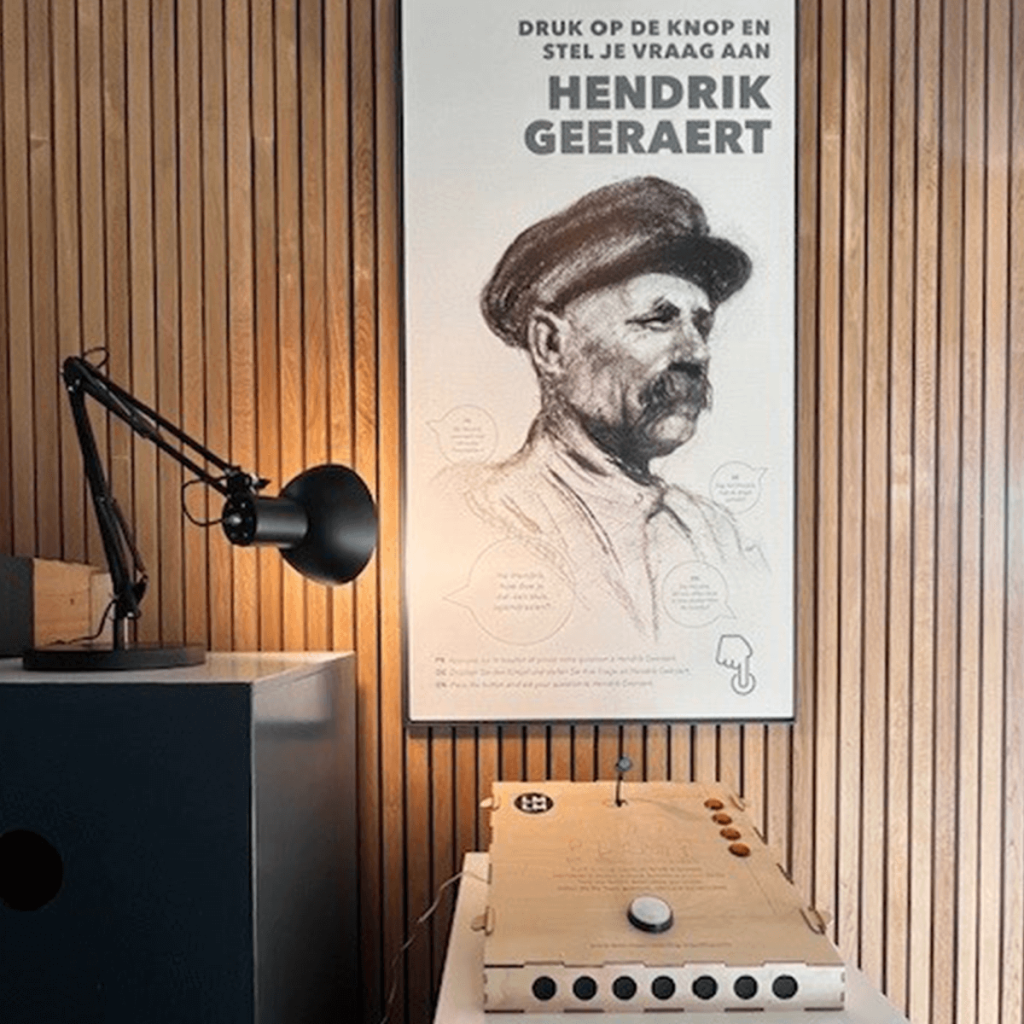
Hendrik Geeraert, the WWI hero who answers back at Westfront Nieuwpoort
Hendrik Geeraert opened the sluices at Nieuwpoort in 1914. At Westfront he now answers visitors' questions himself, grumpily, in four languages.
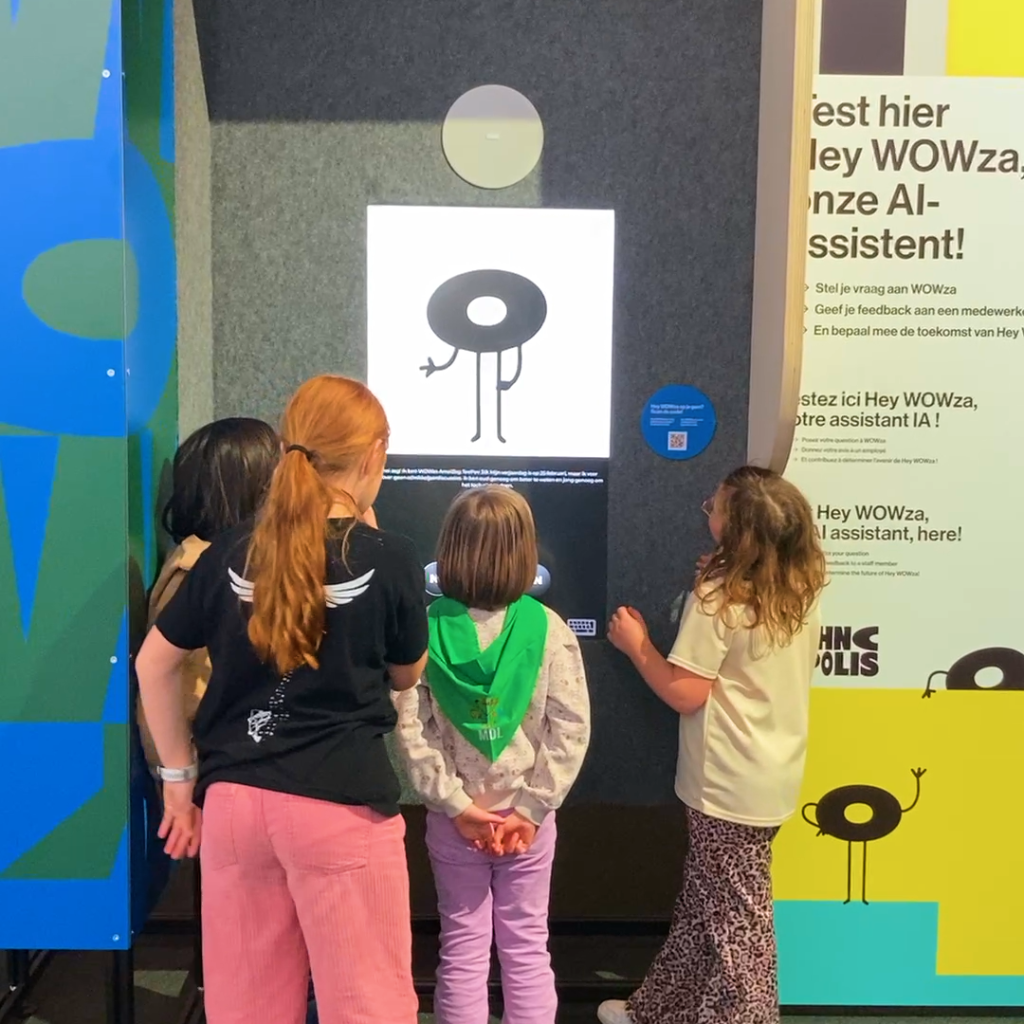
heyWowza, the Talking Point that greets every visitor at Technopolis
For nine days heyWowza answered anyone who pressed the button at Technopolis. 5,012 conversations later we know what visitors ask, and how…
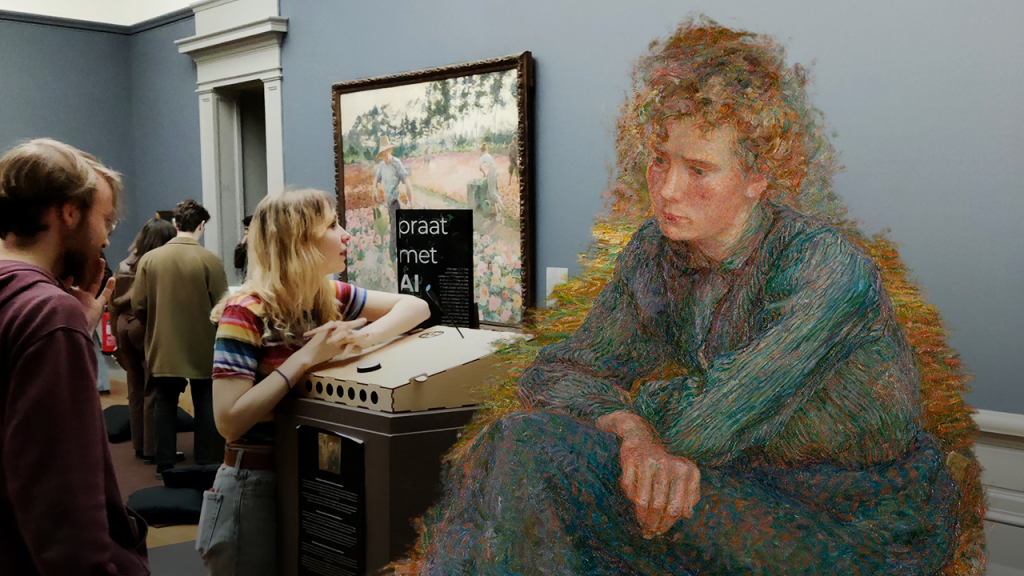
Talking Paintings at MSK Ghent
Two paintings at the Museum of Fine Arts Ghent (MSK) answer visitor questions out loud. Here is how the installation works and…