
What should they keep?
The museum is designing an entirely new permanent exhibition, and needed input.
The In Flanders Fields Museum in Ypres tells the story of the First World War in the region where it was fought. Right now it is preparing its biggest change in years: an entirely new permanent exhibition. Before you rebuild a museum, you want to know what works and what does not in the one you have. A five star rating cannot tell you that, you want to know what your visitors felt and what stays with them after their visit, what made the biggest impact.
So the museum and Westtoer’s knowledge centre put an AI interviewer near the exit, from early 2025 to October 2025. Visitors had a natural conversation that listens, asks a follow-up that fits the answer, and takes stories instead of scores. Every response was categorised automatically, 95% of them correctly, into a dashboard the museum could filter.
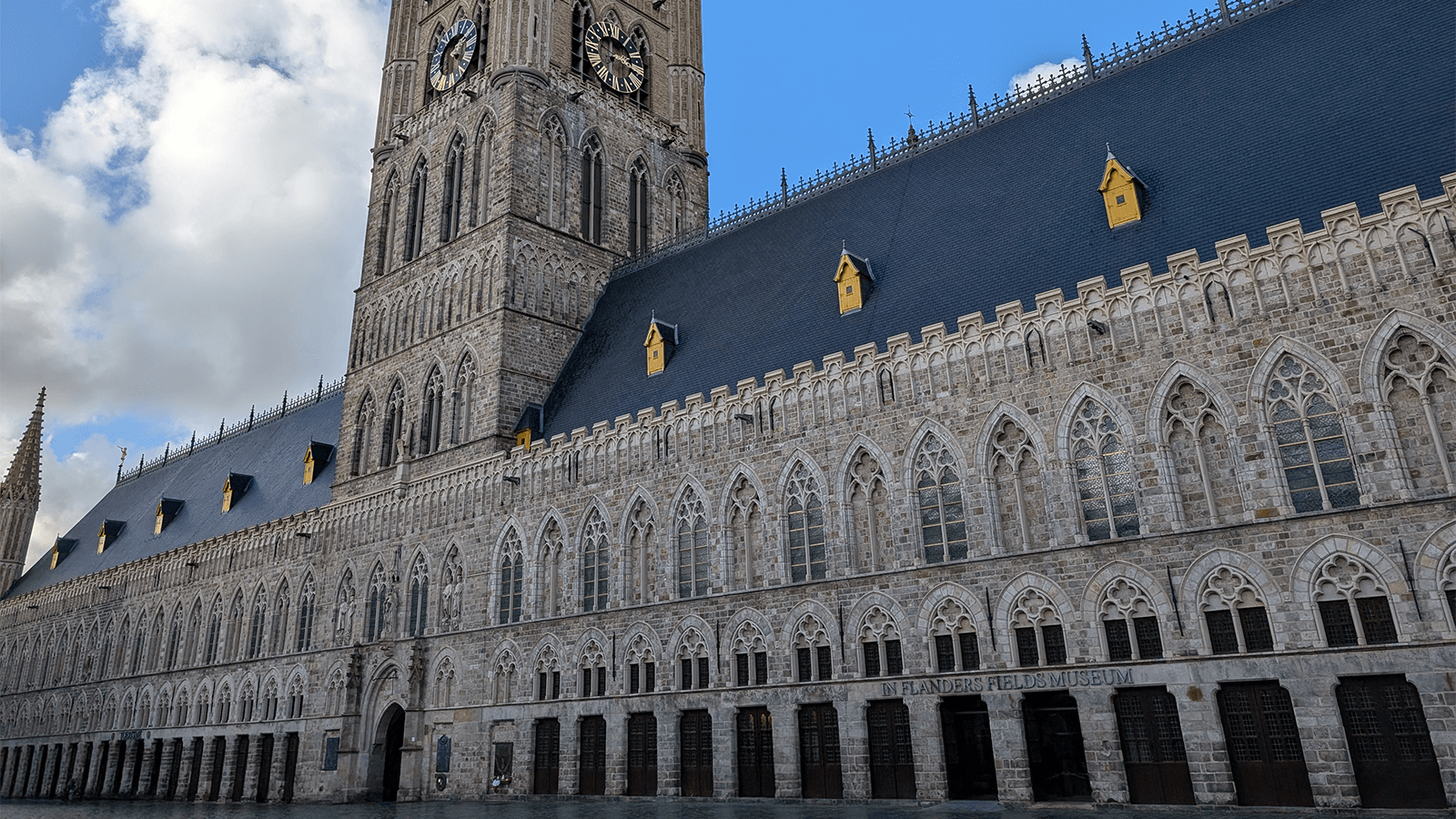
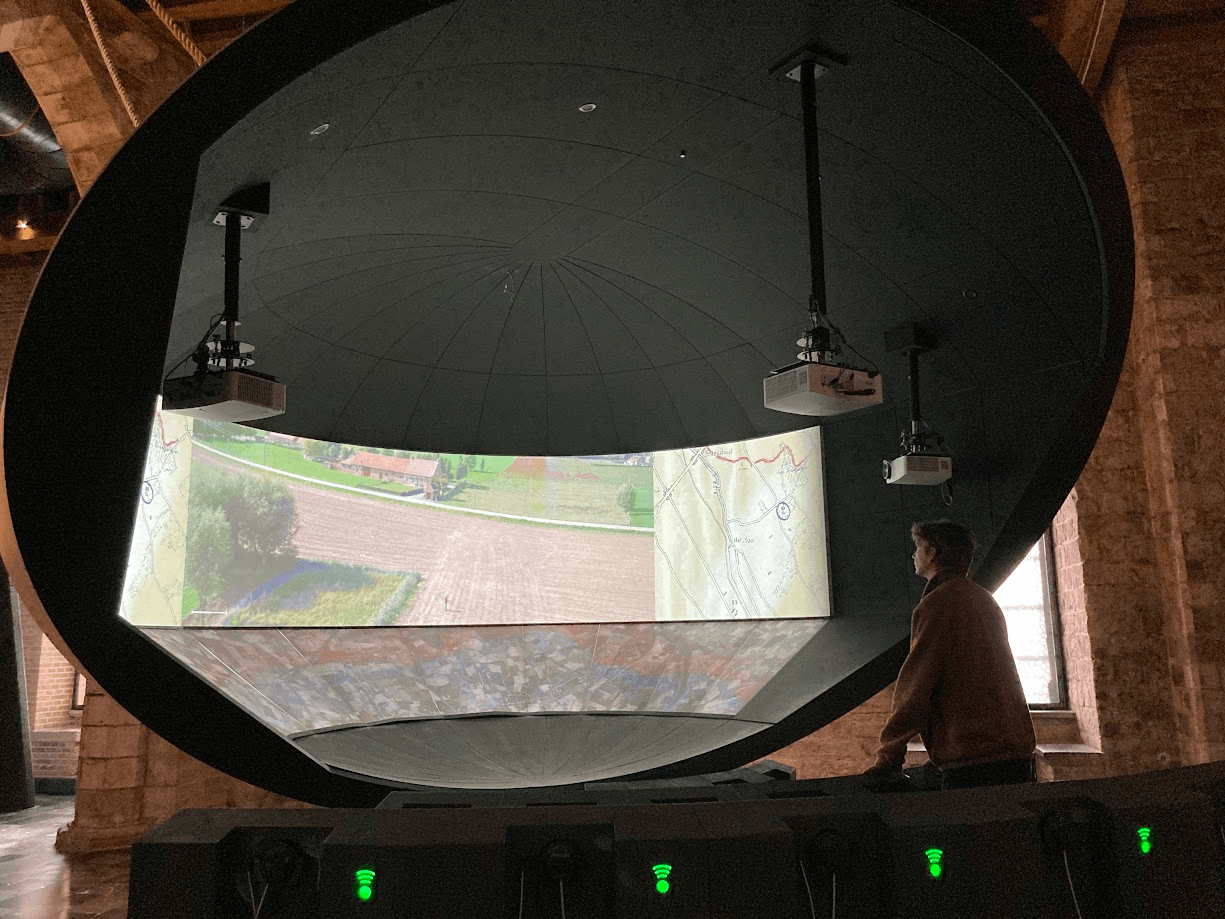
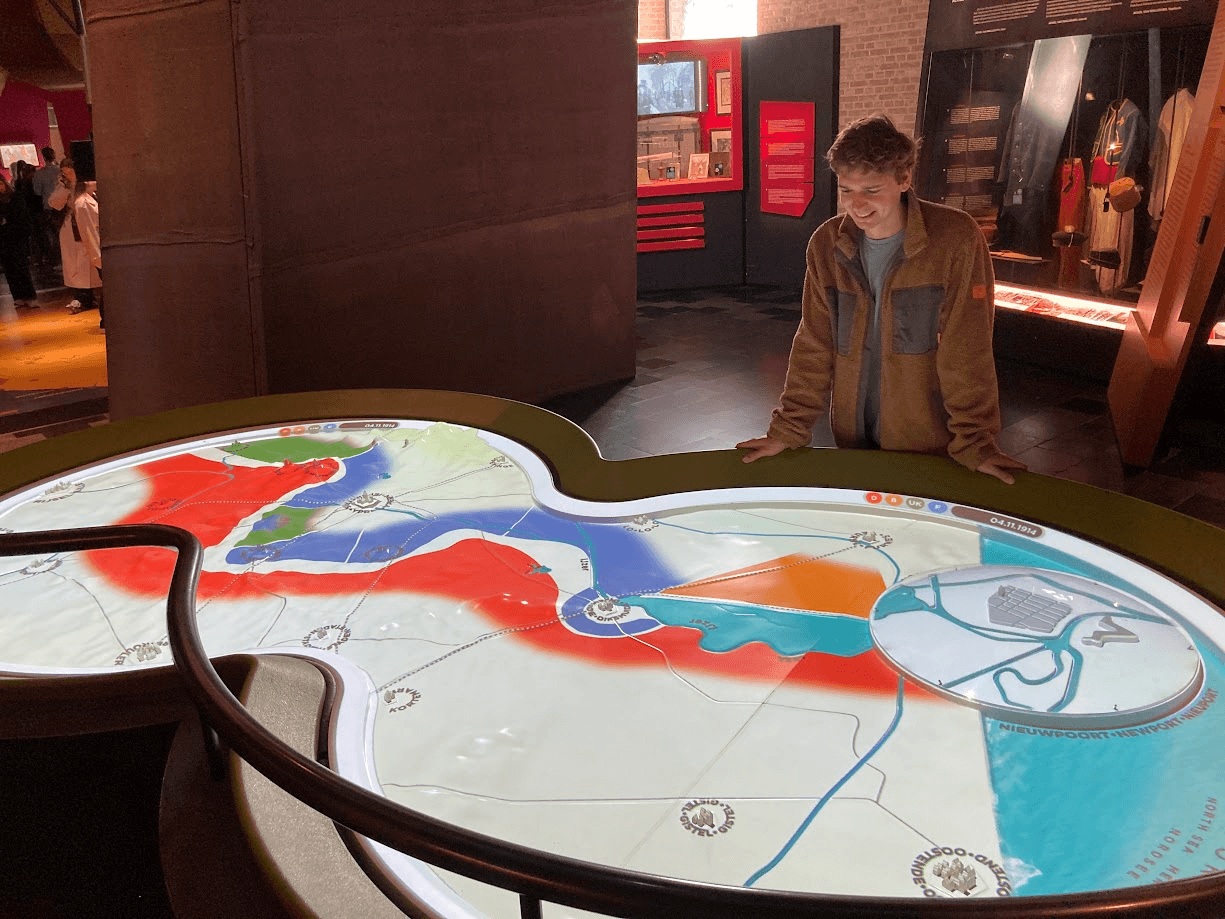
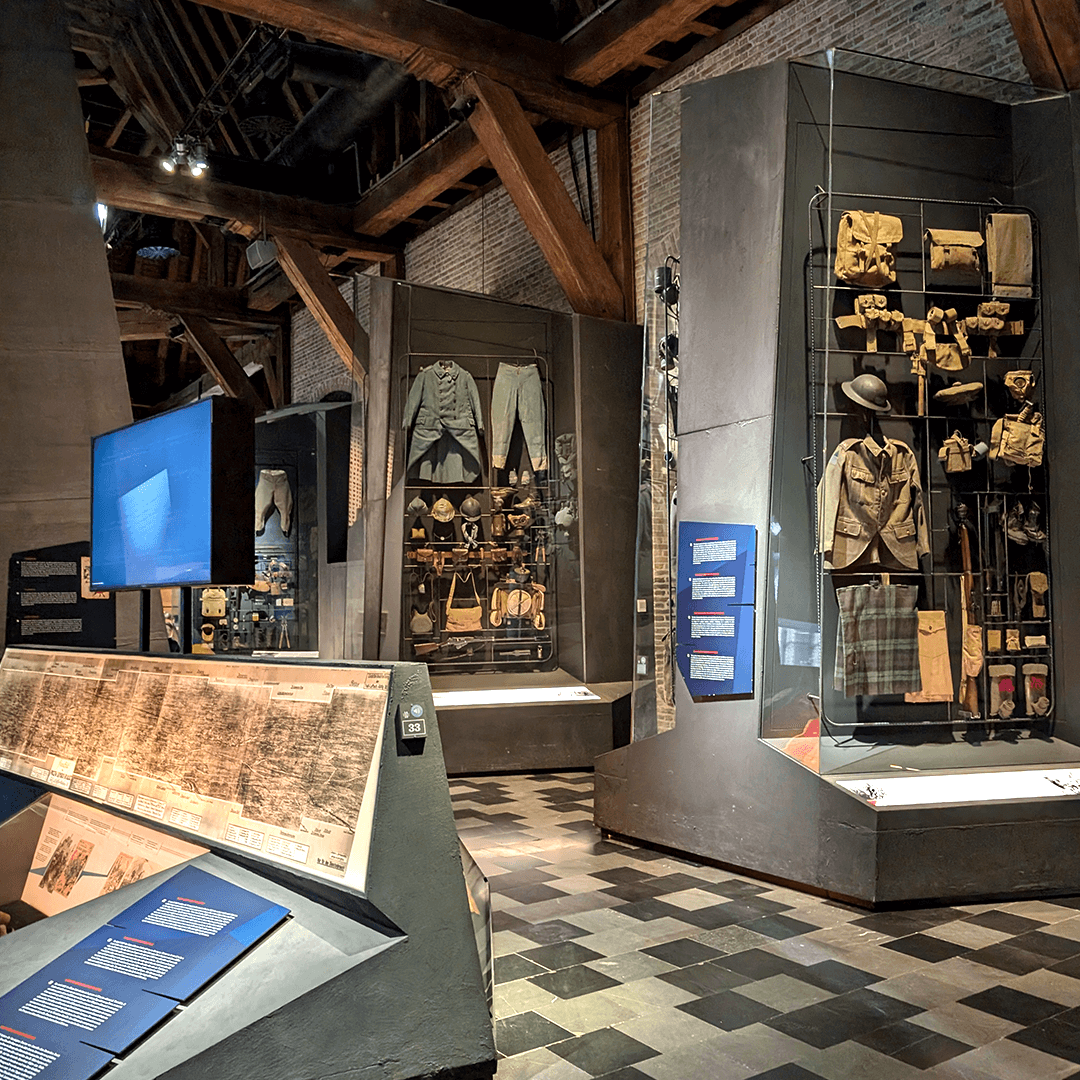
The Cloth Hall in Ypres and the museum inside. Only things that make an impact will be kept.
What visitors actually said
Every interview is a small story with its own title. These two are verbatim.
Personal storiesAI: Interesting! And which story did you find most special, and why?
Visitor: The story of the nurses and doctors helping the wounded in the war
AI: What did you find special about the story of the doctors and nurses?
Visitor: They’re often overlooked and forgotten in a war story, It’s nice to hear personal stories it makes it more personal and real.
AI: Is this something you often find more interesting, those personal stories?
Visitor: The costumes of the soldiers.
AI: Interesting! What exactly stood out to you about those costumes?
Visitor: That a person once wore them. They suddenly make the war so real.
AI: That’s indeed a powerful thought.
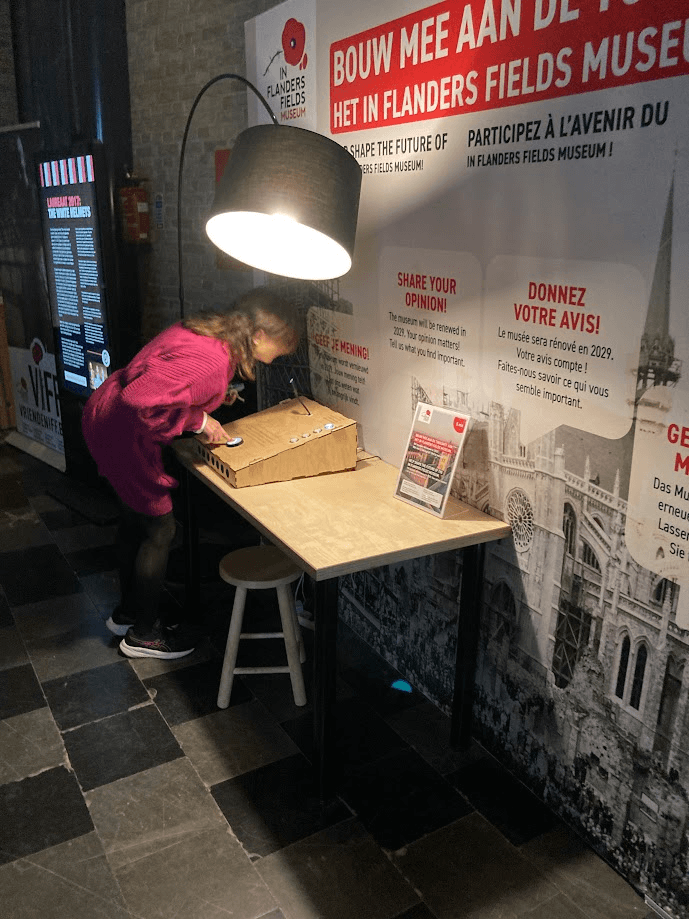
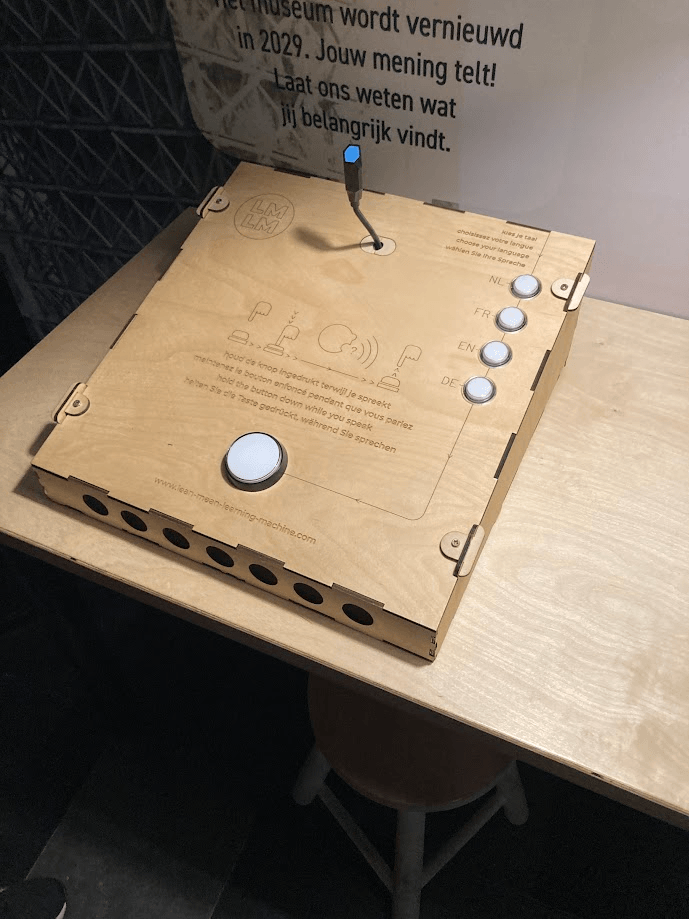
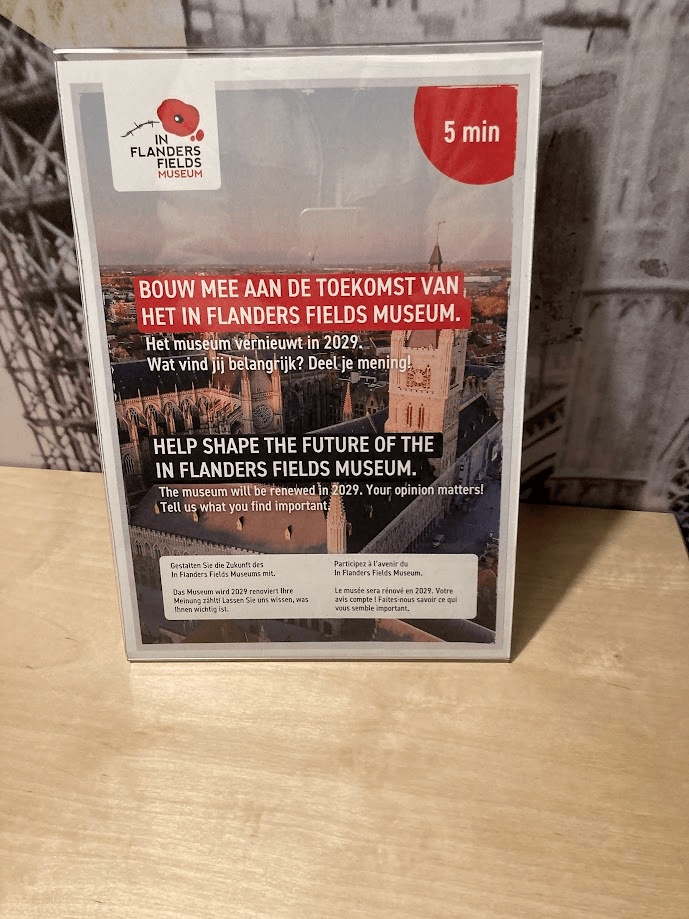
An interview in progress, the console up close, and the sign that invites you to sit down.
Three steps, no clipboard
Two chairs and a console near the exit. That is the whole setup.
Sit down after the visit
Two chairs by the exit, a console on the table. No app, no QR code, no form on a tablet.
Answer and get a follow-up
The interviewer asks a question out loud, listens, and follows up on what you actually said.
The museum filters the dashboard
Every answer is categorised, 95% of them correctly, into a dashboard the museum staff can filter.
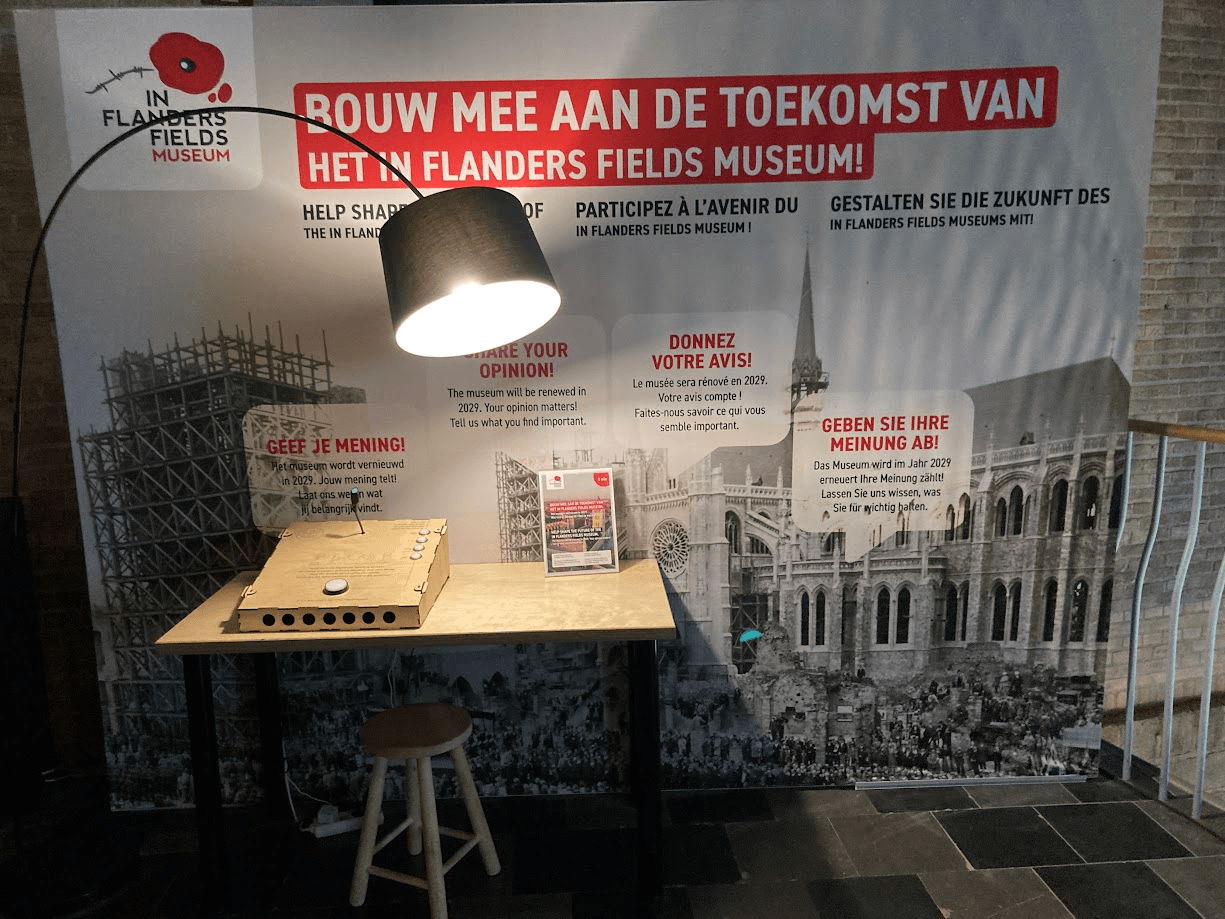
The whole setup: a console, a banner and a seat. Nothing to install, nothing to explain.
Open questions find what closed ones miss
A closed question can only confirm what you expected to hear. An open one tells you something new.
Stories instead of scores
Visitors name the item, the story and the reason it moved them. An open question with a real follow-up reveals what no rating scale or checkbox ever would.
Questions sharpened with experts
The seven questions were decided on together with Westtoer and the museum before a single visitor sat down.
A safe context
AI applied together with experts, in a setting the museum controlled. Interviews are anonymous, and the tone of the interviewer fits the setting.
Evidence for the new exhibition
A filterable dashboard, an automatically generated summary of the qualitative analysis, and raw exports for the researchers. What works today flows straight into the plans for the new permanent exhibition, next to the curators’ own vision.
Dries Van Robaeys, communication officer at the In Flanders Fields Museum, on the project.
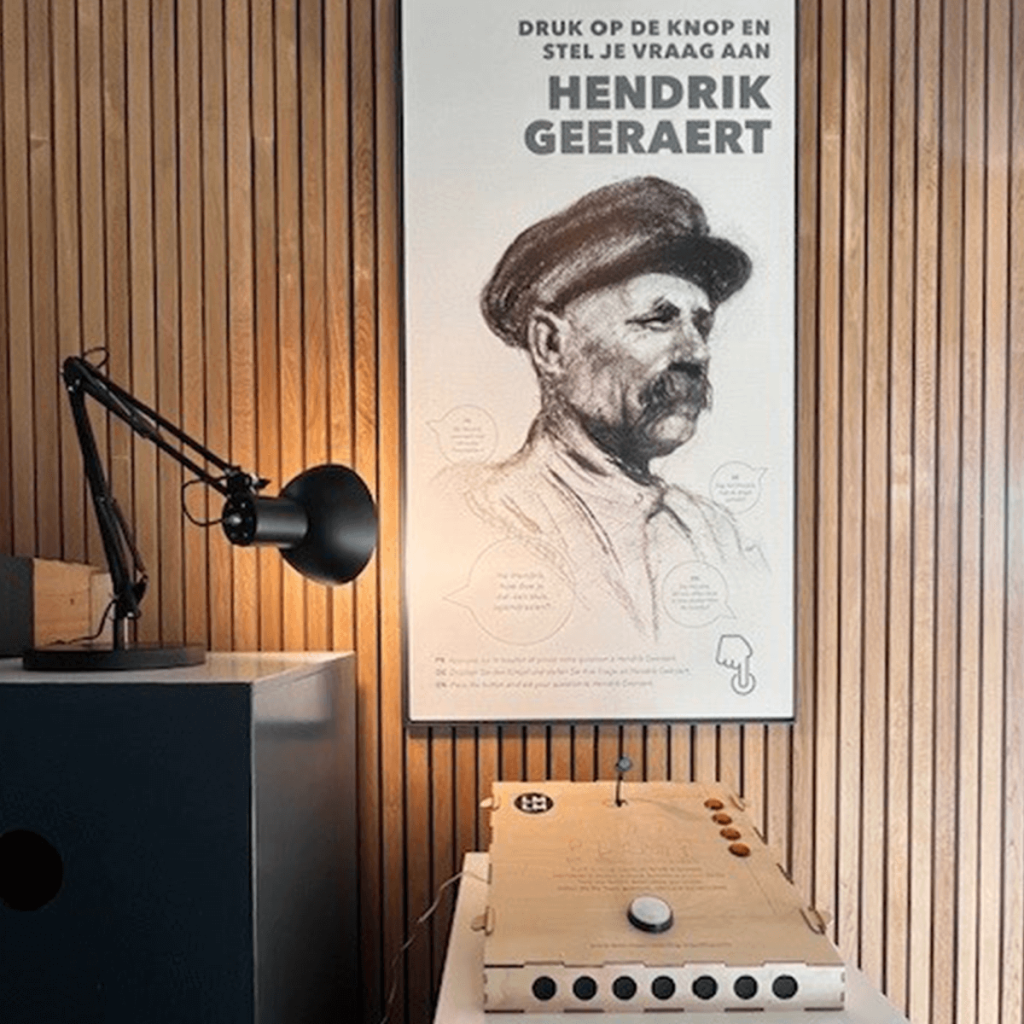
Hendrik Geeraert, the WWI hero who answers back at Westfront Nieuwpoort
Hendrik Geeraert opened the sluices at Nieuwpoort in 1914. At Westfront he now answers visitors' questions himself, grumpily, in four languages.
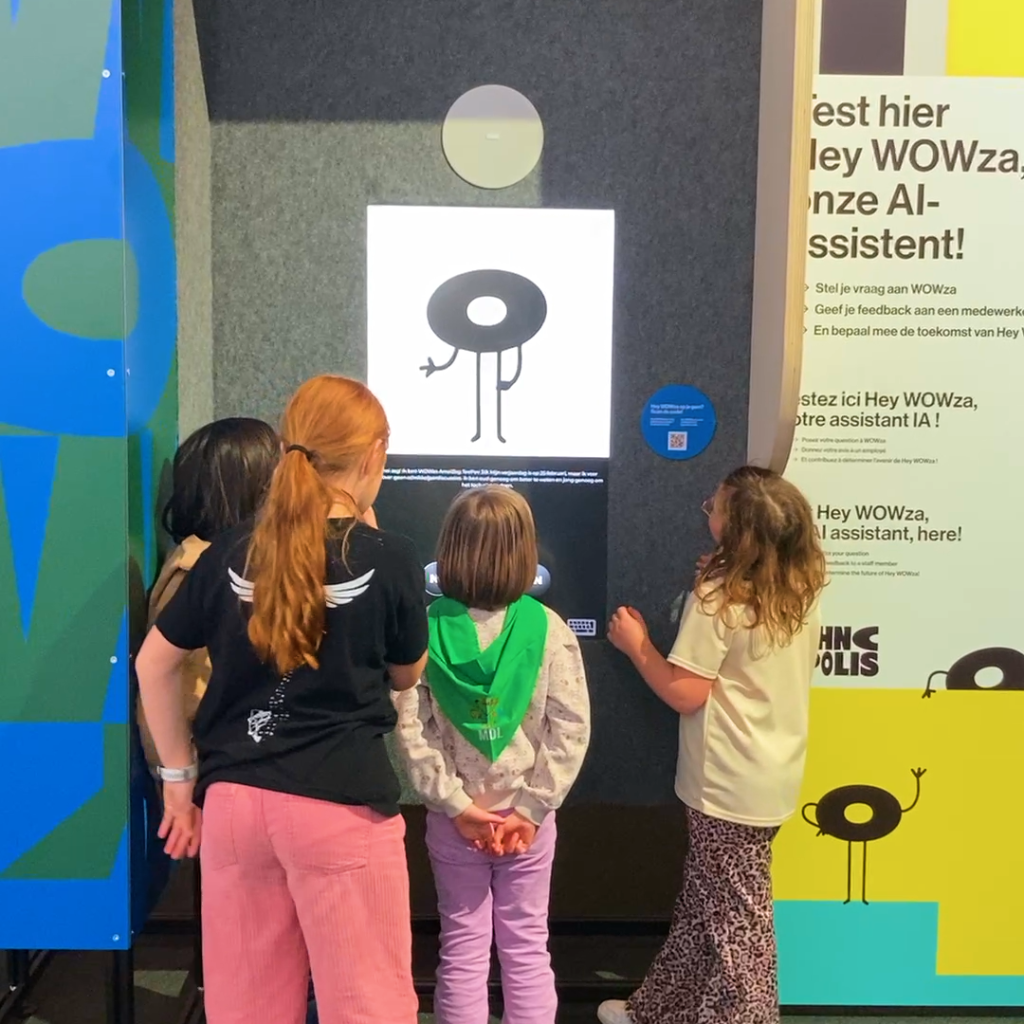
heyWowza, the Talking Point that greets every visitor at Technopolis
For nine days heyWowza answered anyone who pressed the button at Technopolis. 5,012 conversations later we know what visitors ask, and how…
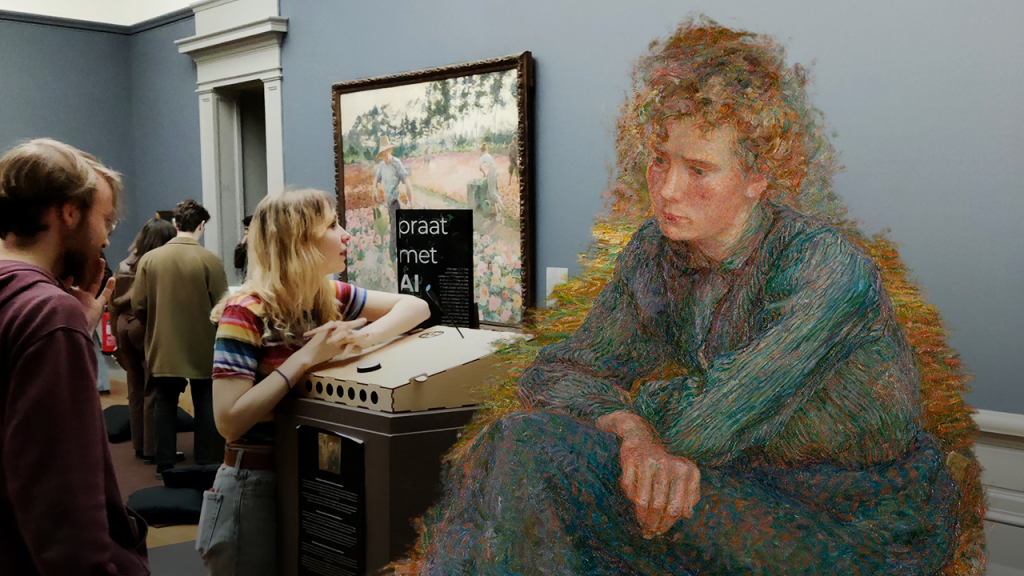
Talking Paintings at MSK Ghent
Two paintings at the Museum of Fine Arts Ghent (MSK) answer visitor questions out loud. Here is how the installation works and…